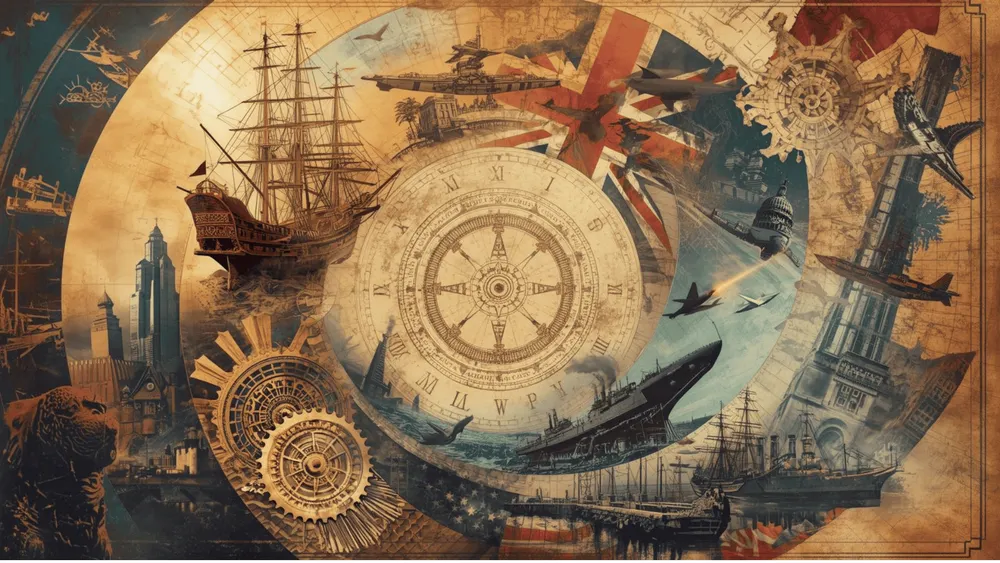
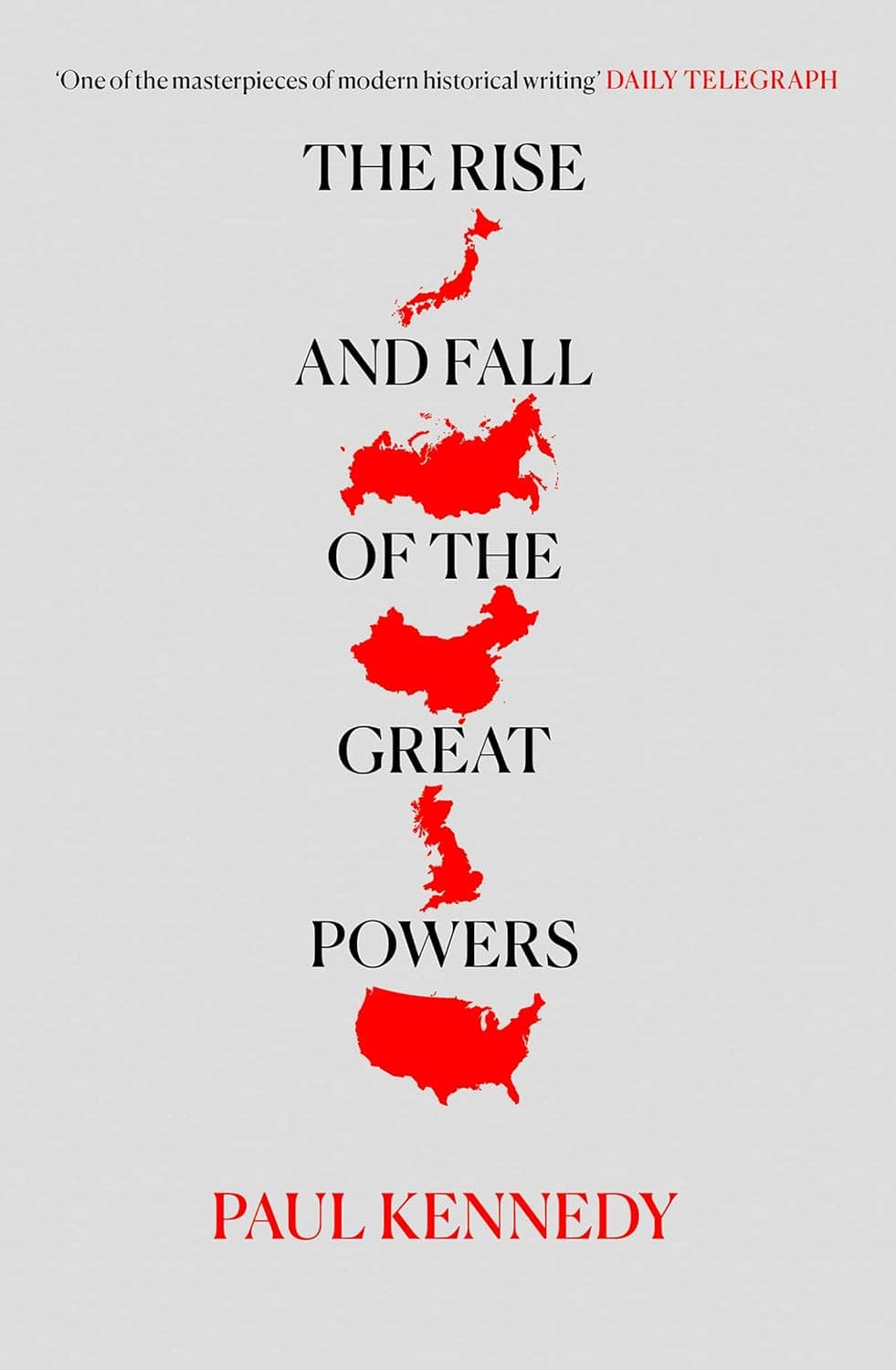
In an era of heated debate about American decline and Chinese ascendance, Paul Kennedy's The Rise and Fall of the Great Powers offers a crucial historical corrective: every dominant power believes its supremacy is permanent, and every one has been wrong. From Habsburg Spain to Victorian Britain, hegemonic moments have proven fleeting, giving way to multipolar competition as the international system's natural state. As we witness the return of great power rivalry, Kennedy's five-century analysis suggests we're not experiencing a crisis of world order but rather its predictable evolution—and understanding this pattern is essential for navigating our multipolar future.
The Illusion of Permanence
Every hegemon, Kennedy demonstrates, suffers from the same perceptual trap. At the zenith of their power, dominant states and their citizens invariably believe their supremacy reflects some inherent superiority—cultural, institutional, or even divinely ordained—rather than a temporary confluence of favorable circumstances. This assumption of permanence proves consistently wrong.
Consider Habsburg Spain in the late 16th century. With silver flowing from the Americas, territories spanning from the Netherlands to Naples, and the most formidable military machine in Europe, Spanish dominance appeared unassailable. Yet within a century, Spain had descended to secondary status, outmaneuvered by the Dutch Republic and France, its economy hollowed out and its treasury perpetually empty.
The pattern repeats with remarkable consistency. Louis XIV's France, despite its cultural brilliance and military innovations, exhausted itself in successive wars and ceded primacy to Britain. The British Empire, upon which the sun famously never set, found itself financially dependent on American loans by 1916. Even apparent exceptions prove the rule: the United States enjoyed genuine hegemonic status for perhaps two decades after 1991, a historical eyeblink.
The Mechanisms of Decline
Kennedy identifies a central mechanism driving this cyclical pattern: the contradiction between military overextension and economic vitality. Great powers acquire their status through economic dynamism—productive capacity, financial innovation, technological advancement. But maintaining dominance requires ever-expanding military commitments, which gradually drain the very economic resources that made dominance possible.
The mathematics are unforgiving. A hegemon must maintain military superiority across multiple theaters while competitors can focus resources regionally. Spain faced this reality when fighting Dutch rebels, Ottoman expansion, English privateers, and French ambitions simultaneously. Britain confronted it when trying to defend interests from India to Africa to the Western Hemisphere while rivals emerged in Germany, America, and Japan.
This isn't simply about defense budgets as a percentage of GDP, though that matters. It's about the opportunity cost of capital. Resources devoted to military establishments are resources not invested in productive infrastructure, education, or technological innovation—precisely the investments that rising powers make to challenge the existing order.
The Rise of Competitors
Kennedy's analysis reveals that hegemonic decline is inseparable from the rise of new powers, creating an inherently multipolar dynamic. Dominant powers inadvertently foster their own competition through several mechanisms.
First, hegemons create the conditions for others' growth. British naval supremacy secured global trade routes that German and American manufacturers exploited. American security guarantees allowed Japan and Western Europe to prioritize economic development over defense spending. The hegemon bears the systemic costs while others reap benefits.
Second, the technologies and institutions that enable dominance inevitably diffuse. Spain's tercios were copied and countered. Britain's industrial techniques spread to Belgium, Germany, and America. American financial and technological innovations now power Chinese development. What begins as monopolistic advantage becomes common knowledge.
Third, the very success of a hegemon creates niches for competitors. As Britain focused on India and naval supremacy, Germany could concentrate on land power and industrial chemistry. As America maintained global military presence, China could specialize in manufacturing and infrastructure development.
Historical Multipolarity as the Norm
Perhaps Kennedy's most important insight is that multipolarity, not unipolarity, represents the historical norm. The European state system from 1500 to 1945 was fundamentally multipolar, with five or six great powers in constant competition. Even apparent moments of hegemony—Spain under Philip II, France under Louis XIV, Britain in the Victorian era—were merely periods when one power held a temporary edge in an essentially multipolar system.
This multipolarity, Kennedy suggests, actually contributed to European dynamism. Competition drove innovation as states sought military and economic advantages. The inability of any single power to achieve lasting dominance prevented stagnation. When China enjoyed regional hegemony or the Ottoman Empire dominated the eastern Mediterranean, innovation slowed. European fragmentation proved paradoxically productive.
The Cold War's bipolarity was aberrant, a unique configuration emerging from World War II's destruction of alternative power centers. The post-1991 "unipolar moment" was even more anomalous—a brief interlude between the Soviet collapse and the inevitable rise of new competitors.
Implications for Contemporary Order
If Kennedy's analysis holds, what does it mean for our expectations about future international order? Several implications emerge.
First, current American concerns about decline should be contextualized historically. The United States isn't experiencing some unprecedented failure but rather the normal pattern whereby economic diffusion erodes hegemonic advantages. China, India, and other emerging powers are doing what rising states always do—leveraging new technologies and institutions to challenge the existing order. This process is neither aberrant nor necessarily catastrophic.
Second, we should abandon fantasies of restored unipolarity. Whether framed as "making America great again" or maintaining "indispensable" status, efforts to recreate the 1990s are historically naive. The conditions that briefly permitted American unipolarity—Soviet collapse, European weakness, Chinese underdevelopment, unchallenged technological supremacy—cannot be recreated through policy choices. They were contingent historical circumstances, now passed.
Third, multipolarity need not mean chaos. Kennedy's analysis shows that multipolar systems can be remarkably stable when great powers recognize mutual interests and accept spheres of influence. The Concert of Europe, despite its flaws, maintained general peace for decades. The key is acknowledging that no single power can dominate and that accommodation beats confrontation.
Fourth, economic vitality matters more than military spending. Kennedy's cautionary tale about imperial overstretch remains relevant. Powers that prioritize military expansion over economic renewal ultimately weaken themselves. The challenge for any great power is maintaining the productive capacity that underwrites influence while avoiding the military commitments that drain it.
The Multipolar Future
As we navigate the emerging multipolar order, Kennedy's historical perspective offers valuable guidance. The competition between the United States and China, the resurgence of regional powers like India and Indonesia, the evolution of European strategic autonomy—these developments aren't anomalies requiring correction but rather the international system returning to its natural state.
This doesn't mean the transition will be smooth. Historically, shifts from one configuration to another often involve conflict, as rising and declining powers miscalculate each other's resolve and capabilities. The most dangerous moments come when a declining hegemon refuses to accept new realities or when rising powers overestimate their strength.
But Kennedy's five-century survey also suggests grounds for optimism. Great power competition has coexisted with technological progress, economic development, and even, eventually, expanding cooperation. The task for contemporary statesmen isn't preventing multipolarity—that's inevitable—but managing it wisely.
The myth of perpetual dominance dies hard. Every hegemon believes itself exceptional, immune to the historical forces that toppled its predecessors. Yet the pattern holds with remarkable consistency: economic diffusion, strategic overextension, and the rise of competitors eventually erode any concentration of power.
Understanding this isn't defeatism but realism. It's recognizing that the international system has always been dynamic, that today's dominant power becomes tomorrow's declining force, and that multipolarity represents not a problem to solve but a condition to manage. Five hundred years of history suggest we should adjust our expectations accordingly. The question isn't whether the current order will evolve into something more multipolar—Kennedy's analysis suggests that's certain—but whether we can navigate that transition without the catastrophic conflicts that too often accompanied similar shifts in the past.