The era of media has changed. From the printed broadsheet to the radio to the television and now to the smartphone screen, the way human beings consume and produce information has undergone a series of dramatic transformations — each one unsettling, each one eventually absorbed into the fabric of social and political life. But something about the latest transformation feels different in scale, in speed, and in consequence. Social media has not merely changed how we receive information. It has changed who gets to produce it, who gets to amplify it, and — most consequentially — who gets to decide what remains visible and what disappears.
The arrival of the camera phone gave birth to what mainstream media eagerly branded citizen journalism — a term that flattered the industry's own instincts, since it imagined ordinary people as junior reporters feeding footage upward to professional gatekeepers.
That conception was almost immediately overtaken by reality. Social media did not merely give citizens a channel to the newsroom. It gave them a platform of their own — one that could reach millions without passing through any editorial filter at all. Today, anyone with a phone and a following is a broadcaster, a propagandist, an organiser, or all three simultaneously.
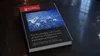
It is this new reality — vast, ungoverned, consequential, and deeply resistant to the old frameworks of media regulation — that John P. Wihbey sets out to address in Governing Babel. An associate professor of media innovation at Northeastern University and co-founder of the Institute for Information, the Internet & Democracy, Wihbey has produced a serious and timely work that asks perhaps the most important governance question of our digital age: who is responsible when the information commons goes wrong — and what should we do about it?
The Babel of Our Times
The book's title is apt in ways that extend beyond the merely metaphorical. In the biblical story, Babel is the moment when shared language collapses, when the ambition to build something that reaches the heavens produces only confusion and fragmentation. Wihbey sees in this ancient parable a precise description of the contemporary information environment. Seven major social media platforms — YouTube, Facebook, WhatsApp, Messenger, Instagram, WeChat, and TikTok — each count more than one billion active users. We are, as he puts it, building technological towers. But the condition of modern Babel is one of permanent unruliness, a multiplication of voices and views that no single authority can contain or comprehend.
The consequences of this unruliness are not abstract. Wihbey opens with a panoramic survey of the crises that have defined the social media era. The storming of the United States Capitol in January 2021, when a mob fuelled by months of online disinformation attempted to stop the certification of a presidential election, stands as his central American example. But his canvas is global. In Russia, law enforcement agencies have used social media to reverse-engineer protest communities, identify dissidents, and deliver them to the state. In India, the government ordered platforms to restrict content during the farmers' protest — one of the most sustained democratic demonstrations the country had seen in decades. In Uganda, Nepal, and across the Arab world, governments have simply switched platforms off when the political temperature rose.

Across these varied flashpoints, Wihbey identifies a set of common questions that networked communication now forces upon every society: who gets to do the gatekeeping — the global platforms or national governments? To what degree do platforms respect higher principles, such as international human rights law, that transcend nation states? And what happens when the nation state itself is the threat to its own citizens? These are not questions with easy answers. But they are questions that can no longer be deferred.
The Response Principle
At the heart of Governing Babel is a deceptively simple argument. Wihbey does not advocate for censorship. He does not propose that governments should dictate what citizens may read or say online. What he argues, instead, is that the platforms which host the world's public discourse have a responsibility — a duty of care, in the language of common law — to respond to patterns of harm in good faith and with persistence. He calls this the response principle.
The distinction is important and worth dwelling on. Under the response principle, a platform is not judged on whether any individual post was removed or allowed to stand. It is judged on whether it acted in good faith when systemic harms emerged — whether it invested in the tools, the people, and the processes needed to detect and mitigate problems at scale. This is what Wihbey calls an effects-based approach: regulation does not specify how platforms must act, but holds them accountable for what actually happens as a result of their choices. The question regulators would ask is not 'did you take down this post?' but 'did you respond seriously to this category of harm, and can you show us the evidence?'

To enforce this principle, Wihbey envisions a new regulatory body — not a resurrection of the Federal Communications Commission, which was designed for the broadcast era, but something more suited to the democratic demands of the twenty-first century. He imagines a hybrid institution, with appointed commissioners working alongside citizen juries or assemblies, designed to give the regulatory process both technical competence and democratic legitimacy. Platforms would be required to file regular public reports, demonstrate compliance baselines, and provide transparent evidence of their response efforts. The goal is not to silence speech but to make the stewardship of the information commons a public and accountable act.
Wihbey grounds this argument in a sweeping historical account of how democracies have regulated powerful communications technologies before. It took from roughly 1912 to the 1960s to develop a workable regulatory framework for mass media in the United States. By his reckoning, we are somewhere in the early 1930s of the social media era — early enough that the problem still feels chaotic and intractable, but not so early that the outlines of a solution cannot be glimpsed. The hundred-year journey, as he calls it, has barely begun.
A Powerful Argument — and Its Limits
Governing Babel makes its central case with clarity, historical depth, and genuine intellectual seriousness. Wihbey is at his best when he is connecting the present crisis to deeper traditions — excavating the First Amendment jurisprudence of the early twentieth century, revisiting Eleanor Roosevelt's foundational work on international human rights, tracing the evolution of broadcast regulation from the chaos of early radio to the relative order of the mid-century FCC. The book earns its ambitions. It is not a polemic or a policy brief. It is an attempt to think carefully about a hard problem, and it largely succeeds.
Yet a question nags, and it is one the book does not fully resolve. Wihbey's response principle assumes that the political will to implement it exists, or can be created. But consider what that implementation actually requires: a government willing to establish a genuinely independent regulatory body; a civil society robust enough to participate meaningfully in its proceedings; platforms willing to accept accountability rather than capture the regulator; and a judiciary capable of enforcing the results without political interference. In the United States, where Wihbey's policy prescriptions are primarily aimed, this may be an achievable — if difficult — aspiration. Elsewhere, it is harder to sustain the optimism.
Readers from countries like India, where independent institutions have faced sustained pressure and civil society organisations operate under increasing legal constraint, will find themselves asking a pointed question: what happens to the response principle when the government that is supposed to enforce it is also the actor most interested in weaponising social media for its own purposes? Wihbey acknowledges the global dimension of the problem throughout the book, but his solutions remain anchored in the American context. The gap between the universality of his diagnosis and the specificity of his prescription is the book's most significant limitation.
There is also a deeper philosophical question lurking beneath the book's argument — one that Wihbey gestures toward but does not fully confront. Social media is routinely blamed for the disruptions of our political era: the rise of populism, the collapse of shared facts, the incitement to violence. But were not people capable of all of these things before social media existed? The India Against Corruption movement of 2011 mobilised millions through a powerful combination of social media, television, and street-level organising — Facebook and Twitter playing a transformative role in mass mobilisation, information dissemination, and agenda-setting for mainstream media. And yet India's independence movement had mobilised an entire nation against an empire with nothing more than print, oratory, and human courage. This paradox runs through the entire social media debate: the very same platforms that governments have used to identify and suppress dissidents are the platforms through which citizens have organised to hold those same governments accountable. The tools of oppression and the tools of liberation are, in this case, identical — which is precisely why blunt censorship is the wrong answer, and why getting regulation right matters so enormously. People have always assembled, always protested, always been susceptible to propaganda and capable of political violence. The question of whether social media has fundamentally changed human nature — or merely accelerated and amplified tendencies that were always present — is one that the governance frameworks of the future will need to answer. Governing Babel takes us a long way toward the right questions. That it does not resolve all of them is less a criticism than an honest acknowledgement of the difficulty of the terrain.
Verdict
Governing Babel is essential reading for anyone who thinks seriously about democracy, technology, and the future of public life. John P. Wihbey has written a book that is historically informed, analytically honest, and genuinely useful — not as a final answer, but as a serious contribution to a conversation that societies everywhere urgently need to have. The response principle is the right framework: humane, effects-based, and grounded in democratic traditions rather than authoritarian impulse. Whether the political conditions necessary to implement it can be created — in Washington, let alone in New Delhi or Nairobi — remains the harder and more open question. Wihbey's hundred-year journey has barely begun, and the road ahead is considerably less certain than even his cautious optimism allows.
BOOK DETAILS
Governing Babel: The Debate over Social Media Platforms and Free Speech — and What Comes Next by John P. Wihbey. MIT Press, 2025.