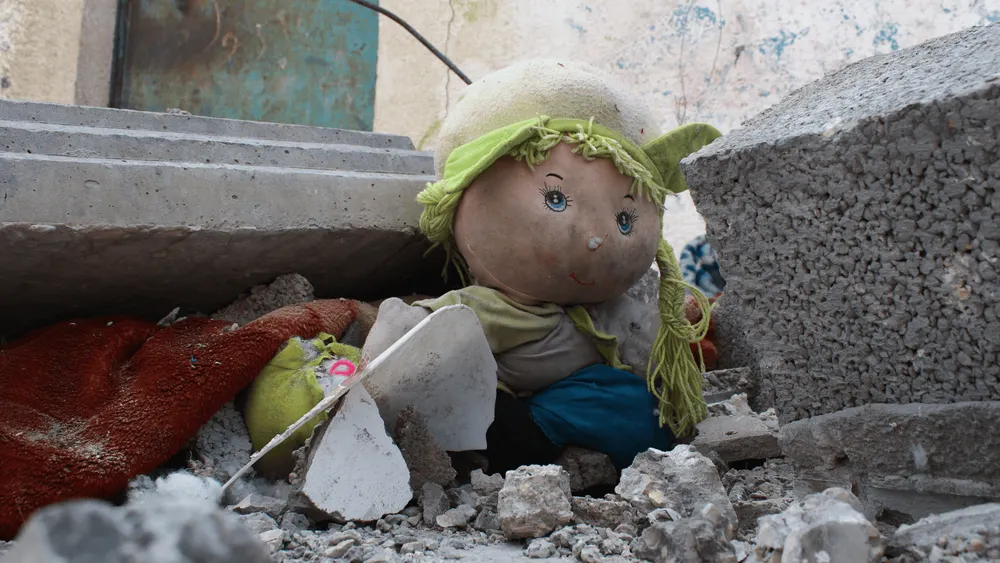
The optimism that accompanied October 10's ceasefire agreement between Israel and Hamas lasted precisely eighteen days. By October 28, Israeli airstrikes had killed over 100 Palestinians, including 46 children, in what became the deadliest single day since the truce began. Though Israeli officials declared the ceasefire "back on" the following morning, the episode exposed a fundamental truth about the current Gaza arrangement: this is not peace, nor even a sustainable cessation of hostilities, but rather a precarious pause punctuated by violence, mutual recrimination, and the ever-present threat of renewed warfare.
The fragility of the ceasefire reflects deeper structural problems that no diplomatic agreement has yet addressed. After two years of devastating conflict that killed more than 68,000 Palestinians and saw the October 7, 2023 Hamas attacks claim over 1,200 Israeli lives, exhaustion drove both parties to accept terms that left their core grievances unresolved. The result is a volatile arrangement where technical violations—real or perceived—can instantly trigger lethal responses, while the underlying conditions that sparked the original conflict remain fundamentally unchanged.
Architecture of a Fragile Peace
The ceasefire agreement, brokered by the Trump administration with assistance from Egypt, Qatar, and Turkey, represents significant diplomatic achievement in its mere existence. Yet its structure reveals why stability remains elusive. The deal's first phase focused on immediate humanitarian concerns: halting active combat operations, releasing living Israeli hostages, freeing approximately 2,000 Palestinian prisoners, and surging humanitarian aid into Gaza. These provisions addressed symptoms rather than causes, —a framework that temporarily reduces violence while preserving the conditions for its eventual resumption.
The agreement's most contentious elements lie in its implementation details. Israel retained control over significant portions of Gaza territory, including strategic corridors that divide the Strip. The provision allowing Israel to maintain a "buffer zone" until there is no "resurgent terror threat" effectively grants indefinite occupation rights, subject entirely to Israeli security assessments. Hamas, meanwhile, faces complete disarmament in future phases—a requirement that strikes at the organization's fundamental identity and raison d'être.
Most problematic is the agreement's approach to hostage remains. The requirement that Hamas return all bodies of deceased Israeli captives within 72 hours proved impossible given Gaza's devastation. With an estimated 10,000 Palestinians still buried beneath rubble and most heavy machinery destroyed, locating specific remains requires resources Gaza simply doesn't possess. This technical impossibility became the trigger for renewed violence when Israel accused Hamas of deliberately withholding bodies and staging discoveries.
Violation Spiral
The October 28 strikes illustrate how quickly ceasefire violations can escalate. Israel's accusation that Hamas had staged the discovery of hostage remains—supported by drone footage showing Palestinians burying and then "discovering" a body—provided the immediate justification. The killing of Master Sergeant Yona Efraim Feldbaum in Rafah added another violation to Israel's list. Prime Minister Benjamin Netanyahu ordered "immediate, powerful strikes," which killed 104 Palestinians overnight.
Yet Hamas denies involvement in the Rafah incident, and disputes about hostage remains reflect genuine logistical challenges as much as potential manipulation. The International Committee of the Red Cross, which facilitates exchanges, had warned from the outset that locating bodies under Gaza's ruins would prove extraordinarily difficult. The IRC's unusual criticism of Hamas for allegedly staging a discovery demonstrates the complexity of determining truth amid accusations and counter-accusations.
This pattern—alleged violation, military response, contested narratives—has repeated throughout the ceasefire's brief life. Israel has conducted multiple strikes it characterizes as responses to Hamas provocations. Palestinian health officials report nearly 100 killed and 230 wounded since October 10, despite the nominal truce. Each incident deepens mistrust and provides ammunition for those on both sides who oppose any accommodation with their enemies.
Humanitarian Crisis as Strategic Leverage
Beyond military violations, the ceasefire's humanitarian provisions have become another battlefield. The agreement specified 600 daily aid trucks as the minimum necessary to prevent famine in Gaza. Yet Israel has consistently restricted aid flows, at times cutting the permitted number to 300 trucks daily. The Rafah crossing from Egypt remains frequently closed, and Israel continues to block materials it deems potentially useful for reconstruction that might benefit Hamas.
This weaponization of humanitarian aid serves multiple strategic purposes. For Israel, controlling aid flows provides leverage to ensure Hamas compliance with ceasefire terms. Restricting construction materials, particularly cement and machinery, prevents Hamas from rebuilding military infrastructure. Yet these same restrictions trap Gaza's 2.3 million residents in uninhabitable conditions. The UN Development Programme estimates reconstruction will require more than a decade and $70 billion—figures that assume a level of access and resources currently impossible under Israeli restrictions.
The humanitarian stranglehold also reflects deeper disagreements about Gaza's future. The ceasefire's later phases envision Hamas's complete removal from governance, replaced by a technocratic Palestinian administration overseen by an international "Board of Peace." This arrangement, while potentially acceptable to exhausted Gazan civilians, represents an existential threat to Hamas's political project. By maintaining humanitarian pressure, Israel seeks to turn Gaza's population against Hamas, potentially achieving through deprivation what two years of military assault could not accomplish.
Regional and International Dynamics
The ceasefire's fragility extends beyond the immediate combatants to encompass broader regional dynamics. The Trump administration's investment in the agreement—with the president personally threatening to "terminate" Hamas if violations continue—creates pressure for superficial compliance while incentivizing both parties to blame the other for any breakdown. The presence of high-profile American officials, including Jared Kushner and special envoy Steve Witkoff touring Gaza, in the region demonstrates Washington's stake in maintaining at least the appearance of success.
Regional mediators face their own complex calculations. Egypt, which controls Gaza's only non-Israeli border crossing, must balance humanitarian concerns with security fears about Hamas and broader regional stability. Qatar, having spent years cultivating influence through its Hamas relationship, seeks to preserve its mediating role while avoiding blame for ceasefire failures. Turkey's involvement reflects President Erdogan's ambitions to position himself as a champion of Palestinian causes while maintaining pragmatic relations with Israel.
European powers, contemplating potential sanctions against Israel, watch the humanitarian aid situation closely. The European Union has indicated that Israel's handling of aid flows will influence decisions about future diplomatic and economic pressure. This linkage creates additional complexity, as Israel must weigh the domestic political costs of allowing more aid against international diplomatic consequences of restriction.
Psychology of Perpetual Conflict
Perhaps most significant is the psychological dimension of the current arrangement. For Gazans, the ceasefire brings no real peace—merely a reduction in the intensity of suffering. Israeli reconnaissance aircraft and drones continue their constant surveillance. Military positions remain occupied. The threat of renewed bombardment hangs over every day. This perpetual state of tension, what Palestinians describe as "managed occupation," prevents any genuine recovery or reconstruction of normal life.
For Israelis, particularly those with family members among the hostages, the slow return of remains and uncertainty about those still missing maintains a state of unresolved trauma. Each delayed handover or disputed identification reopens wounds from October 7, 2023. The security establishment's insistence on maintaining military readiness and quick-trigger responses reflects deep skepticism about Hamas's intentions and capacity to control other armed groups in Gaza.
This psychological landscape makes creative diplomacy nearly impossible. Trust-building measures that might stabilize the ceasefire—prisoner exchanges, economic rehabilitation, gradual military disengagement—require a minimum level of confidence that neither party possesses. Instead, both sides prepare for the resumption of full-scale conflict while going through the motions of compliance with international demands for peace.
Impossibility of Technical Solutions
The current crisis exposes the limitation of approaching the Israeli-Palestinian conflict through technical agreements and phased implementations. The ceasefire's elaborate provisions—detailed schedules for hostage releases, specific aid quotas, predetermined withdrawal lines—suggest precision and careful planning. Yet these technical details cannot overcome fundamental political realities: Israel's determination to prevent any future security threat from Gaza, and Palestinian insistence on genuine sovereignty and an end to blockade.
The focus on Hamas's disarmament in future phases exemplifies this disconnect. Disarmament might seem a logical prerequisite for peace, but it requires Hamas to abandon its core identity as an armed resistance movement without receiving the political achievements that might justify such transformation to its base. Similarly, Israel's insistence on maintaining security control until threats are eliminated creates a circular logic: Hamas's existence justifies continued occupation, while occupation ensures Hamas's continued relevance as a resistance force.
International efforts to square this circle through creative formulations—international peacekeeping forces, technocratic governance structures, economic rehabilitation programs—fail to address the underlying political grievances. Palestinians in Gaza may desperately want an end to violence, but few will accept arrangements that formalize their permanent subjugation. Israelis may desire quiet borders, but not at the price of empowering an enemy they view as genocidally committed to their destruction.
Path Ahead: Managing Escalation
Given these realities, the immediate future likely holds continued ceasefire violations, periodic escalations, and international efforts to prevent complete breakdown. The October 28-29 violence may serve as a template: significant enough to demonstrate resolve and extract concessions, but stopping short of triggering full-scale war. This pattern of controlled escalation serves various purposes—allowing leaders to demonstrate toughness to domestic audiences, testing international tolerance for violence, and potentially shifting the terms of implementation in favorable directions.
The United States, having invested presidential prestige in the agreement, will likely continue backing Israel's interpretation of violations while pressuring both parties to avoid actions that completely collapse the framework. President Trump's statement that the ceasefire "is not in jeopardy" despite over 100 deaths reveals this approach: maintain the fiction of success while tolerating substantial violence that doesn't generate overwhelming international attention.
For regional mediators, the challenge becomes preventing incremental violations from cascading into renewed war. This requires constant diplomatic engagement, creative reinterpretation of agreement terms, and occasional acceptance of face-saving formulas that paper over fundamental disagreements. The sustainability of such efforts remains questionable, particularly as domestic pressures in Israel and among Palestinians push toward more confrontational approaches.
A Ceasefire Without Peace
The Gaza ceasefire represents neither war nor peace but something more dangerous: an unstable equilibrium maintained through exhaustion rather than agreement. Its violations are not aberrations but inherent features of an arrangement that addresses symptoms while leaving causes untouched. The October 28 strikes and their aftermath demonstrate how quickly this equilibrium can shift toward violence, and how readily international actors will rationalize such violence to preserve the broader framework.
For Gaza's population, trapped between Hamas's political project and Israel's security imperatives, the ceasefire offers little hope for genuine improvement. Humanitarian aid remains restricted, reconstruction impossible, and normal life a distant dream. The constant threat of renewed bombardment, justified by technical violations or security concerns, maintains a level of tension incompatible with recovery from two years of devastating war.
The international community's investment in maintaining this arrangement—through continued mediation, humanitarian assistance, and diplomatic pressure—reflects both the absence of better alternatives and unwillingness to confront the conflict's fundamental dynamics. Yet without addressing core issues of Palestinian sovereignty, Israeli security, and the future of Gaza itself, the current ceasefire merely postpones rather than prevents the next round of devastating violence.
As winter approaches and humanitarian conditions worsen, the pressure on this fragile arrangement will only intensify. Whether it survives in its current form, evolves toward something more sustainable, or collapses entirely depends on factors beyond the control of any single actor. What remains certain is that Gazans will continue paying the price for this uncertainty with their lives, their homes, and their hopes for a better future. The ceasefire may be "back on," as Israel declared after its latest strikes, but peace remains as distant as ever.