The Iran war did not arrive without a library. Every development since February 28 — the ceasefire that is not a ceasefire, the Security Council vetoes, the Global South absorbing costs it did not vote for, the ICC unable to reach the powerful, Pakistan indispensable again, Europe sermonising without authority — has been explained, predicted or at least anticipated by books written years and decades before the first strike. The problem is not that we lacked the intellectual tools to understand what was coming. The problem is that we rarely read them before the fact.
These eleven books did not all arrive at my desk simultaneously. Some I have read. Some I know through years of following the arguments they contain — through reviews, author interviews, the ideas that have entered the broader conversation about power and international order. What connects them is not my personal annotation of each page but their direct relevance to the questions DiploPolis has been arguing since February 28. Consider this a curated brief rather than a reading diary.
This list is not a general introduction to international relations. It is a specific reading list for a specific moment — eleven books that illuminate what DiploPolis has been arguing since the war began. Each one earns its place not by reputation but by relevance. Some are canonical. Some are underread. All of them make the current crisis more legible. Read them in any order. The argument connecting them is the world you are already living in.
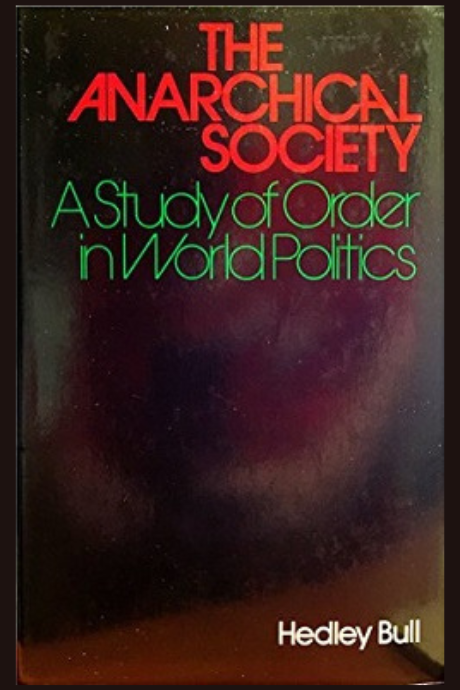
The Anarchical Society — Hedley Bull (1977)
Bull explains the central fraud of international order: rules exist, but enforcement depends on power. That is why ceasefires collapse, red lines move and the weak are told to trust agreements nobody intends to police. The anarchical society is not chaos — it is order maintained without a sovereign, which means maintained only for as long as the powerful find it convenient. DiploPolis has returned to this argument again and again, especially in the ceasefire pieces. Every time Washington announced a pause and Tehran announced a violation and neither side paid a consequence, Bull's central insight was being demonstrated in real time. The book is half a century old. It has not aged a day.
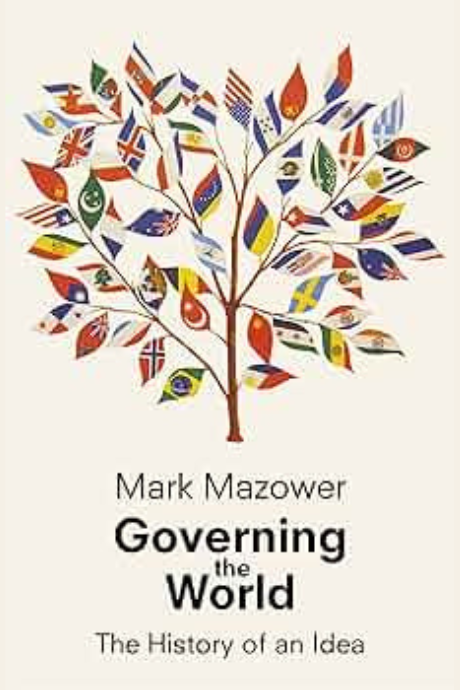
Governing the World — Mark Mazower (2012)
Mazower gives the institutional memory behind today's paralysis. The Security Council was not built to deliver justice; it was built to manage power. When China and Russia veto action on Iran, they are not breaking the system. They are using it exactly as designed. Mazower's history of international institutions — from the League of Nations through the United Nations to the present — is essential reading for anyone trying to understand why the machinery of international response keeps failing at the precise moments it is most needed. The machinery was never designed for justice. It was designed for stability. Those are different objectives, and the gap between them is where the dead accumulate.
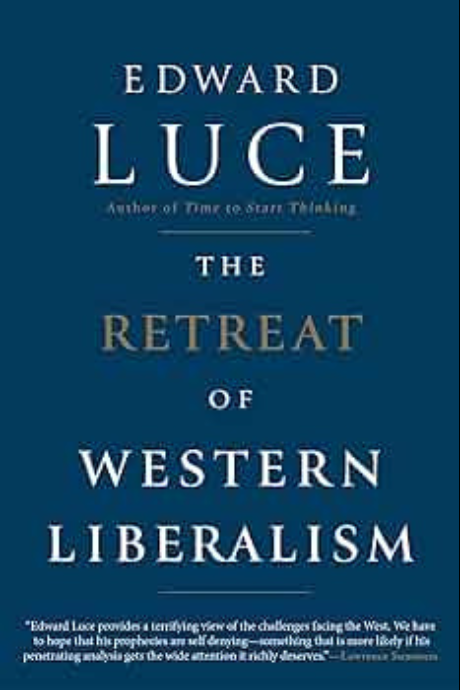
The Retreat of Western Liberalism — Edward Luce (2017)
Luce captures the decay DiploPolis keeps finding in Europe and the wider West: the language of liberal order remains, but the confidence behind it has gone. Bulgaria, the EU's eastern fractures and Europe's hesitant response to war all belong to this story. France criticised the strikes and opened its airbases. Germany stayed quiet and offered Ramstein. Spain said the same thing it said last month. The sermon continues; the authority has left the room. Luce wrote this in 2017 about domestic politics in Britain and America. He was describing something that has since metastasised across the entire Western institutional framework. The book is more useful now than it was when it was published.
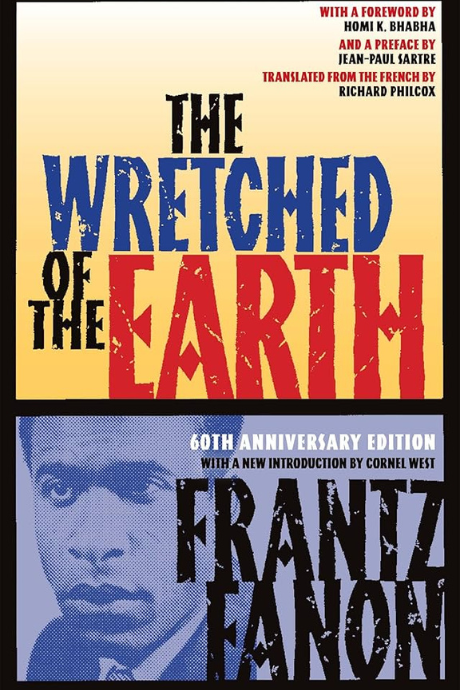
The Wretched of the Earth — Frantz Fanon (1961)
Fanon is not background reading. He is the moral weather system behind much of what DiploPolis argues. The Global South does not distrust Western power because it misunderstands liberalism; it distrusts Western power because it remembers what liberalism looked like when it arrived with guns, debt and lectures. The Wretched of the Earth is not a comfortable book and it is not meant to be. It is an argument about the psychology of colonial power and the psychology of those subjected to it — an argument that has not been superseded by decolonisation because the structural relationships it described have not been superseded either. When the Global South watches the ICC reach African leaders but not Western ones, Fanon is the intellectual framework through which that observation becomes an argument rather than a grievance.
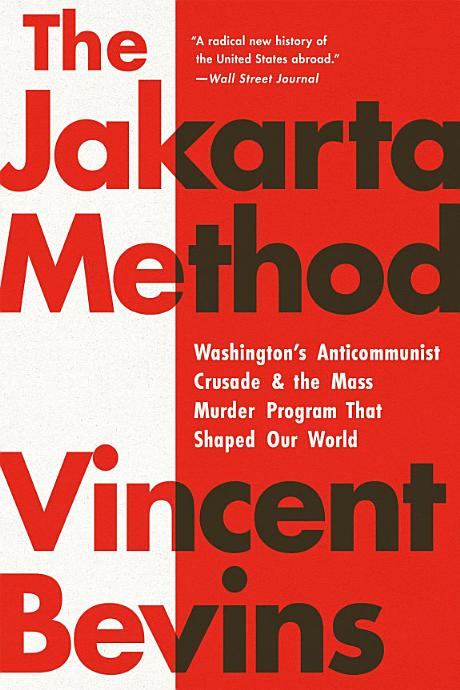
The Jakarta Method — Vincent Bevins (2020)
Bevins explains why the phrase 'rules-based international order' lands so differently outside the West. For much of the Global South, the order was not rules, but disappearances, coups and convenient massacres. DiploPolis's scepticism of Western institutional virtue sits directly inside this history. Bevins documents the United States-backed campaigns of mass political violence across Indonesia, Latin America, Africa and Asia during the Cold War — violence that was not the exception to American foreign policy but its instrument. This is not ancient history. The governments installed through that violence, and the relationships built around it, shape the regional architecture that the Iran war is now destabilising. The Jakarta Method is the most important recent book for understanding why Washington's credibility problem in the Global South is structural rather than reputational.
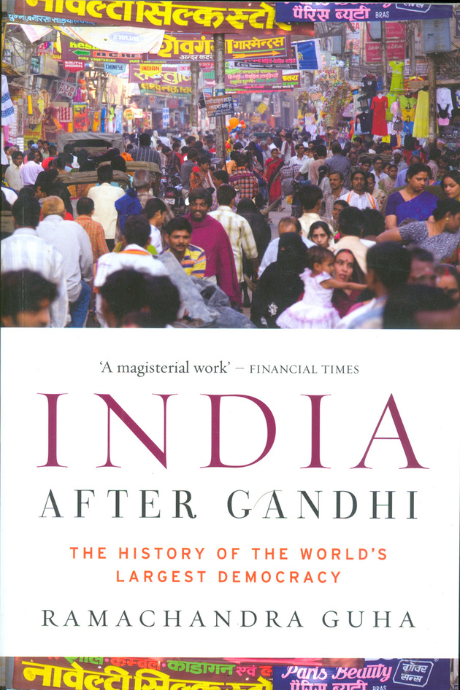
India After Gandhi — Ramachandra Guha (2007)
Guha is essential because India's foreign policy cannot be understood without India's domestic argument with itself. The Vishwaguru claim rests on civilisational confidence; the reality is messier, more fragile and more unfinished. Operation Sindoor and its aftermath expose that gap with brutal clarity. India struck harder than it had since 1971, sent 59 parliamentarians to 32 countries to isolate Pakistan and watched Trump announce the ceasefire, Pakistan thank him and the world move on. That outcome is not explained by foreign policy analysis alone. It is explained by the distance between what India believes itself to be and what its actual strategic weight in the current international order allows it to do. Guha's thousand-page history of independent India is the foundation for understanding that distance.
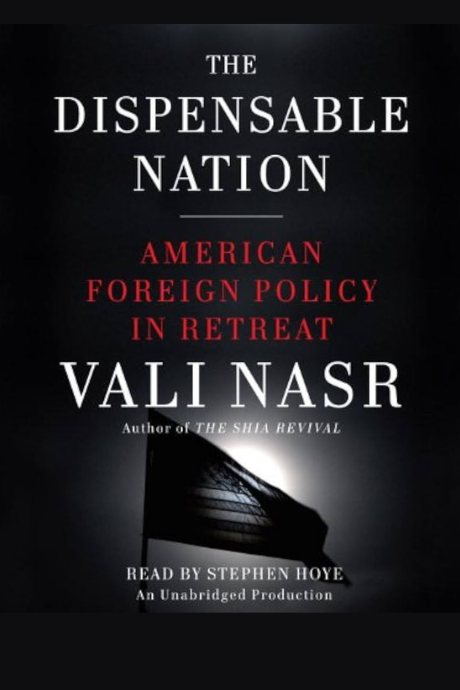
The Dispensable Nation — Vali Nasr (2013)
Nasr shows how Washington repeatedly misreads South Asia and the Middle East, then calls the consequences instability. Pakistan's return as an indispensable bad actor fits that pattern exactly. The actor is not rehabilitated; the requirement has changed. Nasr, a former senior State Department official, wrote this book about the Obama administration's failures in Afghanistan and Pakistan. What he described — Washington's inability to understand the region it was operating in, its tendency to reward the behaviour it claimed to be punishing, its confusion of tactical necessity with strategic alignment — applies with equal force to the Trump administration's routing of Iran diplomacy through Islamabad. Pakistan seeded the nuclear crisis Washington is now trying to resolve. The phone number that works in both directions belongs to the man India spent four days trying to break.
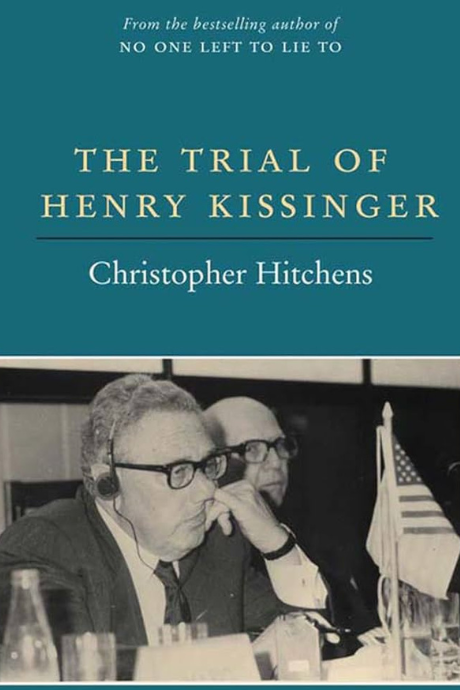
The Trial of Henry Kissinger — Christopher Hitchens (2001)
Hitchens understood the great exemption: accountability is for defeated men, weak states and enemies of the moment. Kissinger's career is the ICC's Iran problem in human form. The crime is not that the law failed once; the crime is that everyone knew it would. Hitchens wrote this as a legal brief, not a polemic — documenting specific acts by a specific man that met the legal definition of war crimes, and then documenting the complete absence of accountability that followed. The argument is not that Kissinger was uniquely evil. The argument is that the system was designed to let him be. That design has not changed. The ICC can issue an arrest warrant for Benjamin Netanyahu. It cannot collect him. The distance between those two facts is the distance Hitchens spent a lifetime measuring.
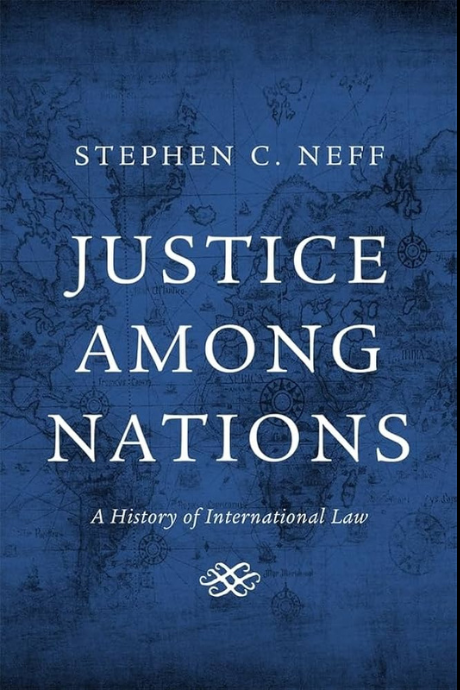
Justice Among Nations — Stephen Neff (2014)
Neff gives DiploPolis the long view of international law's central contradiction. Law claims to restrain power, but power has always helped write the law. That does not make law useless; it makes the question sharper — who is law for when the powerful are in the dock? Neff's history of international law from antiquity to the present is the most intellectually honest account available of the gap between what the law promises and what it delivers. It is not a cynical book. It is a precise one. The precision is what makes it useful. Understanding that international law has always been a contested rather than a settled field — that its authority has always depended on the willingness of the powerful to submit to it — is the prerequisite for understanding why the current moment looks the way it does.
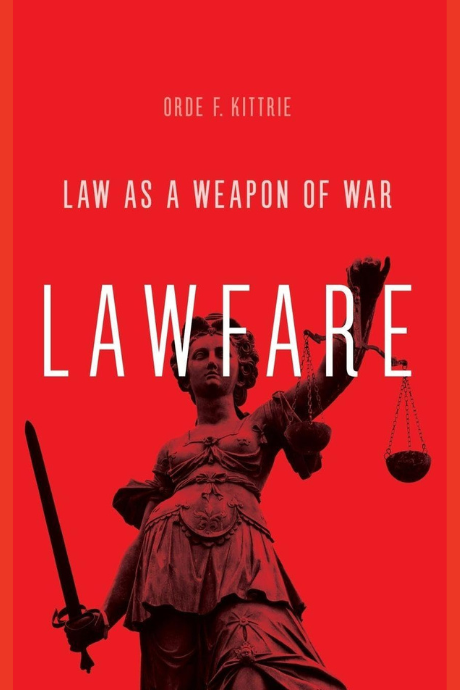
Lawfare — Orde Kittrie (2016)
Kittrie explains the modern theatre of legal language. States no longer reject law outright; they weaponise it, quote it, reinterpret it and discard it when jurisdiction arrives at their own door. That is why Israel, the US and Russia speak like litigants while behaving like sovereigns above judgement. Lawfare — the use of law as a weapon of conflict rather than a constraint on it — is the defining legal phenomenon of the current era. Every statement by Israeli or American officials framing their actions in the language of self-defence, proportionality and lawful military necessity is an act of lawfare as much as it is a legal argument. Kittrie wrote the manual. Reading it makes the theatre harder to mistake for substance.
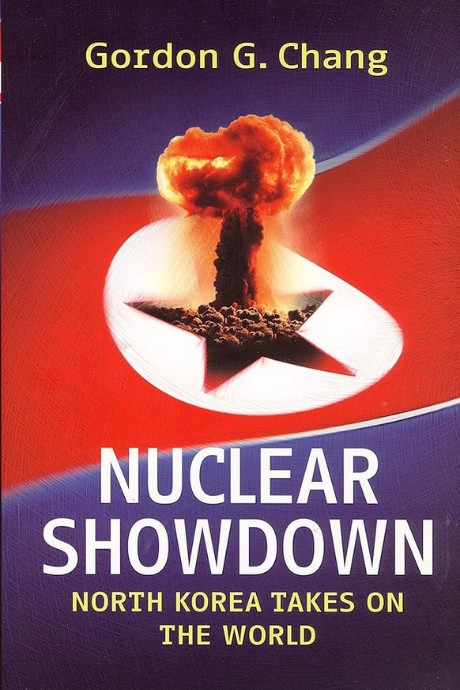
Nuclear Showdown — Gordon Chang (2006)
North Korea's lesson is the one every vulnerable state has absorbed: surrendering deterrence is an act of faith, and faith is not a security doctrine. After Iran, the message travels faster. The world did not see a rogue state problem. It saw an insurance policy being cancelled. Chang wrote this book about North Korea two decades before the Iran war. The argument it makes — that a state which surrenders its nuclear programme based on international assurances learns, sooner or later, the cost of that trust — has been dramatically validated by February 28, 2026. Iran gave up its nuclear weapons programme under the JCPOA. The JCPOA was abandoned. Iran was bombed. The governments watching this sequence are not drawing the conclusion Washington wants them to draw.
These eleven books do not predict the future. They explain the present by illuminating the structural forces that have always been underneath it. Read them not as comfort but as equipment. The world DiploPolis covers every day is the world these writers saw coming.
Find this piece interesting?
Dispatches by DiploPolis delivers sharp analysis and pointed commentary on power, politics, diplomacy, and world affairs — directly to your inbox.
No neutrality. No noise. Just argument.