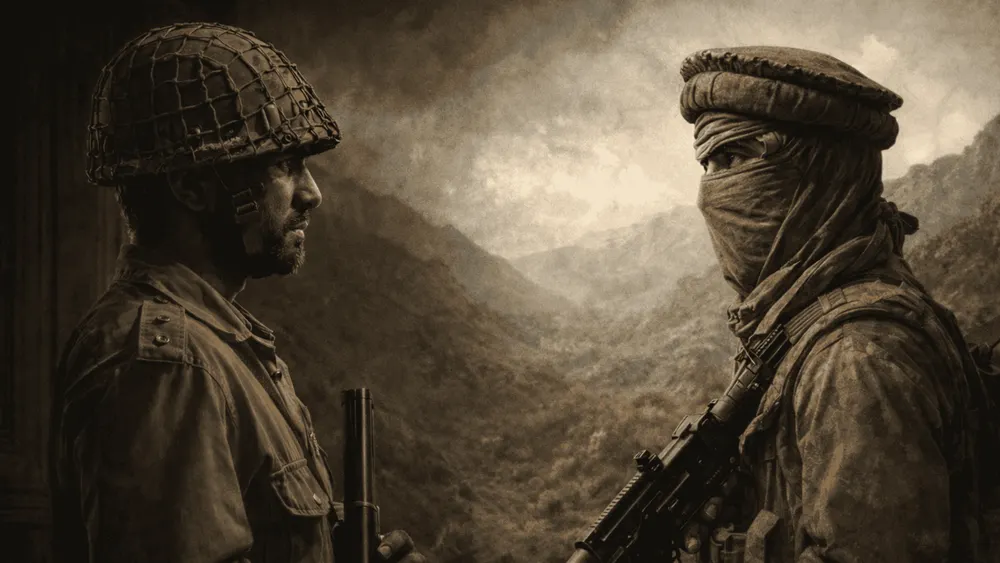
'Our patience has reached its limit,' Khawaja Asif, Pakistan’s Defence Minister said in a social media post on February 27, 2026, declaring what he called an 'open war.' The statement was dramatic. The situation it described was not. Pakistan has been at war with the Taliban for years. The only thing open about it is the pretence that Islamabad did not see it coming.
Pakistan created the Taliban. This is not contested history. Through the 1990s, the Inter-Services Intelligence funded, trained, and armed the movement that would take Kabul in 1996. The calculation was strategic — a friendly government in Afghanistan, strategic depth against India, a proxy force that served Islamabad's regional ambitions without requiring Pakistani boots on the ground.
It worked, until it did not.
The Tehrik-i-Taliban Pakistan was the bill arriving. Born from the same ideological infrastructure that produced the Afghan Taliban, the TTP turned the apparatus inward. The safe houses, the recruitment networks, the theological justifications for violence; all of it came home. Pakistan had spent decades building a machine. The machine had its own ideas about who to point it at.
Now Islamabad is formally blaming Kabul for sheltering TTP commanders. The Afghan Taliban, Pakistan's oldest client, is harbouring Pakistan's most wanted enemies. The irony is so complete it almost requires admiration. Pakistan spent thirty years cultivating a relationship with Afghan militants and is now discovering that militants do not honour the terms of relationships.
They honour the terms of ideology. And ideologically, the TTP and the Afghan Taliban share more with each other than either share with Islamabad. The deeper problem is not the TTP. It is that Pakistan has never resolved the fundamental contradiction at the heart of its security establishment. The belief that militant proxies can be managed indefinitely, that you can run a controlled fire in someone else's house without eventually burning your own.
Find this piece interesting?
Dispatches by DiploPolis delivers sharp analysis and pointed commentary on power, politics, diplomacy, and world affairs — directly to your inbox.
No neutrality. No noise. Just argument.
Afghanistan burned. Now the embers are back across the Durand Line and they are not cooling. Khawaja Asif's declaration of open war is the sound of a policy finally collapsing under its own weight. Pakistan cannot bomb its way out of a problem it ideologically created.
Military operations in Khyber Pakhtunkhwa and the tribal belt have been running for years and Operation Azm-e-Istehkam, meaning Resolve for Stability in Urdu, is only its latest iteration. The TTP meanwhile, remains capable of spectacular violence inside Pakistani cities and military installations. The Pakistani Taliban's resilience is not a failure of military firepower. It is a failure of strategic imagination that stretches back decades and implicates every government, civilian and military, that has held power in Islamabad since 1979.
The Afghan Taliban's position is worth understanding clearly. Kabul has its own reasons for tolerating the TTP. Sheltering them is leverage, a reminder to Islamabad that the relationship runs both ways, that clients can become creditors. Every time Pakistan pressures Kabul on border management or trade or diplomatic recognition, the TTP's continued sanctuary in Afghan territory is the unspoken reply.
Pakistan built that dynamic. It cannot now complain that Kabul is using it. The surprise is not that Pakistan is at war with the Taliban. The surprise is that anyone in Islamabad is surprised. When you spend thirty years building something: funding it, arming it, giving it theological cover and operational freedom, you do not get to be astonished by what it becomes. You especially do not get to declare open war on it as though it arrived uninvited.
Pakistan did not inherit this war. It constructed it, carefully, over decades, with considerable American funding and Chinese acquiescence. Khawaja Asif's patience may have reached its limit. The patience of the TTP, fighting on terrain it knows, for a cause it believes in, with sanctuaries its patrons cannot eliminate, shows no such signs. Islamabad is now at war with its own policy. That war was always going to come. The only question was when Islamabad would stop pretending otherwise.