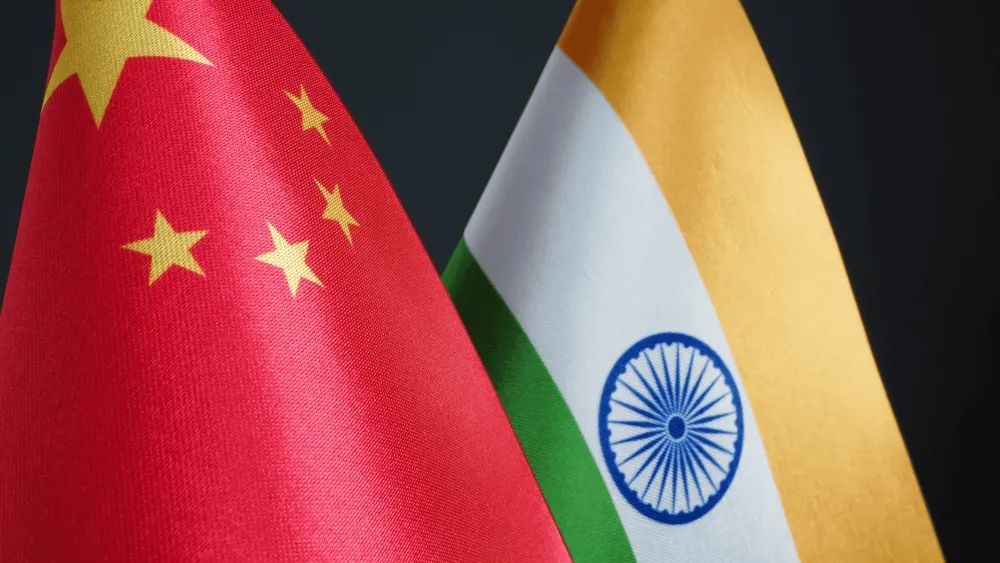
China has renamed 23 places in Arunachal Pradesh it does not control. Again.
On April 10, Beijing's Ministry of Civil Affairs published its sixth list of what it calls 'standardised' names for locations in a state it does not administer, does not police and does not govern. Each entry comes with a name in Chinese characters, Tibetan script and pinyin, with precise GPS coordinates. India's ministry of external affairs responded on April 12, calling it a 'mischievous attempt' to introduce 'fictitious names' and 'baseless narratives' that 'cannot alter the undeniable reality' on the ground. China, for its part, insists Arunachal Pradesh is Zangnan, or southern Tibet, and that the renaming falls within its sovereignty.
It is absurd. That is precisely why it works.
These names are not about geography. They are aimed at time. China is not trying to convince anyone that Arunachal Pradesh suddenly belongs to it because a civil affairs ministry published a document. It knows who governs there, who votes there, who builds roads and collects taxes. This is not an attempt to replace reality. It is an attempt to surround it.
The mechanism is slow and deliberate. Names become records. Records become maps. Maps become references. References become documents. Documents become positions. Over decades, what was once indisputable begins to acquire qualifiers. Not settled, but 'disputed'. Not administered, but 'claimed'. The language shifts first. The argument follows.
Since 2017, Beijing has published six such lists, covering six locations, then 15, then 11, then 30, then 27, now 23 more. The total now stands at 112 renamed locations. It does this without urgency and without spectacle. It does not need immediate control. It needs permanence of claim.
The timing is rarely accidental. The first list in 2017 came days after the Dalai Lama visited Tawang monastery, a visit Beijing had condemned. The 2024 batch arrived after Prime Minister Modi inaugurated the Sela Tunnel, the all-weather high-altitude link that improves troop access to Tawang. The sixth list arrives during a period of active diplomatic engagement between New Delhi and Beijing. That is not a coincidence. It is a signal. China has done this in other theatres too, renaming islands and reefs in the South China Sea to normalise claims it cannot enforce on the ground. The pattern is consistent.
Changing a map is the tribute vice pays to virtue. Beijing cannot alter the reality, so it works to alter the description of that reality instead.
India reacts episodically. A statement, a rejection, a dismissal, then silence until the next list appears. The assumption is that absurdity cancels itself out, that a claim so detached from reality cannot accumulate weight. That assumption is the vulnerability.
A claim dismissed once is an absurdity. A claim dismissed six times begins to sound like a position. A claim that enters international databases, academic papers and foreign maps — however inaccurately — becomes part of the conversation. And once something enters the conversation, it becomes negotiable.
There is a difference between a settled border and a debated one. The first is defended. The second is managed, qualified and eventually traded.
China is not playing for acceptance today. It is playing for argument tomorrow. The sixth list is not a provocation. It is an instalment.
India is right to call it fictitious. It would be wiser to understand what the fiction is for.
Find this piece interesting?
Dispatches by DiploPolis delivers sharp analysis and pointed commentary on power, politics, diplomacy, and world affairs — directly to your inbox.
No neutrality. No noise. Just argument.