Donald Trump called Spain 'terrible'. He threatened to cut off all trade. He told the world the United States could 'just fly in and use it; nobody is going to tell us not to use it'. Spain's answer came the same week. No bases. No airspace. No exceptions. Washington was forced to relocate 15 aircraft, including critical Boeing KC-135 refuelling tankers, from the Rota and Morón military bases in southern Spain. These installations have served as key American logistical hubs for operations across Europe, Africa and the Middle East for decades. By denying access, Madrid did more than make a political statement; it severed the primary logistical artery for the US-Israel war on Iran.
The practical cost to Spain was real. The political cost was higher. Secretary of State Marco Rubio warned that NATO arrangements would have to be 're-examined' if allies denied basing rights while expecting American defence guarantees. The ultimatum from Washington was unambiguous: comply or lose your shield. Spanish Prime Minister Pedro Sánchez did not comply. 'We are not going to be complicit in something that is bad for the world and is also contrary to our values and interests; just out of fear of reprisals from someone'. This was not a diplomatic negotiation; it was a rejection of the transactional logic.
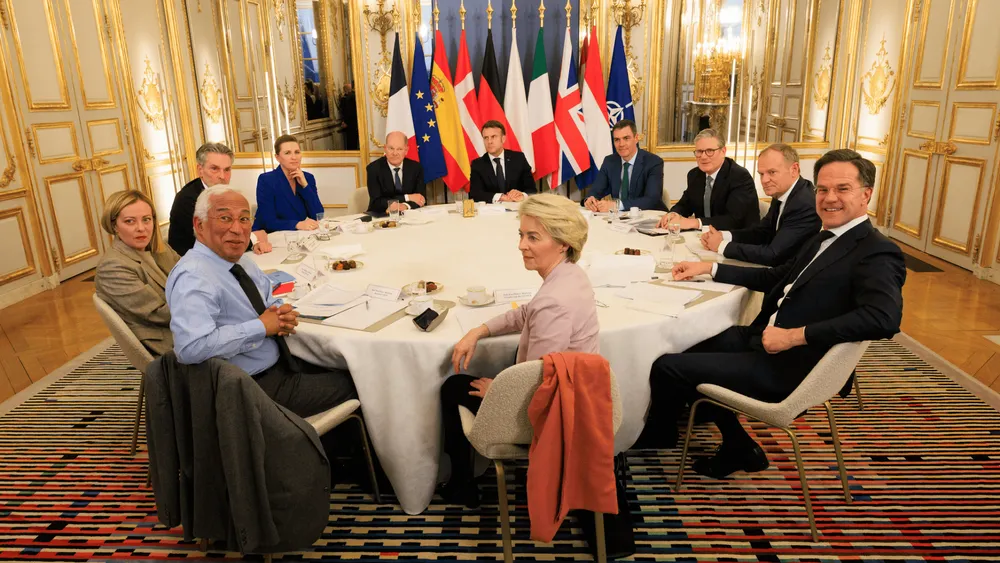
Europe says it opposes this war. It does not. Europe opposes Iran's response to this war. That distinction was visible from the earliest days of the conflict. Governments across the continent rushed to condemn Iranian retaliation with urgency, precision and unified language. On the American and Israeli strikes that triggered it, those same governments went quiet, or hedged, or found reasons to wait. They had concerns. They lacked positions. Under pressure, some are finally moving. Italy denied US aircraft access to its base in Sicily, a decision made while Italy's own Defence Minister was being evacuated from Dubai as the war began. France restricted overflight rights for aircraft carrying military supplies to Israel, then quietly allowed American refuelling tankers displaced from Spain to operate from French territory.
This is not opposition; it is managed discomfort. Spain did not need to recalibrate, because it never moved. Pedro Sánchez had already suspended arms sales to Israel over Gaza, one of the first European leaders to do so. He had already called the war on Iran illegal before the first week was out. This is not a government that discovered its conscience under pressure. Spain's refusal of the bases was stated on the first day of the conflict and has not shifted since. When Washington turned up the pressure with trade threats, NATO warnings and public contempt, Spain said nothing it had not already said. Even after Donald Trump took to Truth Social to label allies as 'COWARDS' for their refusal to assist in the regional firestorm, Madrid’s position remained firm. Defence Minister Margarita Robles was direct: the war is 'profoundly illegal and profoundly unjust', and that position was 'made perfectly clear to the US armed forces from the beginning'.
Consistency is what makes Spain the exception. It is not about ideology or rhetoric. Every European government carries the same constraints Spain does; they have bases to protect, alliances to preserve and economies too large to risk casually. Spain carries all of it and still held its position. The difference is that it chose to treat international law as a principle rather than a convenience, something you uphold when it costs you, not just when it does not. Every other European government is now searching for a position it can defend to its citizens, its allies and to history. Spain already has one. It had one before the war started. In a continent where strategic autonomy has been debated for years as an aspiration, Spain enacted it quietly, at cost and without waiting for the rest of Europe to catch up. That is what sovereignty looks like when it means something.