On March 4, 2026, Brian McGinnis walked into a Senate Armed Services Subcommittee hearing in full Marine Corps uniform and did something that would be unthinkable in most democracies. He stood up and shouted at the people running the war.
"America does not want to send its sons and daughters to war for Israel." Capitol Police moved immediately to restrain and remove him from the room as he refused to stop speaking. Senator Tim Sheehy of Montana, a Republican and former Navy SEAL, left his seat to help the police drag McGinnis out. As they pulled him through the doorway his arm caught in the frame. There was an audible snap as McGinnis broke his bone in the hallway of the United States Capitol.
McGinnis is 44 years old. Having served in Iraq in 2003 he now works as a firefighter in Raleigh and his wife is Palestinian. He is running for Senate in North Carolina on the Green Party ticket. He is now charged with three counts of assaulting a police officer and three counts of resisting arrest. A GoFundMe started for him raised nearly $45,000 in days.
This is a violent image. It is also an image of profound hope.
Consider what happened in that hallway. A citizen - a veteran, a firefighter, a man who wore the uniform of the country whose policy he was opposing - walked into the room where the readiness of the US military was being reviewed and confronted it directly. He was removed by force. He was injured. He was charged. And then tens of thousands of Americans sent him money within 48 hours.
Find this piece interesting?
Dispatches by DiploPolis delivers sharp analysis and pointed commentary on power, politics, diplomacy, and world affairs — directly to your inbox.
No neutrality. No noise. Just argument.
This is what real opposition to Washington’s foreign policy looks like. Not a diplomatic note. Not a statement from a rival capital. An ordinary man in a hallway, screaming until his arm breaks.
The United States goes to war often. But it also argues over those wars with a ferocity that few other powers can survive.
Vietnam did not end because of a single battlefield defeat. It collapsed because the American public withdrew its consent. Iraq proceeded despite millions in the streets, but those streets created the political cost that eventually forced a withdrawal.
The pattern is consistent. American power is durable. American patience is not. And American domestic politics — messy, furious, ungovernable — is the most reliable check on American foreign policy that exists.
Now consider the contrast. In India, dissent during war does not survive long enough to be debated. It is branded anti-national. As space for dissent closes, criticism becomes sedition and debate becomes betrayal. The rally of national sentiment is total and instant. A Brian McGinnis equivalent in an Indian parliamentary hearing is unimaginable. The system does not just silence dissent. It ensures most never attempt it.
In the United States, that same space does not close. It gets louder. The spectacle of a veteran being dragged from a Senate hearing by his own government's police, is not a sign of institutional failure. It is evidence of a system mature enough to allow the confrontation to exist. Dissent during wartime is treated not as betrayal but as participation. Noisy, inconvenient, sometimes violent participation. But participation nonetheless.
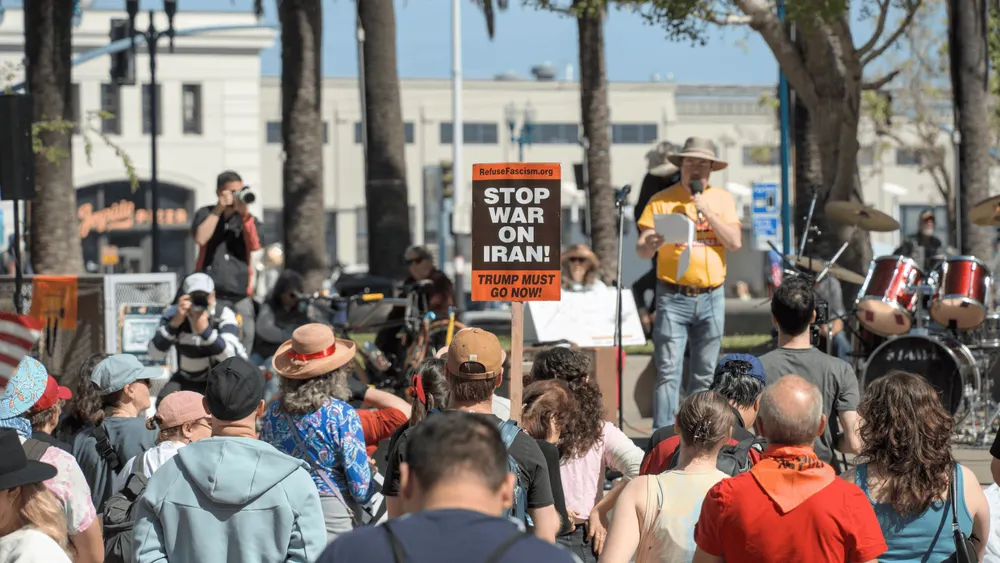
The real pressure on Washington never comes from the outside. Not from the UN General Assembly. Not from rival capitals. Not from the statements of governments that lack the standing to lecture. It comes from within. From the veteran in the hallway and the student on the lawn, the official who decides their conscience is worth more or the one who chose prison over silence.
Messy. Inconsistent. Frequently ignored. But it ensures that American power is never fully insulated from the people it claims to represent.
The loudest challenge to American foreign policy is American. In most of the world, that would be called a luxury. In the United States, it is called Tuesday.