
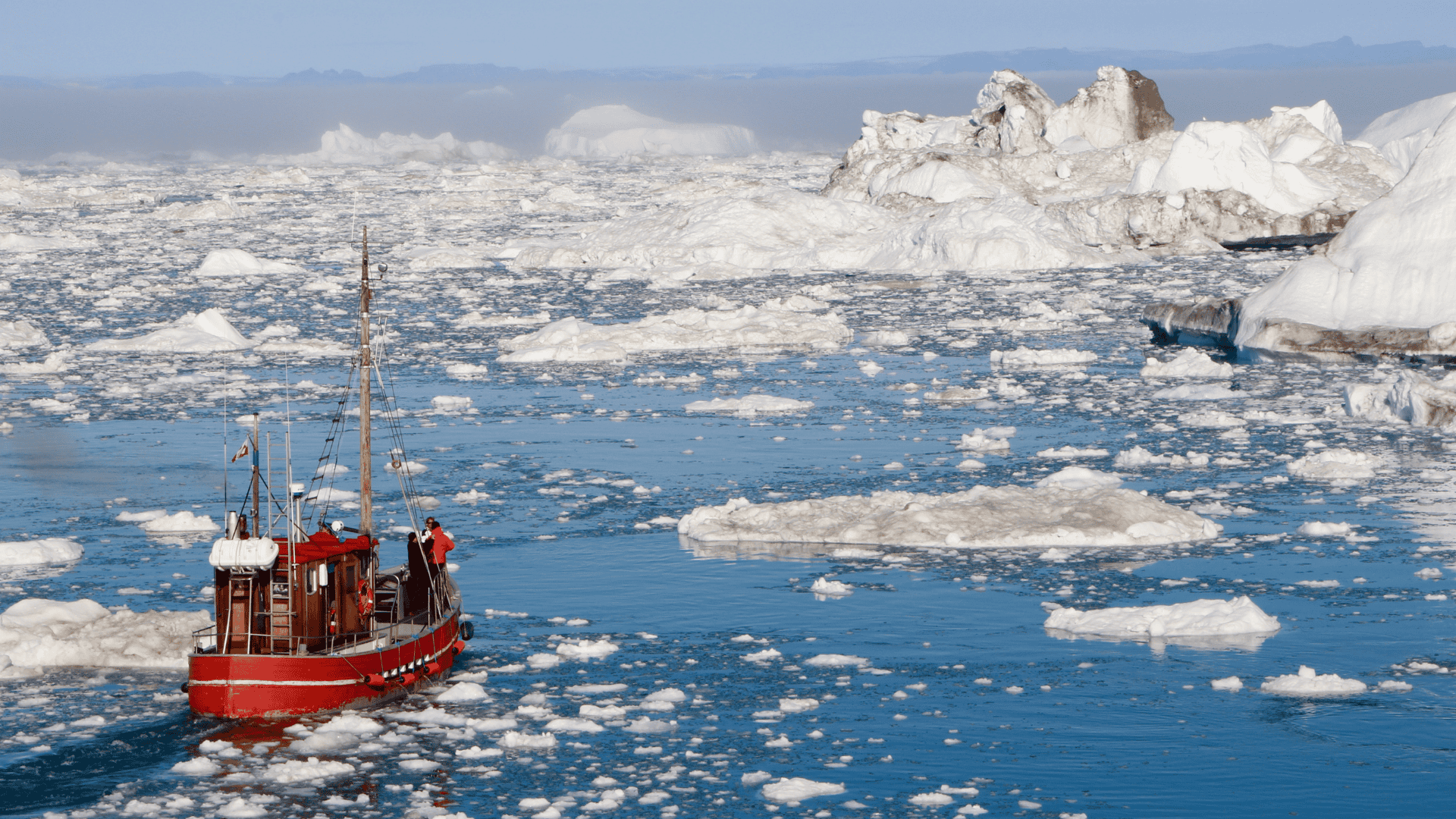
When Russia planted a titanium flag on the Arctic Ocean floor beneath the North Pole in 2007, the symbolic gesture sent shockwaves through global capitals. The expedition, led by explorer Artur Chilingarov, wasn’t merely scientific theater—it was a calculated assertion of sovereignty over potentially vast underwater resources as melting ice opened new frontiers for competition. “The Arctic is Russian,” Chilingarov declared, crystallizing what security analysts now recognize as the defining geopolitical contest of the climate change era.
The world’s polar regions are experiencing the most rapid environmental transformation in human history. Arctic temperatures are rising twice as fast as the global average, while Antarctic ice sheets show accelerating melt rates that threaten global sea levels. These changes aren’t just environmental phenomena—they’re reshaping the strategic landscape by opening new territories for resource extraction, creating navigable sea routes, and altering territorial claims that have remained frozen for decades.
The polar regions represent the ultimate intersection of climate change and geopolitics. Melting ice reveals hydrocarbon reserves estimated at 30% of global natural gas and 13% of oil resources in the Arctic alone. New shipping routes through previously impassable waters could reduce Asia-Europe transit times by 40%. Military strategists view polar regions as the next frontier for great power competition, with nuclear submarines already patrolling beneath Arctic ice and nations scrambling to establish territorial claims before international law solidifies around new realities.
Understanding polar geopolitics has become essential for grasping 21st-century international relations. The Arctic Council, once a sleepy forum for environmental cooperation, now hosts heated debates over resource rights and military activities. The Antarctic Treaty System faces unprecedented pressures as climate change accelerates and resource scarcity intensifies. From Washington to Beijing, polar strategies are becoming central components of national security planning and economic competitiveness.
Historical Context: From Exploration to Strategic Competition
The polar regions have long captured human imagination, but their geopolitical significance remained limited by technological constraints and extreme environments. Early exploration focused on geographical discovery and scientific understanding rather than resource extraction or territorial control. The heroic age of Antarctic exploration, epitomized by expeditions from Scott, Shackleton, and Amundsen, established national prestige claims but limited practical sovereignty.
The Cold War transformed polar regions into strategic frontiers. The Arctic’s geographic position made it crucial for intercontinental ballistic missile trajectories and early warning systems. The United States and Soviet Union established extensive military infrastructure across Arctic territories, from radar stations in Greenland to nuclear submarine bases in the Kola Peninsula. Antarctic militarization was prevented by the 1959 Antarctic Treaty, which suspended territorial claims and banned military activities while promoting scientific cooperation.
Climate change has fundamentally altered polar geopolitics by making previously theoretical resources practically accessible. Arctic sea ice extent has declined by approximately 13% per decade since satellite measurements began in 1979. Antarctic ice sheet dynamics show accelerating mass loss, with implications for both sea level rise and resource accessibility. These environmental changes transform abstract territorial claims into concrete economic and strategic opportunities.
The 2007 Russian flag-planting expedition exemplified this transformation. While dismissed by some as political theater, the mission represented sophisticated geological surveying aimed at supporting continental shelf extension claims under the UN Convention on the Law of the Sea (UNCLOS). Russia’s submission claimed an additional 1.2 million square kilometers of Arctic Ocean floor, potentially containing vast hydrocarbon reserves.
Contemporary polar competition differs from historical patterns in its multilateral complexity and resource-driven motivations. Cold War Arctic competition was essentially bilateral between superpowers focused on military positioning. Today’s polar geopolitics involves multiple state and non-state actors pursuing economic opportunities, environmental protection, indigenous rights, and strategic advantages simultaneously.
The Arctic: Melting Ice, Rising Stakes
Arctic geopolitics centers on the region’s transformation from frozen wasteland to accessible frontier. The Arctic contains an estimated 90 billion barrels of oil and 1,670 trillion cubic feet of natural gas, mostly offshore in areas becoming accessible as sea ice retreats. Beyond hydrocarbons, the region holds significant mineral deposits including rare earth elements essential for renewable energy technologies.
The Arctic Council, established in 1996, includes eight Arctic states: Canada, Denmark, Finland, Iceland, Norway, Russia, Sweden, and the United States. Indigenous peoples’ organizations hold permanent observer status, reflecting recognition of traditional territorial rights. However, climate change has strained the Council’s consensus-based approach as economic interests increasingly conflict with environmental protection and indigenous concerns.
Russia dominates Arctic geography and resources, controlling approximately 53% of Arctic Ocean coastline and 60% of Arctic land territory. Moscow’s Arctic strategy emphasizes resource development, Northern Sea Route commercialization, and military capability development. Russian investments in Arctic infrastructure exceed $300 billion since 2010, including new ports, airfields, and icebreaker fleets. The Northern Fleet’s elevation to strategic military district status in 2014 underscored the region’s military importance.
The United States approaches Arctic competition from a position of relative disadvantage despite Alaska’s strategic location. American icebreaker capabilities lag significantly behind Russian fleets, limiting year-round presence and search-and-rescue capabilities. The Trump administration’s 2019 decision to establish U.S. Space Command’s first Arctic strategy and the Biden administration’s updated Arctic strategy emphasize competition with Russia and China while addressing climate change impacts.
China’s Arctic engagement represents the most significant non-Arctic state involvement in polar affairs. Beijing’s 2018 Arctic Policy designated China a “near-Arctic state” despite being located 1,500 kilometers from Arctic territories. Chinese investments in Greenlandic mining projects, Icelandic infrastructure, and Russian energy developments reflect systematic efforts to gain Arctic access and influence. The Polar Silk Road initiative explicitly connects Belt and Road infrastructure development to Arctic opportunities.
Canada and Nordic countries face complex balancing acts between sovereignty assertion and international cooperation. Canada’s Northwest Passage sovereignty claims conflict with international straits navigation rights, creating tensions with allies including the United States. Denmark’s Kingdom includes Greenland and the Faroe Islands, providing significant Arctic territory and potential resource wealth that could transform Danish geopolitical weight.
Norway exemplifies successful Arctic resource development through its sovereign wealth fund, built on North Sea oil revenues and extended to Arctic territories. Norwegian experience in Arctic petroleum extraction, environmental protection, and indigenous relations provides models for sustainable resource development that other Arctic states study closely.
Antarctic Ambitions: The Frozen Continent’s Growing Appeal
Antarctic geopolitics operates under different legal frameworks but faces similar pressures from climate change and resource competition. The Antarctic Treaty System, comprising the 1959 Antarctic Treaty and subsequent agreements, established Antarctica as a scientific preserve and banned military activities while suspending territorial claims. However, this framework faces growing strains as climate change reveals resources and territorial claims become more economically significant.
Seven countries maintain territorial claims in Antarctica: Argentina, Australia, Chile, France, New Zealand, Norway, and the United Kingdom. Some claims overlap, creating potential conflict zones, while the United States and Russia reserve rights to make claims while not recognizing existing ones. The treaty’s prohibition on new claims doesn’t prevent countries from strengthening their positions for potential future negotiations.
Climate change accelerates Antarctic ice loss while revealing mineral resources and biological assets. The continent contains significant coal, iron ore, and precious metal deposits, though extraction remains technically challenging and legally prohibited. Marine living resources, including krill and fish stocks, become more accessible as ice retreats, creating new fisheries management challenges.
Scientific research provides the primary legal mechanism for maintaining Antarctic presence and influence. Research station locations often correspond to territorial claim areas, reflecting strategic considerations alongside scientific objectives. China has rapidly expanded Antarctic research capabilities, establishing five permanent stations and conducting extensive geological surveys that some analysts view as resource assessment activities.
The Antarctic Treaty’s renewal mechanisms create potential pressure points. While the treaty lacks expiration dates, the Protocol on Environmental Protection includes provisions for modification after 2048. This timeline creates incentives for position-strengthening activities as countries prepare for potential renegotiation opportunities.
Commercial interests focus increasingly on Antarctic tourism and bioprospecting. Tourism to Antarctica has grown from fewer than 10,000 annual visitors in 1990 to over 70,000 pre-COVID, creating environmental pressures and governance challenges. Bioprospecting for pharmaceutical compounds and industrial enzymes adapted to extreme environments represents another emerging economic interest.
Resource Competition and Strategic Calculations
Polar resource competition encompasses traditional extractive industries alongside emerging strategic materials essential for renewable energy transitions. Arctic hydrocarbon resources become increasingly valuable as conventional reserves decline and energy security concerns intensify following the Ukraine war. Simultaneously, polar regions contain mineral deposits including rare earth elements, lithium, and cobalt crucial for battery technologies and renewable energy infrastructure.
The Northern Sea Route exemplifies how climate change creates new strategic opportunities. This shipping lane along Russia’s Arctic coast could reduce Asia-Europe transit times from 34 days via the Suez Canal to 20 days, representing significant cost savings and supply chain advantages. However, the route remains challenging due to ice conditions, limited infrastructure, and political risks associated with Russian territorial control.
China views Arctic shipping routes as alternatives to current chokepoints including the Strait of Malacca and Suez Canal, which could be closed during conflicts or disrupted by adversaries. Chinese shipping companies have conducted trial voyages through Arctic routes while Beijing invests in port infrastructure and navigation technologies. The Polar Silk Road concept explicitly connects Arctic shipping to broader Belt and Road Initiative objectives.
Resource development faces significant environmental and technical challenges that complicate economic calculations. Arctic offshore drilling requires specialized technologies and environmental protections that increase costs significantly above conventional petroleum extraction. Extreme weather conditions, limited infrastructure, and environmental regulations create additional operational challenges.
Indigenous communities play crucial roles in polar resource development through treaty rights and traditional territorial claims. Inuit communities across Arctic territories maintain traditional hunting and fishing rights that can limit or condition resource extraction activities. Indigenous organizations increasingly engage in international forums, providing perspectives that challenge purely state-centric approaches to polar governance.
Climate change creates temporal urgencies around resource claims and development opportunities. Ice-free periods in Arctic waters remain limited, creating seasonal windows for exploration and extraction activities. Antarctic ice loss could accelerate suddenly if tipping points are reached, potentially altering resource accessibility and territorial boundaries more rapidly than current projections suggest.
Military and Security Dimensions
Polar regions have become increasingly militarized as climate change opens new strategic frontiers and resource competition intensifies. Arctic military activities have expanded significantly since 2014, driven by deteriorating Russia-West relations and great power competition dynamics.
Russia leads Arctic militarization through comprehensive infrastructure development and force modernization. Moscow has reopened Soviet-era bases, established new facilities, and deployed advanced military systems including S-400 air defense missiles and nuclear-capable Kinzhal hypersonic missiles to Arctic territories. Russian military exercises in Arctic conditions have increased in frequency and scale, demonstrating capabilities for sustained operations in extreme environments.
The United States has struggled to match Russian Arctic military capabilities despite strategic recognition of the region’s importance. American military infrastructure in Alaska provides some capabilities, but icebreaker shortfalls limit sustained presence and operations. The establishment of Arctic commands and updated strategies reflect growing attention, but capability development lags behind strategic ambitions.
NATO allies have enhanced Arctic cooperation through exercises and infrastructure development. Norway’s High North strategy emphasizes alliance cooperation and presence activities. Canada has committed to new Arctic patrol vessels and surveillance capabilities. However, alliance cohesion faces challenges from Turkey’s blocking of Finnish and Swedish NATO membership, which affects Arctic security cooperation.
China’s growing Arctic presence creates new strategic challenges for established Arctic powers. While Chinese activities remain primarily economic and scientific, Beijing’s military modernization and expanding global presence raise questions about future Arctic military intentions. Chinese research activities and infrastructure investments could provide foundations for future military presence if political circumstances change.
Nuclear weapons add particular complexity to Arctic security dynamics. The region contains significant nuclear infrastructure including missile silos, submarine bases, and early warning systems. Nuclear-powered icebreakers and submarines operate routinely in Arctic waters. Any military conflict involving nuclear powers in Arctic territories could escalate rapidly to strategic levels.
Cybersecurity and space-based assets become increasingly important for Arctic operations. GPS and communications satellites enable navigation and coordination in extreme environments where traditional systems fail. Cyber attacks on Arctic infrastructure could disrupt energy production, shipping, and military operations across vast territories with limited redundancy.
The Svalbard Archipelago – Microcosm of Arctic Competition
The Svalbard archipelago illustrates Arctic geopolitical complexities through its unique legal status and strategic location. The 1920 Svalbard Treaty grants Norway sovereignty while providing other signatory countries equal rights to commercial activities and prohibiting military installations. This arrangement creates ongoing tensions as strategic interests evolve.
Russia maintains significant presence on Svalbard through mining operations in Barentsburg and research activities. Russian activities serve economic purposes while maintaining political influence in a strategically located Arctic territory. Moscow has challenged Norwegian interpretations of treaty provisions, particularly regarding environmental regulations and maritime zones around the archipelago.
China has expanded Svalbard engagement through research station establishment and tourism development. Chinese scientific activities on Svalbard provide Arctic research capabilities and demonstrate growing polar interests. While currently within treaty provisions, Chinese presence represents emerging great power competition in Arctic territories traditionally dominated by regional states.
Norway faces delicate balancing requirements between treaty obligations and sovereignty assertion. Oslo must provide equal treatment to foreign activities while maintaining effective administration and environmental protection. Climate change intensifies these challenges as ice retreat makes previously inaccessible areas available for competing uses.
The Svalbard Global Seed Vault, established in 2008 as a agricultural biodiversity protection facility, has become symbolically significant for global food security discussions. The facility’s location on Svalbard reflects the archipelago’s neutral status while demonstrating international cooperation possibilities in Arctic territories.
Recent tensions include disputes over research activities, environmental regulations, and maritime boundaries. Russia has challenged Norwegian fishing regulations in waters around Svalbard, claiming treaty rights extend to maritime zones. These disputes illustrate how climate change and resource competition create new interpretation challenges for historical agreements.
Greenland’s Strategic Transformation
Greenland exemplifies how climate change transforms peripheral territories into strategic assets. The world’s largest island, with only 56,000 inhabitants, suddenly finds itself at the center of great power competition due to its strategic location, mineral resources, and melting ice sheet.
Denmark’s relationship with Greenland provides the constitutional framework for international engagement. Greenland achieved home rule in 1979 and expanded self-government in 2009, gaining control over natural resources while remaining within the Danish Kingdom. This arrangement allows Greenlandic authorities significant autonomy in economic development while Denmark retains foreign policy control.
The United States maintains strategic interests in Greenland through the Thule Air Base, established during World War II and maintained through Cold War and contemporary operations. The base provides early warning capabilities and supports space surveillance activities. In 2019, President Trump’s reported interest in purchasing Greenland reflected recognition of the island’s strategic value, though the proposal was dismissed by Danish and Greenlandic authorities.
China has pursued economic engagement with Greenland through mining investments and infrastructure development proposals. Chinese companies have acquired stakes in Greenlandic mining projects while Beijing offered to finance airport construction projects. These activities raised security concerns in Washington and Copenhagen about Chinese strategic presence in Arctic territories.
Climate change accelerates Greenland’s economic potential while creating environmental challenges. Ice sheet melting reveals mineral deposits including rare earth elements, uranium, and precious metals. However, traditional livelihoods including fishing and hunting face disruption from environmental changes. Rising sea levels globally result partly from Greenlandic ice loss, creating international implications for domestic policy decisions.
Greenlandic independence discussions reflect both opportunities and challenges created by climate change and resource development. Independence would provide full control over natural resources and foreign relations while requiring assumption of Danish subsidies and security responsibilities. The feasibility depends partly on resource development success and international recognition.
The Greenlandic case illustrates broader themes in polar geopolitics: how climate change transforms peripheral territories into strategic assets, how small populations gain leverage through resource control, and how great power competition affects sovereignty arrangements and development opportunities.
Environmental Governance and International Law
Polar environmental governance faces unprecedented challenges as climate change accelerates ecosystem disruption while opening new territories for human activities. Existing international frameworks, designed for stable environmental conditions, struggle to adapt to rapid ecological transformation and intensifying competition.
The Arctic Council has evolved from environmental cooperation forum toward quasi-security institution as climate change creates new strategic challenges. The Council’s Arctic Marine Protection Area network attempts to balance conservation with resource development, but consensus requirements limit effectiveness when economic interests conflict. Recent suspension of cooperation with Russia following the Ukraine invasion demonstrates how geopolitical tensions can undermine environmental governance.
Antarctic Treaty System governance faces pressures from climate change impacts and resource competition. The Committee for Environmental Protection struggles with tourism impacts, research station expansion, and bioprospecting activities that blur lines between scientific research and commercial exploitation. The system’s consensus requirements create deadlock potential as economic interests intensify.
Marine protected areas represent one governance response to increased polar activities. The Ross Sea Marine Protected Area, established in 2016 after lengthy negotiations, protects Antarctic marine ecosystems while allowing limited research and fishing activities. Similar proposals for Arctic marine protection face greater challenges due to overlapping national jurisdictions and competing economic interests.
Climate change complicates territorial boundaries and resource jurisdictions as ice retreat reveals new territories and alters coastlines. Arctic maritime boundaries remain disputed in several areas, while Antarctic ice sheet collapse could fundamentally alter territorial geography. International law provides limited guidance for managing territorial changes caused by climate change.
Indigenous rights frameworks increasingly influence polar governance through international law and domestic constitutional arrangements. The UN Declaration on the Rights of Indigenous Peoples provides frameworks for traditional territory protection and resource benefit-sharing. Arctic indigenous organizations have gained influence in international forums while Antarctic governance lacks comparable indigenous participation.
Implications for Global Climate Security
Polar geopolitics and global climate security are inextricably linked through feedback loops that connect regional competition to planetary environmental stability. The Arctic contains massive carbon stores in permafrost and methane hydrates that could be released through warming and industrial activities. Antarctic ice sheet dynamics affect global sea levels and climate patterns with implications for international security and migration.
Arctic resource extraction accelerates climate change while being enabled by it, creating positive feedback loops that could produce irreversible environmental changes. Increased shipping through Arctic routes reduces global transit emissions while potentially increasing regional environmental impacts. These trade-offs complicate policy responses and international cooperation.
Geoengineering proposals increasingly target polar regions for climate intervention activities. Arctic ice preservation through marine cloud brightening or surface albedo modification could slow warming while affecting weather patterns globally. Solar radiation management deployment in polar regions could provide climate benefits while creating new forms of environmental governance challenges.
International climate cooperation faces challenges from intensifying polar competition. Countries may prioritize short-term resource access over long-term climate stability if economic benefits appear immediate while climate costs remain future and uncertain. Success in polar environmental protection requires aligning economic incentives with climate objectives.
Military activities in polar regions contribute to climate change through emissions while being necessitated partly by climate change impacts. Arctic military infrastructure requires enormous energy inputs for heating and transportation in extreme environments. Balancing security requirements with climate objectives represents a fundamental policy challenge for polar states.
Climate refugee scenarios could involve entire populations from small island states and low-lying areas, creating unprecedented challenges for international refugee law and polar territorial administration. If significant populations require relocation due to sea level rise, polar regions might provide destination territories, fundamentally altering demographic and political dynamics.
Future Scenarios and Strategic Implications
Multiple scenarios are possible for polar geopolitics depending on climate change rates, technological developments, and international cooperation levels. Understanding these scenarios is crucial for long-term strategic planning and policy development.
Accelerated warming scenarios could open polar regions rapidly while creating environmental disruptions that limit economic activities. Faster ice loss might reveal resources while making extraction more difficult due to unstable conditions and extreme weather. International cooperation could strengthen if climate impacts create shared threats requiring collective responses.
Technological breakthroughs in renewable energy could reduce demand for polar hydrocarbon resources while increasing demand for mineral resources required for clean energy infrastructure. Advanced extraction technologies might make previously uneconomical deposits viable. Autonomous systems could reduce human risks in polar operations while increasing activity levels.
Geopolitical scenarios range from cooperative resource management to territorial conflicts and military confrontation. Successful diplomacy could create frameworks for shared resource development and environmental protection. Alternatively, territorial disputes could escalate to conflicts that disrupt global commerce and environmental cooperation.
Economic scenarios depend on commodity prices, technological costs, and regulatory frameworks. High energy prices make Arctic resources more attractive despite extraction challenges. Environmental regulations could limit activities while carbon pricing affects project economics. Indigenous benefit-sharing requirements influence development feasibility.
Legal framework evolution could strengthen or weaken current governance systems. UNCLOS modifications might address climate change impacts on territorial boundaries. New treaties could emerge for polar resource management or environmental protection. Alternatively, existing frameworks might collapse under pressure from competing interests and rapid environmental change.
The polar regions have become the ultimate testing ground for humanity’s ability to manage planetary change while pursuing national interests. The stakes extend far beyond regional territories to encompass global climate stability, resource security, and international cooperation. How countries navigate polar competition will significantly influence whether the 21st century features cooperative responses to shared challenges or conflictual competition that accelerates environmental and security crises.
The new great game in polar regions differs fundamentally from historical precedents in its planetary implications and technological possibilities. Success requires unprecedented cooperation between traditional rivals while managing legitimate security interests and economic opportunities. The alternative—unconstrained competition in Earth’s most fragile environments—risks outcomes that no single country can control and all must live with. The ice is melting, the stakes are rising, and the world is watching to see whether polar geopolitics produces cooperation or conflict in humanity’s hour of environmental trial.