

In an era of rapid geopolitical shifts—from the Russia-Ukraine conflict to U.S.-China strategic competition, from climate diplomacy to cyber warfare—understanding the foundational principles of international relations has never been more critical. While headlines change daily, the underlying dynamics of power, security, and statecraft remain remarkably consistent with patterns established decades or even centuries ago.
For diplomats, policy analysts, students, and anyone seeking to comprehend our complex world, certain books have stood the test of time as essential guides to international affairs. These works don’t just offer historical perspective; they provide analytical frameworks that remain startlingly relevant to today’s challenges.
Why These Classics Matter in Today’s World
Before diving into social media analysis of the latest crisis, seasoned diplomats and strategists often return to foundational texts. Henry Kissinger’s insights on balance-of-power diplomacy inform current approaches to managing great power competition. Kenneth Waltz’s structural realism helps explain why rising powers like China inevitably challenge established orders. Thomas Schelling’s game theory remains central to nuclear deterrence strategy amid renewed concerns about atomic weapons.
These books offer something Twitter threads and policy briefs cannot: depth, nuance, and time-tested analytical frameworks that transcend momentary crises.
Foundational Theory: Understanding Power and Anarchy
1. “The Twenty Years’ Crisis, 1919–1939” by E.H. Carr (1939)
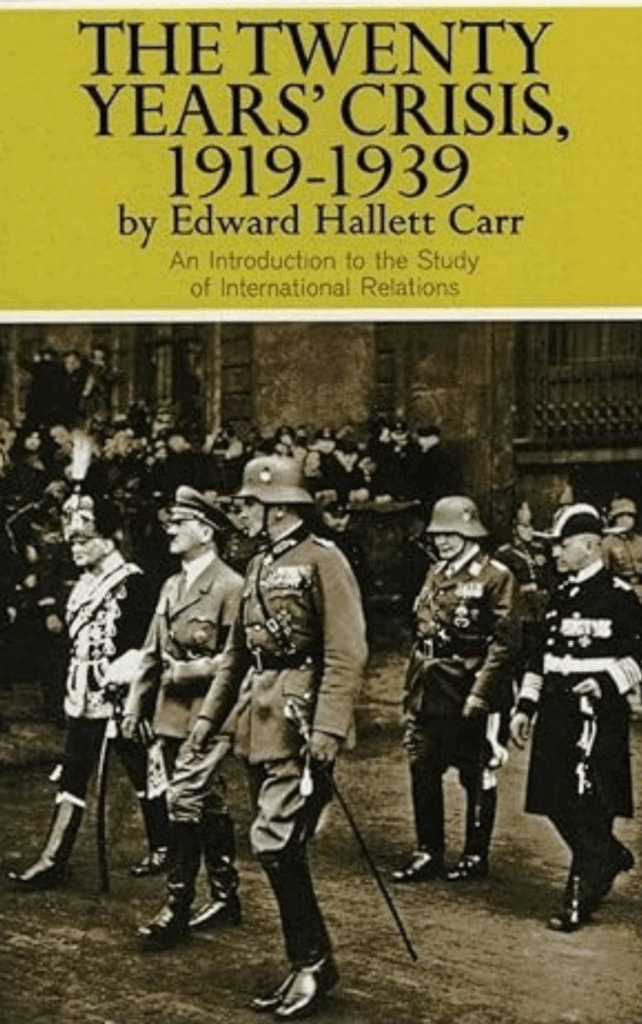
First published in September 1939, making its debut on the eve of the Second World War, this seminal work of international relations, “The Twenty Years’ Crisis, 1919–1939: An Introduction to the Study of International Relations,” was written by British historian and diplomat Edward Hallett Carr.
The book offers a critical examination of the idealist approach to international affairs that prevailed after the First World War, was released just as the period it analyzed was culminating in another global conflict. Its publication in September 1939 coincided with the invasion of Poland by Germany, a pivotal event that marked the beginning of the war.
As Europe stumbled towards the second World War, Carr’s critique of liberal idealism remains devastatingly relevant. His argument that international politics cannot be separated from power considerations directly applies to contemporary debates about humanitarian intervention and the limits of international law. Carr’s background as both a diplomat and historian provides unique insight into the gap between idealistic aspirations and harsh realities.
Today’s Application: Essential for understanding why international institutions often fail during crises, from Syria to Myanmar.
2. “Politics Among Nations” by Hans Morgenthau (1948)
Morgenthau’s six principles of political realism established the foundation for modern IR theory when it was first published in 1948. His emphasis on national interest defined in terms of power helps explain everything from America’s pivot to Asia to Russia’s actions in its perceived sphere of influence. As a German refugee who fled Nazi persecution, Morgenthau understood firsthand how power politics could override moral considerations.
This influential book, “Politics Among Nations“ by Hans Morgenthau which became a cornerstone of the realist school of thought in international relations, was written in the immediate aftermath of World War II. It presented a new framework for understanding global politics, emphasizing the pursuit of power as a primary driver of state behavior. “Politics Among Nations” quickly became a standard textbook in universities across the United States and beyond, shaping the study of international relations for generations of students and scholars.
Today’s Application: Provides framework for analyzing why moral arguments alone rarely change state behavior in international conflicts.
3. “Man, the State, and War” by Kenneth Waltz (1959)
Waltz’s three “images” of analysis—individual leaders, domestic politics, and international anarchy—remain the standard framework for understanding conflict causation. This seminal work first published in 1959 introduced the influential concept of the “three images” to explain the causes of war. In “Man, the State, and War” by Kenneth Waltz provides a framework to analyze the causes of war at three distinct levels:
First Image: Man. This level attributes the causes of war to the nature of individuals. It examines aspects of human behavior, psychology, and inherent characteristics as the root of conflict.
Second Image: the State. This perspective focuses on the internal characteristics of states. It argues that wars are caused by the domestic makeup of nations, such as their political systems, economic structures, and ideologies.
Third Image: the State System. This level posits that the primary cause of war is the anarchic nature of the international system itself. In the absence of a central authority to enforce rules, the competition for power and security among states inevitably leads to conflict.
Waltz’s “Man, the State, and War” is a foundational text in the field of international relations, particularly for the school of thought known as neorealism or structural realism, which emphasizes the importance of the third image in understanding global politics.
Today’s Application: Indispensable for distinguishing between personality-driven foreign policy and structural inevitabilities in great power competition. Whether analyzing Putin’s decision-making, China’s domestic pressures, or systemic competition in the Indo-Pacific, Waltz’s levels of analysis provide essential analytical clarity.
Geopolitical Strategy: Geography as Destiny
4. “The Influence of Sea Power Upon History (1660-1783)” by Alfred Thahan Mahan (1890)
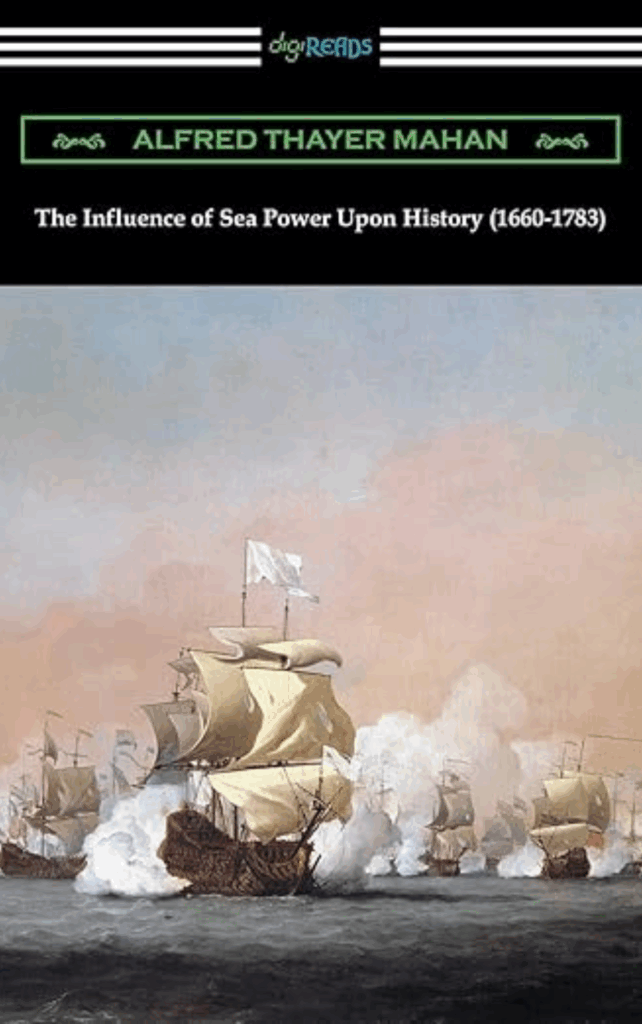
Alfred Thayer Mahan’s groundbreaking work of military strategy, “The Influence of Sea Power Upon History (1660-1783),” was first published in 1890. In this highly influential book, Mahan argued that naval supremacy was the single most critical factor determining the rise and fall of great powers. Drawing on his analysis of the maritime struggles between European nations from 1660 to 1783, he contended that control of the seas allowed a nation to protect its own trade while disrupting the commerce of its enemies, thereby securing economic prosperity and military advantage. The book served as a powerful call for the United States to build a modern, powerful navy to protect its commercial interests and project global influence, significantly shaping the views of policymakers like Theodore Roosevelt and contributing to the naval arms race that preceded World War I.
Today’s Application: Critical for understanding why China’s Belt and Road Initiative focuses heavily on ports and maritime infrastructure. Mahan’s emphasis on naval power and sea-lane control directly informs current tensions in the South China Sea and the strategic importance of the Strait of Hormuz. His work influenced leaders from Theodore Roosevelt to modern Chinese strategists planning their maritime expansion.
5. “The Geographical Pivot of History” by Halford Mackinder (1904)
“The Geographical Pivot of History“ was an article by the British geographer Halford Mackinder, first presented to the Royal Geographical Society in 1904.
This influential paper introduced Mackinder’s Heartland Theory, a foundational concept in the field of geopolitics. He argued that the world’s political destiny was determined by the control of a vast and resource-rich area in the center of Eurasia, which he termed the “Pivot Area” or “Heartland.” This region, roughly corresponding to modern-day Russia and Central Asia, was seen as a natural fortress, inaccessible to the dominant sea powers of the era, such as Great Britain. Mackinder believed that technological advancements like the railway were overcoming the Heartland’s historical isolation, enabling a continental power to consolidate its resources and challenge maritime dominance. His theory is famously encapsulated in the dictum he would later develop: “Who rules East Europe commands the Heartland; Who rules the Heartland commands the World-Island; Who rules the World-Island commands the World.” This perspective profoundly influenced strategic thinking for decades, shaping Western anxieties about German and later Soviet expansion during the World Wars and the Cold War.
Mackinder’s “Heartland Theory”—that control of Eastern Europe and Central Asia provides the key to world domination—explains persistent great power competition in these regions. From NATO expansion debates to competition over Central Asian energy resources, Mackinder’s geographic determinism remains influential.
Today’s Application: Essential reading for understanding why Ukraine and Central Asia remain flashpoints in U.S.-Russia competition.
6. “The Grand Chessboard” by Zbigniew Brzezinski (1997)
”The Grand Chessboard: American Primacy and Its Geostrategic Imperatives“ by Zbigniew Brzezinski was first published in 1997.
Written in the immediate post-Cold War era, this influential work of foreign policy analysis casts the Eurasian landmass as a giant chessboard upon which the struggle for global primacy is played. Brzezinski, who served as National Security Advisor to President Jimmy Carter, argues that the United States, as the world’s sole superpower, must actively manage the geopolitical dynamics of Eurasia to prevent the rise of a peer competitor that could challenge its global dominance. He posits that America’s primary interest is to ensure that no single power, or coalition of powers, gains control over this critical region, which contains the majority of the world’s population, resources, and economic activity. Brzezinski identifies key “geopolitical pivots”—states whose actions can significantly alter the strategic balance—and outlines a geostrategy for the U.S. to maintain its preeminent position by shaping alliances and preventing the consolidation of a rival Eurasian hegemon.
Former National Security Advisor Brzezinski’s analysis of American strategy in Eurasia reads like a blueprint for current U.S. foreign policy challenges. His warnings about preventing any single power from dominating Eurasia directly inform contemporary concerns about Chinese expansion and Russian revisionism.
Today’s Application: Provides strategic context for understanding American alliance systems in Europe and Asia.
Cold War Lessons: Strategy and Crisis Management
7. “The Strategy of Conflict” by Thomas Schelling (1960)
This landmark book is celebrated for applying the principles of game theory to the study of international relations and human conflict. Schelling’s revolutionary approach was to view conflict not simply as a zero-sum contest of brute force, but as a process of bargaining where opponents have a mixture of conflicting and common interests. He introduced and explored several influential concepts, including the idea of a focal point (or Schelling point), which explains how parties can coordinate their actions without direct communication by gravitating toward a solution that seems natural or obvious. Furthermore, he delved into the critical importance of making threats and promises credible, analyzing how a nation could strengthen its position by visibly limiting its own options or engaging in “brinkmanship.”
“The Strategy of Conflict” by Thomas Schelling offers insights into deterrence, credible commitments, and tacit communication profoundly shaped Cold War strategic thinking, particularly in the realm of nuclear policy, and it remains a foundational text in the fields of political science, economics, and conflict resolution.
Schelling’s insights on bargaining, deterrence, and “the threat that leaves something to chance” remain central to modern strategic thinking. His Nobel Prize-winning work on game theory applies directly to current nuclear tensions with North Korea, Iran’s nuclear program, and escalation management in Ukraine.
Today’s Application: Essential for understanding why nuclear powers engage in brinksmanship and how deterrence actually works in practice.
8. “Essence of Decision” by Graham Allison (1971)
First published in 1971, this seminal work on foreign policy analyses and decision-making fundamentally challenged the traditional view of governments as monolithic, rational actors. Using the 1962 Cuban Missile Crisis as a detailed case study, Allison introduces three distinct conceptual models in “Essence of Decision” to explain how nations make critical choices. He presents the conventional Rational Actor Model (Model I), where decisions are seen as calculated choices to maximize national interest, but argues for its insufficiency. He then offers two alternative lenses: the Organizational Process Model (Model II), which views decisions as the outputs of large bureaucracies following their pre-established routines and standard operating procedures, and the Governmental Politics Model (Model III), which understands decisions as the outcome of bargaining, negotiation, and compromise among various leaders and political players within the government. By demonstrating how each model provides different insights into the same historical event, Allison’s book revolutionized the field, compelling analysts to look inside the “black box” of the state to understand the complex bureaucratic and political dynamics that shape foreign policy.
Allison’s three models for analyzing the Cuban Missile Crisis—rational actor, organizational process, and governmental politics—revolutionized how scholars and practitioners understand foreign policy decision-making. His frameworks apply to any major international crisis, from COVID-19 responses to climate negotiations.
Today’s Application: Provides tools for analyzing why states often make seemingly irrational decisions during crises.
International Political Economy: Beyond Pure Power Politics
9. “The Theory of International Politics” by Kenneth Waltz (1979)
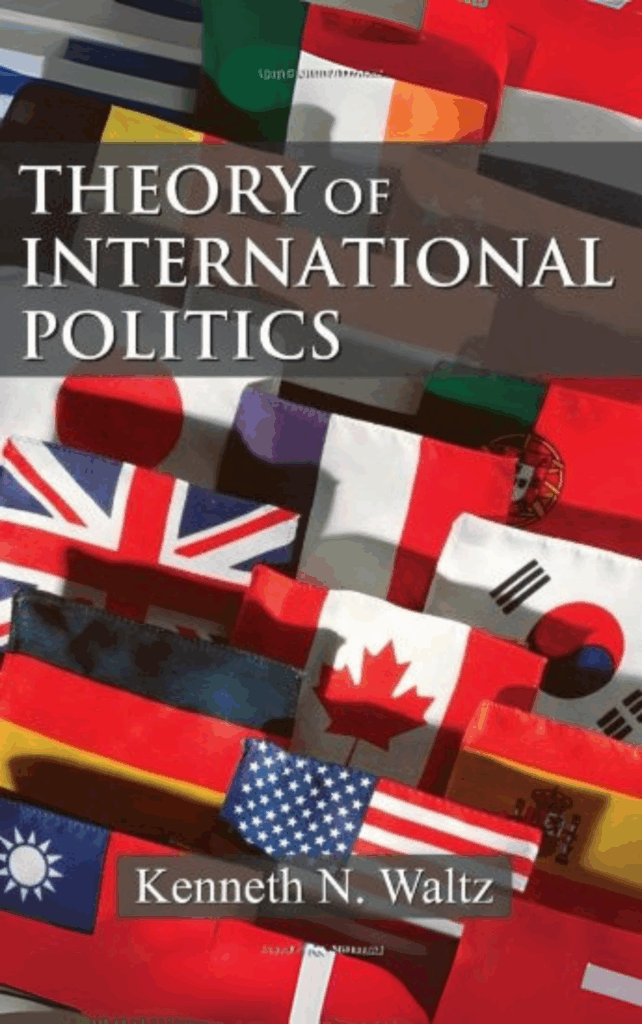
This book first published in 1979 is the foundational text of neorealism, also known as structural realism, and represents one of the most significant developments in international relations theory in the 20th century. Departing from the classical realist focus on human nature, in “The Theory of International Politics”, Waltz argues that the primary driver of state behavior is not the internal characteristics of states or their leaders, but the anarchic structure of the international system itself.
He posits that in a system with no overarching authority, the fundamental motive for every state is survival. This constant imperative for security, combined with the distribution of power (or capabilities) across the system, compels states to behave in similar, predictable ways, regardless of their form of government or ideology.
Waltz’s structural realism explains how the international system’s anarchic nature shapes state behavior regardless of domestic politics or individual leaders’ preferences. His theory helps explain why even democratic peace theorists acknowledge that structural pressures can override ideological preferences.
Waltz famously concluded that bipolar systems, such as the one that characterized the Cold War, are more stable and less prone to major war than multipolar systems. The book’s rigorous, systemic approach redefined the study of international politics and established neorealism as a dominant paradigm in the field for decades.
Today’s Application: Critical for understanding why the U.S.-China relationship has become competitive despite decades of economic integration.
10. “Power and Interdependence” by Robert Keohane and Joseph Nye (1977)
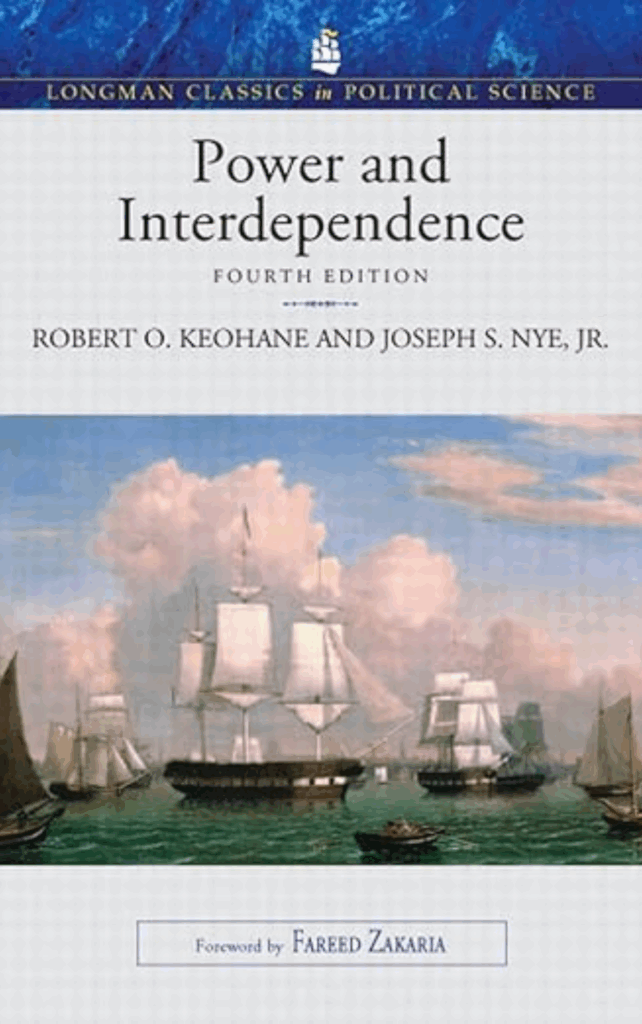
This landmark work first published in 1977 challenged pure realism by demonstrating how economic interdependence and international institutions can modify power politics. Their concept of “complex interdependence” helps explain both the resilience and fragility of the current global order.
This foundational text of neoliberal and liberal institutionalist theory in international relations presents a significant challenge to the traditional realist perspective. In “Power and Interdependence”, Keohane and Nye argue that in the modern era, particularly among advanced industrial democracies, the dynamics of world politics are better described by a condition of complex interdependence. They outline three main characteristics of this condition: the existence of multiple channels connecting societies beyond formal state-to-state relations, an absence of a clear hierarchy of issues where military security does not always dominate the agenda, and the consequently minor role of military force as a tool of policy. In such a world, power is not merely a function of military capability but is also defined by a state’s vulnerability and sensitivity to the actions of others across various domains, such as trade and finance. By emphasizing the roles of international institutions, transnational actors, and economic cooperation, “Power and Interdependence” provided a powerful framework for understanding how cooperation could emerge and be sustained even in an anarchic international system.
Today’s Application: Essential for understanding how economic sanctions work (or don’t) and why complete decoupling remains difficult even amid strategic competition.
Historical Analysis: Learning from the Past
11. “The Sleepwalkers” by Christopher Clark (2012)
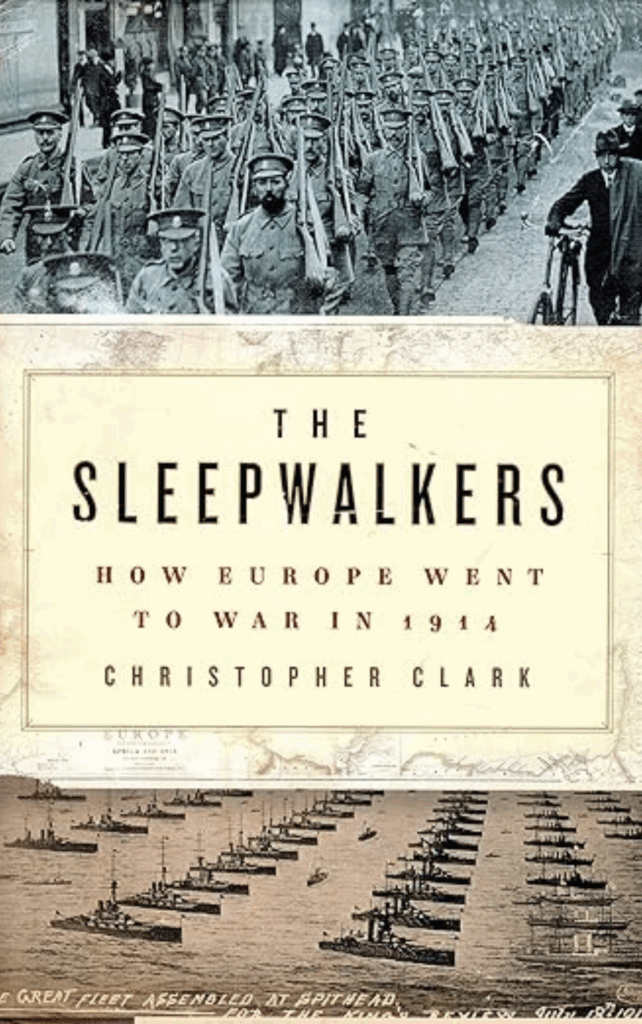
Christopher Clark’s masterful historical analysis “The Sleepwalkers” first published in 2012 offers a groundbreaking perspective on the outbreak of the First World War, shifting the focus from assigning blame to understanding the complex sequence of events and decisions that led to the catastrophe.
The book argues that the war was not the premeditated act of any single nation, such as Germany, but rather a tragedy of collective failure. Clark meticulously details a chaotic international environment where the leaders of Europe—the “sleepwalkers”—were acutely aware of the risks they were taking but failed to grasp the catastrophic consequences of their actions. He portrays a multi-polar world of competing empires, fraught with ethnic nationalism (particularly in the Balkans), rigid alliance systems, and a breakdown in communication.
By focusing on how the war happened, rather than assigning a singular why, Clark illustrates that the key decision-makers in various capitals—Vienna, Berlin, St. Petersburg, Paris, and London—all contributed to the escalating crisis through a series of misjudgments, gambles, and a shared political culture that ultimately made war a conceivable, if not an inevitable, outcome.
Clark’s masterful analysis of World War I’s origins demonstrates how miscalculation, alliance entanglements, and crisis escalation can lead to catastrophic conflicts that no one actually wanted. His work serves as a cautionary tale about the dangers of rigid alliance systems and automatic escalation.
Today’s Application: Provides sobering lessons about how regional conflicts can spiral into global confrontations, particularly relevant to Taiwan and Eastern Europe scenarios.
12. “Diplomacy” by Henry Kissinger (1994)
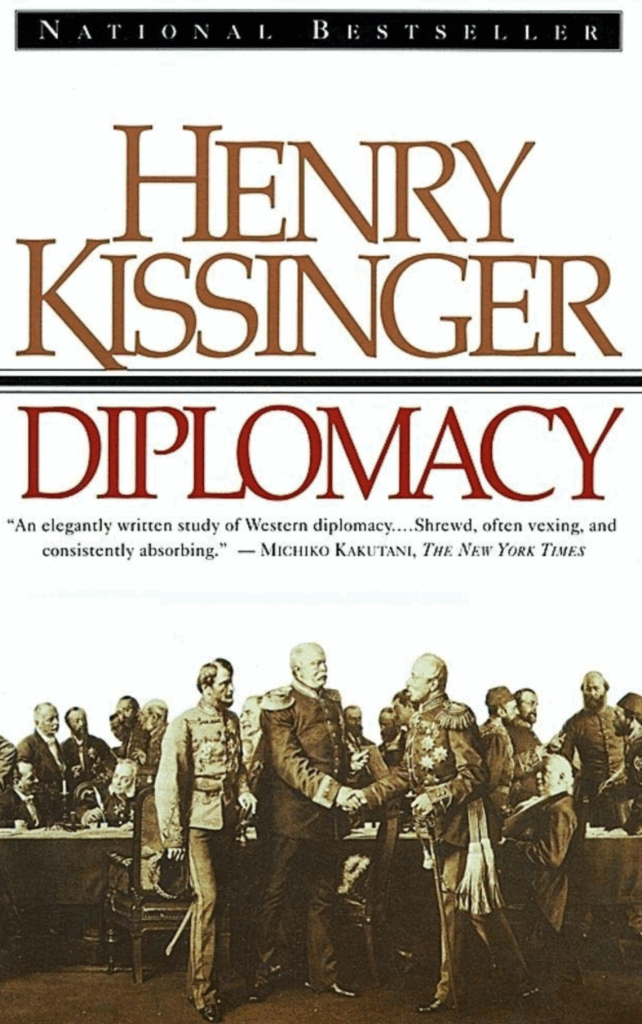
Henry Kissinger’s sweeping historical narrative provides a comprehensive analysis of the art and practice of international relations over the past four centuries, viewed through the lens of his own distinct realist perspective. Drawing on his extensive experience as a diplomat and statesman, in “Diplomacy”, first published in 1994, Kissinger examines the evolution of the international system from the era of Cardinal Richelieu and the birth of raison d’état (the national interest) to the post-Cold War world.
A central theme of the book is the contrast between the European “balance of power” tradition, which accepted the legitimacy of competing states and sought stability through equilibrium, and the American diplomatic tradition, which has historically been more idealistic, oscillating between isolationism and a crusading impulse to spread its values globally.
Kissinger traces the successes and failures of key leaders and pivotal moments—from the Congress of Vienna to the brinkmanship of the Cold War—to argue that a stable world order depends on a clear-eyed pursuit of national interests combined with a pragmatic understanding of the geopolitical realities and the importance of maintaining a global balance of power.
Kissinger combines theoretical insight with practical experience as Secretary of State and National Security Advisor. His analysis of diplomatic history from Richelieu to the post-Cold War era provides unmatched perspective on statecraft, balance of power, and the art of negotiation.
Today’s Application: Offers historical context for understanding why diplomatic solutions require patient cultivation of relationships and careful attention to other nations’ core interests.
Contemporary Challenges: Culture, Democracy, and China
13. “The Clash of Civilizations” by Samuel Huntington (1996)
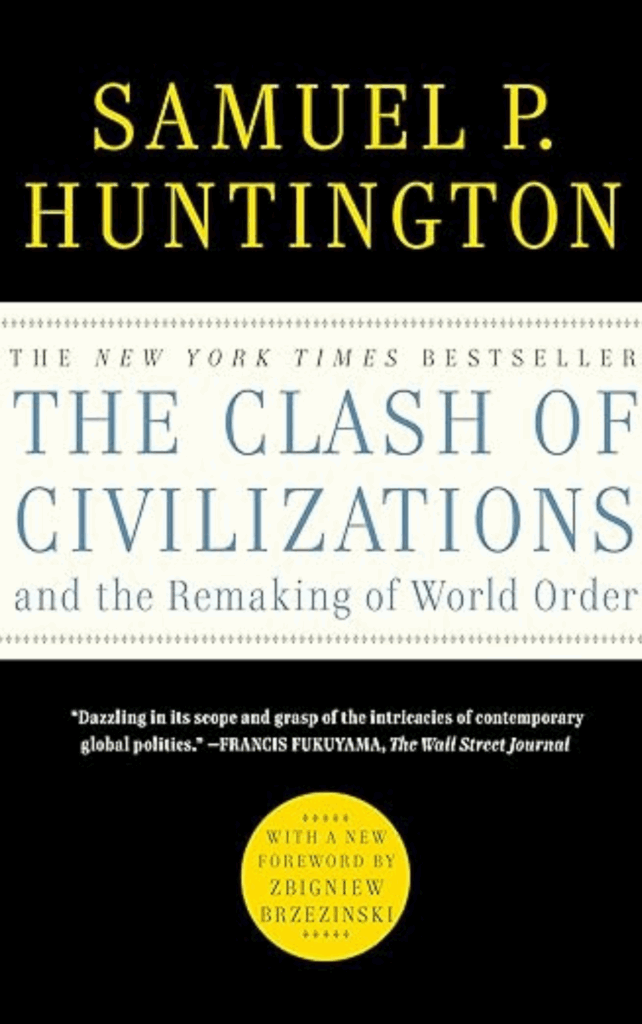
The “Clash of Civilizations and the Remaking of World Order” by Samuel P. Huntington was published as a book in 1996, expanding on his highly influential 1993 article in Foreign Affairs.
Huntington’s provocative thesis argues that the primary source of conflict in the post-Cold War world will not be ideological or economic, but cultural. He posits that while the era of conflict between nation-states or ideologies like communism and capitalism is ending, a new phase will be dominated by clashes between large-scale cultural entities he calls “civilizations.” These civilizations—such as Western, Islamic, Sinic (Chinese), and Orthodox—are defined by shared language, history, religion, and traditions. Huntington contended that these deep-seated cultural differences are more fundamental and less easily compromised than political or economic ones. He predicted that the most dangerous global conflicts would occur along the cultural “fault lines” where these civilizations meet, as a powerful West confronts the rise of non-Western civilizations that are increasingly asserting their own values and interests.
Despite significant criticism, Huntington’s thesis about post-Cold War conflicts being driven by cultural and civilizational differences has proven remarkably prescient in analyzing everything from Middle Eastern conflicts to tensions between the West and authoritarian capitalism.
Today’s Application: Provides framework for understanding ideological dimensions of current great power competition and the limits of universal values.
14. “The End of History and the Last Man” by Francis Fukuyama (1992)
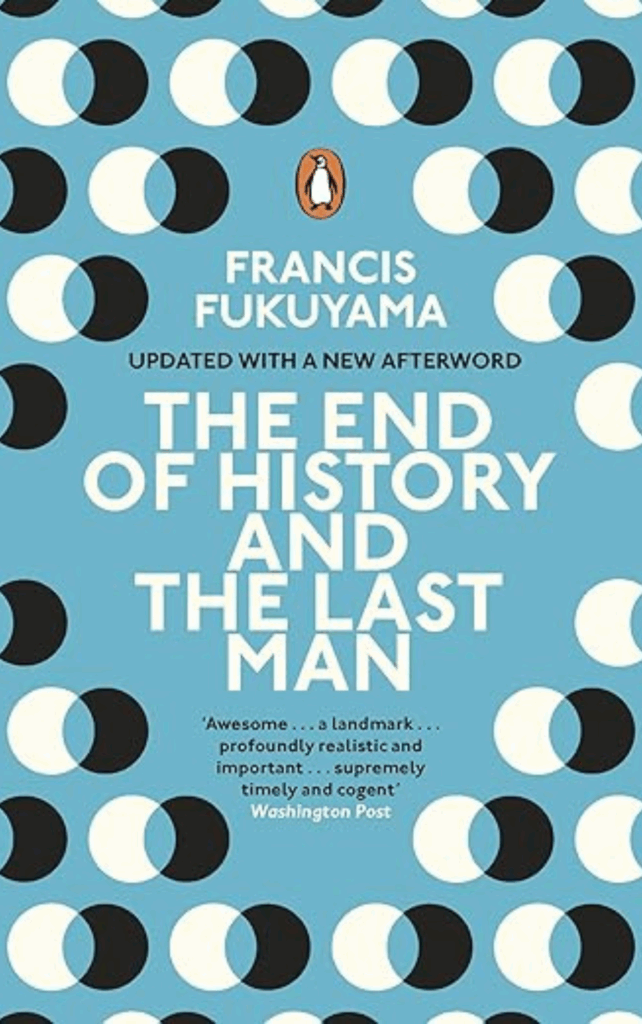
“The End of History and the Last Man“ by Francis Fukuyama was published as a book in 1992, expanding on his celebrated 1989 essay, “The End of History?”.
Fukuyama’s landmark thesis argues that the collapse of the Soviet Union and the end of the Cold War signaled the definitive triumph of Western liberal democracy as the final and universal form of human government. He famously declared not the end of events, but the “end of history” as a grand ideological struggle, positing that the great questions about how to best organize society had been answered. In this new era, he foresaw no viable long-term competitors to the combination of a market-based economy and a democratic political system.
The book also explores the potential downside of this triumph through the concept of the “Last Man,” a figure from Nietzsche’s philosophy who, living in a world of peace and prosperity, is preoccupied with personal comfort and security, lacking the drive for struggle and recognition that defined historical progress. Fukuyama thus presents a fundamentally triumphant but subtly ambivalent vision of the future, questioning whether this ultimate stage of history would be truly satisfying for the human spirit.
While often misunderstood as triumphalist, Fukuyama’s work actually grapples with the challenges facing liberal democracy after the Cold War. His concerns about the “last man” and the potential boredom of democratic peace seem remarkably relevant to contemporary democratic backsliding.
Today’s Application: Essential for understanding internal challenges to democratic systems and the appeal of authoritarian alternatives.
15. “On China” by Henry Kissinger (2011)
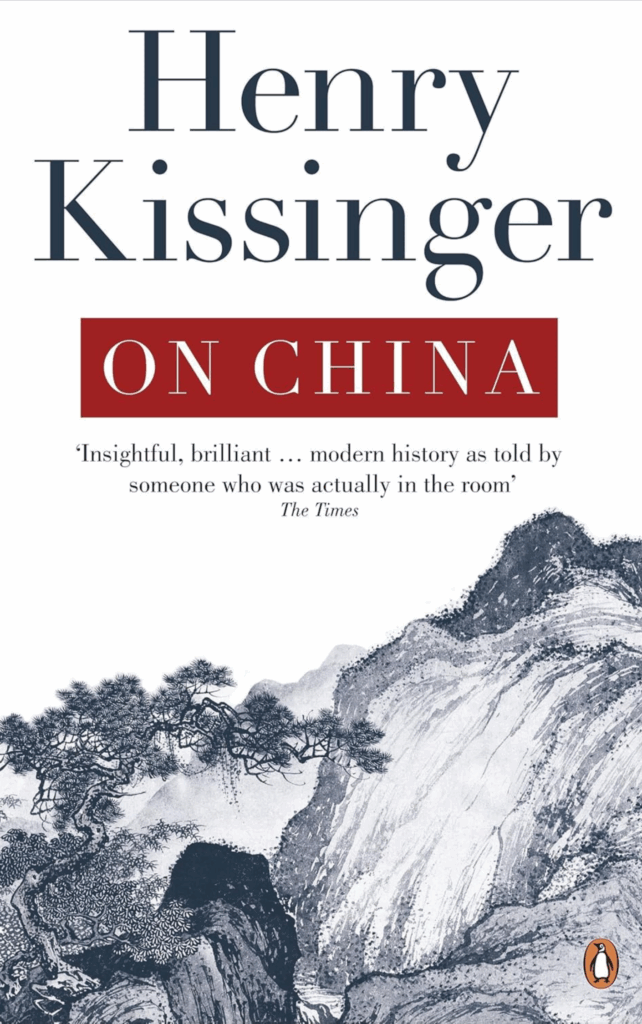
Drawing upon his unique position as a central architect of the U.S.-China rapprochement in the 1970s, Henry Kissinger presents a sweeping historical and strategic analysis of Chinese statecraft.
The book, “On China” first published in 2011 masterfully weaves together a deep history of China’s diplomatic traditions with Kissinger’s own firsthand accounts of negotiating with its most powerful leaders, including Mao Zedong and Deng Xiaoping. He argues that to understand China’s foreign policy today, one must appreciate its long-standing cultural and strategic mindset, which has been shaped for millennia by a distinct worldview.
Kissinger contrasts the Chinese strategic game of weiqi (Go), which emphasizes encirclement and the patient accumulation of relative advantage, with the Western game of chess, which seeks decisive, head-on confrontation. He traces China’s journey from historical splendor through its “century of humiliation,” its communist revolution, and its subsequent rise as a global economic and political power. Ultimately, Kissinger offers a pragmatic vision for the future of the U.S.-China relationship, advocating for a “co-evolution” where the two giants can pursue their interests and manage inevitable conflicts without resorting to a full-scale confrontation that would be catastrophic for the world.
Kissinger’s analysis combines his personal experience opening U.S.-China relations with deep historical understanding of Chinese strategic culture. His insights into Chinese patience, strategic thinking, and approach to international relations are crucial for managing the defining relationship of the 21st century.
Today’s Application: Indispensable for understanding Chinese foreign policy motivations and the potential for managed competition versus inevitable conflict. Kissinger’s analysis of Chinese strategic patience explains why China pursues long-term objectives through incremental steps rather than dramatic confrontations, visible in its approach to Taiwan, South China Sea expansion, and technology competition.
A Reader’s Guide: Where to Start
For Beginners: Start with Morgenthau’s “Politics Among Nations” for theoretical grounding, then move to Allison’s “Essence of Decision” for practical crisis analysis.
For Policy Professionals: Focus on Kissinger’s “Diplomacy,” Brzezinski’s “Grand Chessboard,” and Waltz’s “Theory of International Politics” for strategic frameworks.
For Understanding Current Crises: Prioritize Clark’s “Sleepwalkers,” Schelling’s “Strategy of Conflict,” and Kissinger’s “On China” for historical perspective and escalation dynamics.
For Regional Specialists: Europe-focused readers should emphasize Carr and Clark; Asia specialists should prioritize Kissinger’s China analysis and Mahan’s sea power theory; Middle East experts will find Huntington particularly relevant.
Why These Books Endure
In an age of information overload, these works provide something increasingly rare: sustained analytical depth. They offer frameworks for understanding not just what is happening, but why it’s happening and what might come next. While technology has transformed how diplomacy is conducted, the fundamental dynamics of power, interest, and human nature that these authors identified remain unchanged.
For anyone seeking to understand our complex world—whether as a student, practitioner, or informed citizen—these books represent essential intellectual equipment. They remind us that while history doesn’t repeat, it often rhymes, and understanding those patterns can mean the difference between wise statecraft and dangerous miscalculation.
In today’s rapidly evolving international system, the insights of these masterworks aren’t just academically interesting—they’re practically indispensable for navigating an uncertain future.
Disclosure: As an Amazon Associate, we earn from qualifying purchases. This means that if you click on an Amazon link on our site and make a purchase, we may receive a small commission at no extra cost to you.