
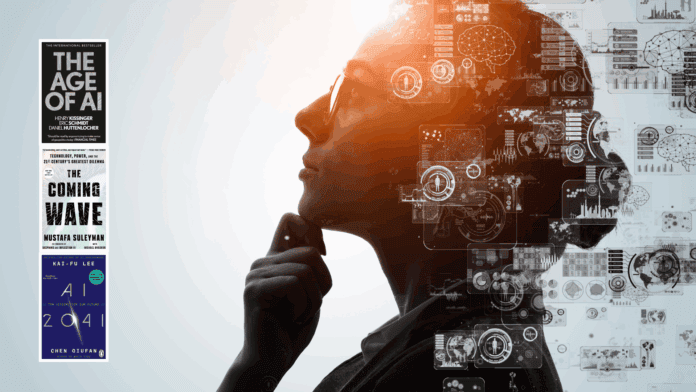
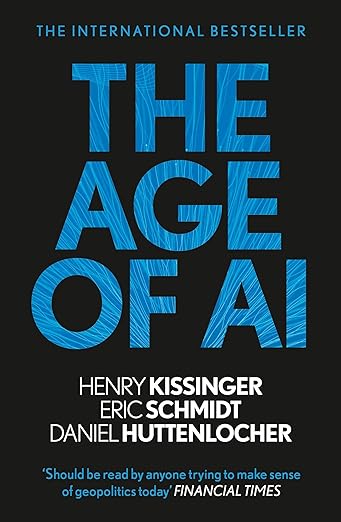
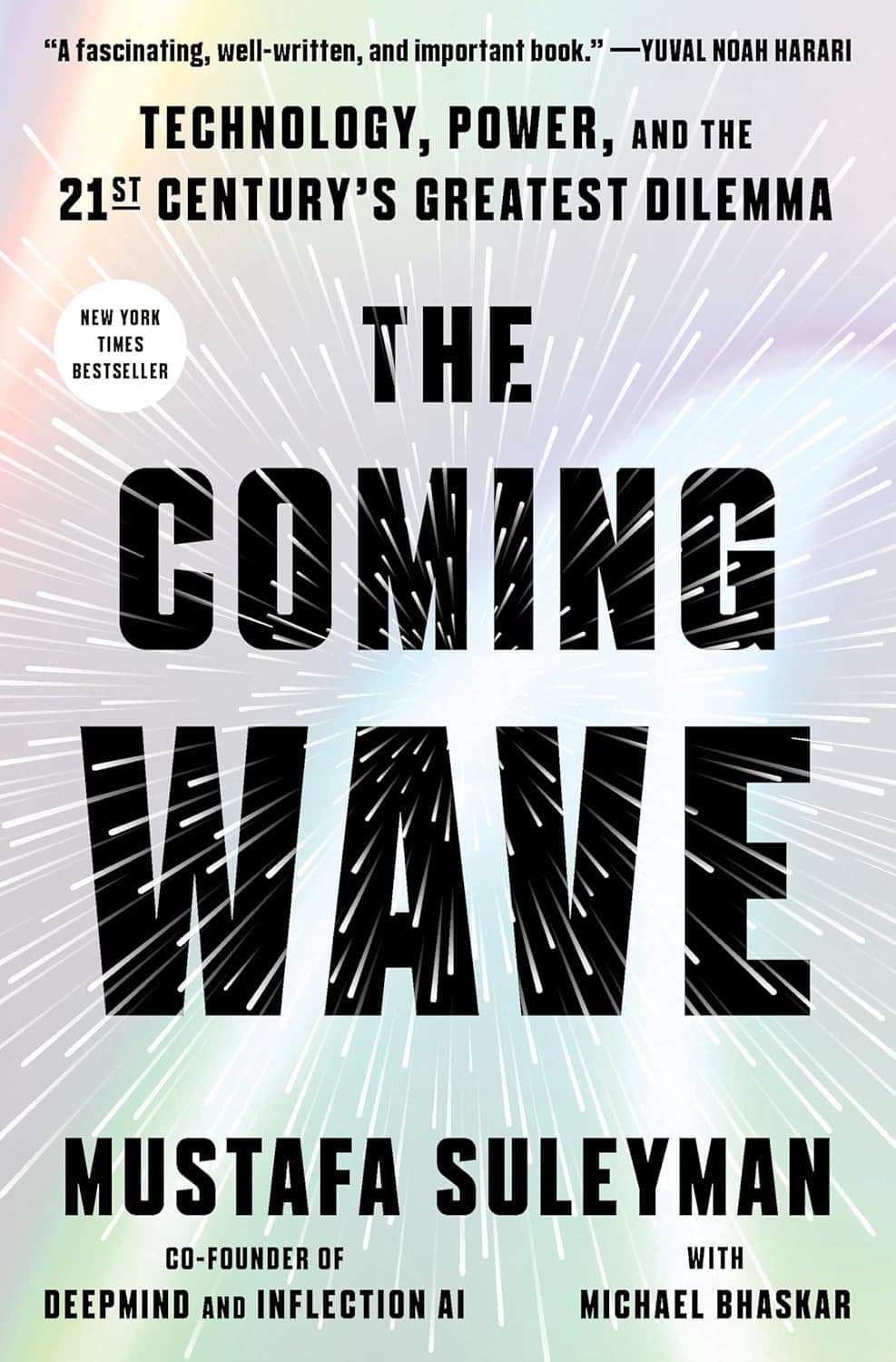
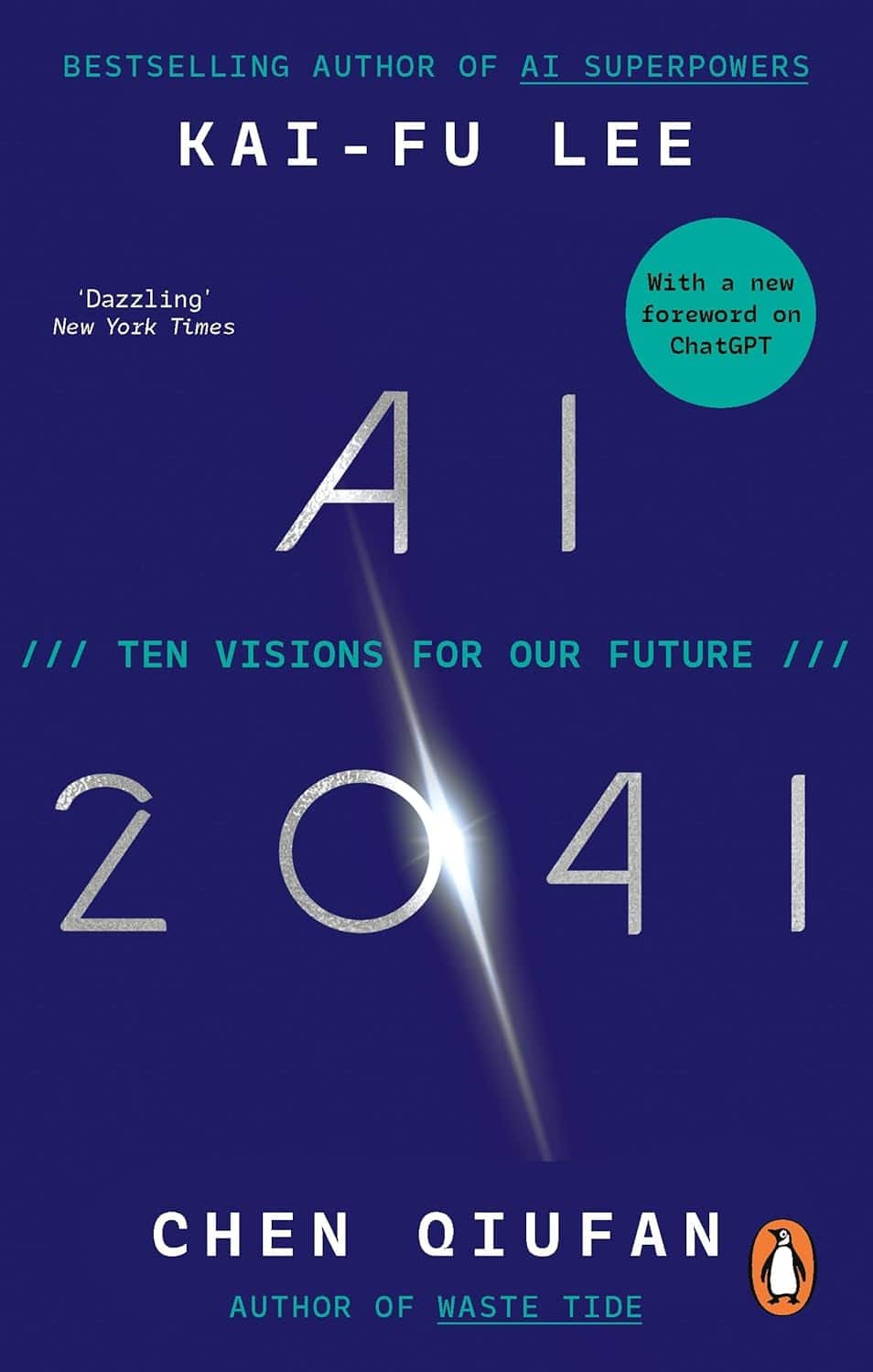
The diplomatic world stands at an unprecedented inflection point. Artificial intelligence is not merely another technological tool to be adopted—it represents a fundamental shift that will redefine how nations interact, compete, and cooperate. To navigate this transformation, three essential works provide indispensable insights: Henry Kissinger, Eric Schmidt, and Daniel Huttenlocker’s The Age of AI: And Our Human Future, Mustafa Suleyman’s The Coming Wave: Technology, Power, and the Twenty-first Century’s Greatest Dilemma, and Kai-Fu Lee and Chen Qiufan’s AI 2041: Ten Visions for Our Future. Together, these works illuminate why understanding AI has become crucial for anyone engaged in international relations.
Technological Tsunami Reshaping Global Order
We are witnessing what Suleyman describes as a “coming wave” of technological transformation that will be impossible to contain within national borders. This wave encompasses not just artificial intelligence but synthetic biology, quantum computing, and other emerging technologies that will fundamentally alter the nature of power, governance, and international relations.
The erosion of traditional diplomatic advantages is accelerating at an unprecedented pace. Nations that have long dominated through superior intelligence networks, experienced diplomatic corps, or well-established international relationships now find these advantages potentially neutralized by countries excelling in AI development and deployment. Countries like Estonia or Singapore, despite their relatively small size, can punch above their diplomatic weight by leveraging advanced AI capabilities to enhance their analytical and predictive capacities.
Consider how traditional intelligence gathering—once requiring extensive human networks, years of relationship building, and sophisticated analysis capabilities—can now be augmented or even replaced by AI systems capable of processing vast amounts of open-source information, satellite imagery, and digital communications in real-time. The speed differential doesn’t just change the pace of diplomacy—it fundamentally alters its rhythm and creates new pressures on decision-makers who must distinguish between genuine insights and algorithmic noise.
Containment Challenge and National Security
One of the most profound challenges facing international relations is what Suleyman identifies as the “containment problem”—the near impossibility of keeping advanced technologies within national boundaries. Unlike previous strategic technologies such as nuclear weapons, which required massive infrastructure and rare materials, AI capabilities can be replicated and distributed with relative ease.
This creates unprecedented vulnerabilities for national security. When AI research published in academic journals can be immediately accessed and implemented globally, traditional concepts of technological advantage become fleeting. The open nature of much AI research, while beneficial for scientific progress, means that breakthroughs in one country quickly become available to potential adversaries.
The implications extend beyond military applications. AI systems developed for civilian purposes—medical diagnosis, financial analysis, transportation optimization—can be rapidly adapted for intelligence gathering, social control, or economic warfare. Nations must now consider how their technological exports might be weaponized against their own interests, creating new dilemmas for trade policy and international cooperation.
Technological Sovereignty and Systemic Competition
We are witnessing the emergence of what might be termed “computational sovereignty”—the idea that a nation’s ability to independently develop, deploy, and control AI systems directly correlates with its strategic autonomy. Countries lacking advanced AI capabilities increasingly find themselves dependent on foreign technologies for critical governmental functions, from border security to economic planning.
This dependency creates new forms of vulnerability and leverage in international relations. When a nation’s customs system, financial regulations, or even diplomatic communications rely on AI systems developed elsewhere, questions of technological sovereignty become paramount. The country that controls the algorithms increasingly influences the decisions those systems make.
China’s approach to technological self-reliance, America’s efforts to maintain semiconductor supply chain control, and Europe’s push for digital sovereignty represent different strategies for navigating this challenge. Each approach reflects fundamental assumptions about the relationship between technology, governance, and national power that will shape international relations for decades to come.
Governance Dilemma in a Multipolar AI World
The integration of AI into governmental systems means that diplomats increasingly negotiate not just with their human counterparts but with the algorithmic logic embedded in foreign administrative systems. When visa applications are processed by AI, trade compliance is monitored algorithmically, and economic sanctions are enforced through automated systems, the code itself becomes a diplomatic actor.
This creates entirely new categories of diplomatic challenges. How do you negotiate with an algorithm? What happens when automated systems make decisions that contradict stated policy positions? How do nations maintain flexibility and the ability to make exceptions—traditionally crucial diplomatic tools—in an era of algorithmic consistency?
The challenge is compounded by the fact that AI development occurs primarily in the private sector, creating new relationships between corporations and governments that don’t fit traditional diplomatic frameworks. When a handful of technology companies control the infrastructure that governments depend on, questions of accountability and democratic governance become paramount.
Information Battlefield and Narrative Control
The battleground of public opinion and narrative control has been revolutionized by AI capabilities. Sophisticated deepfake technologies can create convincing false evidence of diplomatic meetings, statements, or agreements that never occurred. AI-generated disinformation campaigns can be tailored to specific audiences with unprecedented precision, undermining trust in legitimate diplomatic communications.
More subtly, AI systems’ ability to analyze vast amounts of social media data allows for precise targeting of influence operations. Foreign actors can identify key opinion leaders, understand their psychological profiles, and craft messages designed to exploit specific cognitive biases or cultural sensitivities. The result is that the information environment surrounding diplomatic initiatives becomes increasingly contested and difficult to control.
Traditional diplomatic tools for managing information—official statements, background briefings, cultural exchanges—struggle to compete with AI-enabled information operations that can generate content at scale, test messaging effectiveness in real-time, and adapt strategies based on audience response. This forces diplomatic institutions to develop new capabilities while also raising fundamental questions about truth, authenticity, and trust in international relations.
Economic Disruption and Geopolitical Realignment
AI’s economic implications are reshaping traditional sources of national wealth and international competitive advantage. Countries rich in oil or minerals may find their resources less strategically important than nations with advanced semiconductor manufacturing capabilities or large pools of technical talent.
The “data economy” creates new forms of wealth extraction and value creation that don’t fit traditional economic models. When AI systems trained on data from one country create value in another, questions of digital taxation, intellectual property, and fair compensation become diplomatic issues.
Labor market disruptions from AI automation will create new sources of social tension that inevitably affect international relations. Countries will need to cooperate on managing migration flows, sharing best practices for workforce retraining, and preventing AI-driven economic inequality from destabilizing entire regions. The nations that successfully navigate this transition will gain significant advantages over those that struggle with social upheaval and economic displacement.
Multilateral Governance in the Age of AI
International organizations face their own AI-driven transformation challenges. The United Nations, World Trade Organization, and other multilateral bodies must grapple with how AI affects their core functions. How do you conduct fair and transparent voting when AI systems influence domestic political processes? How do you ensure equitable representation when some nations have vastly superior AI capabilities for analysis and advocacy?
These institutions must also confront questions about AI governance itself. Should there be international standards for AI development? How can global cooperation be fostered when AI capabilities are seen as national strategic assets? The challenge is that existing international frameworks were designed for a world where technological change occurred more slowly and could be more easily regulated.
The European Union’s approach to AI regulation, China’s state-directed AI development, and America’s private sector-led innovation represent fundamentally different models that will compete for global influence. International institutions must navigate these competing approaches while developing frameworks that can accommodate diverse values and priorities.
Cultural Values Embedded in Code
AI systems embed the values and assumptions of their creators, making cultural competence in AI development a diplomatic necessity. When Chinese AI systems reflect collectivist concepts of social harmony or American systems embody individualistic assumptions about privacy and autonomy, these cultural differences become encoded in the technologies that increasingly govern international interactions.
Religious and philosophical traditions offer different perspectives on AI’s role in human society, creating new sources of potential conflict or cooperation. Islamic concepts of justice, Buddhist ideas about consciousness, or African communitarian values may suggest alternative approaches to AI governance that Western-dominated technology companies haven’t considered.
These cultural dimensions extend to questions about employment, privacy, and human agency that will increasingly affect international relations. Countries with different approaches to AI’s social impact may find themselves in conflict not just over trade or security issues but over fundamental questions about the kind of society they want to create.
Race for AI Talent and Brain Power
The competition for AI expertise has become a critical element of international relations. Countries are implementing new visa policies, research partnerships, and educational initiatives designed to attract and retain AI talent. The “brain drain” phenomenon now includes not just traditional academic researchers but also AI engineers, data scientists, and machine learning specialists.
This competition creates new forms of soft power projection. Countries that can offer the best research environments, funding opportunities, and career prospects for AI professionals will have significant advantages in developing next-generation capabilities. The concentration of AI talent in certain geographic regions—Silicon Valley, London, Toronto, Beijing—creates new centers of technological and ultimately political influence.
Immigration policies, university partnerships, and research collaborations become tools of technological statecraft. Nations must balance the benefits of open scientific collaboration with concerns about technology transfer and brain drain to potential competitors.
Imperative for Strategic Adaptation
Given these far-reaching implications, understanding AI has shifted from specialized knowledge to fundamental literacy for anyone involved in international relations. The complexity and interconnectedness of these challenges demand multiple analytical perspectives and deep engagement with both current realities and future possibilities.
The convergence of artificial intelligence and diplomacy represents one of the most significant developments in international relations since the emergence of nuclear weapons or global telecommunications. Just as previous generations of diplomats needed to master nuclear strategy or satellite communications, today’s practitioners must grapple with algorithmic decision-making and machine learning systems.
Failure to understand these dynamics risks being relegated to reactive rather than proactive roles in shaping the future of international relations. The nations and institutions that thoughtfully engage with AI’s implications for diplomacy will be best positioned to thrive in an increasingly complex and rapidly changing global environment. The coming wave of technological change is not a distant future possibility—it is the present reality that diplomatic professionals must navigate with wisdom, preparation, and strategic foresight.
Essential Reading: