
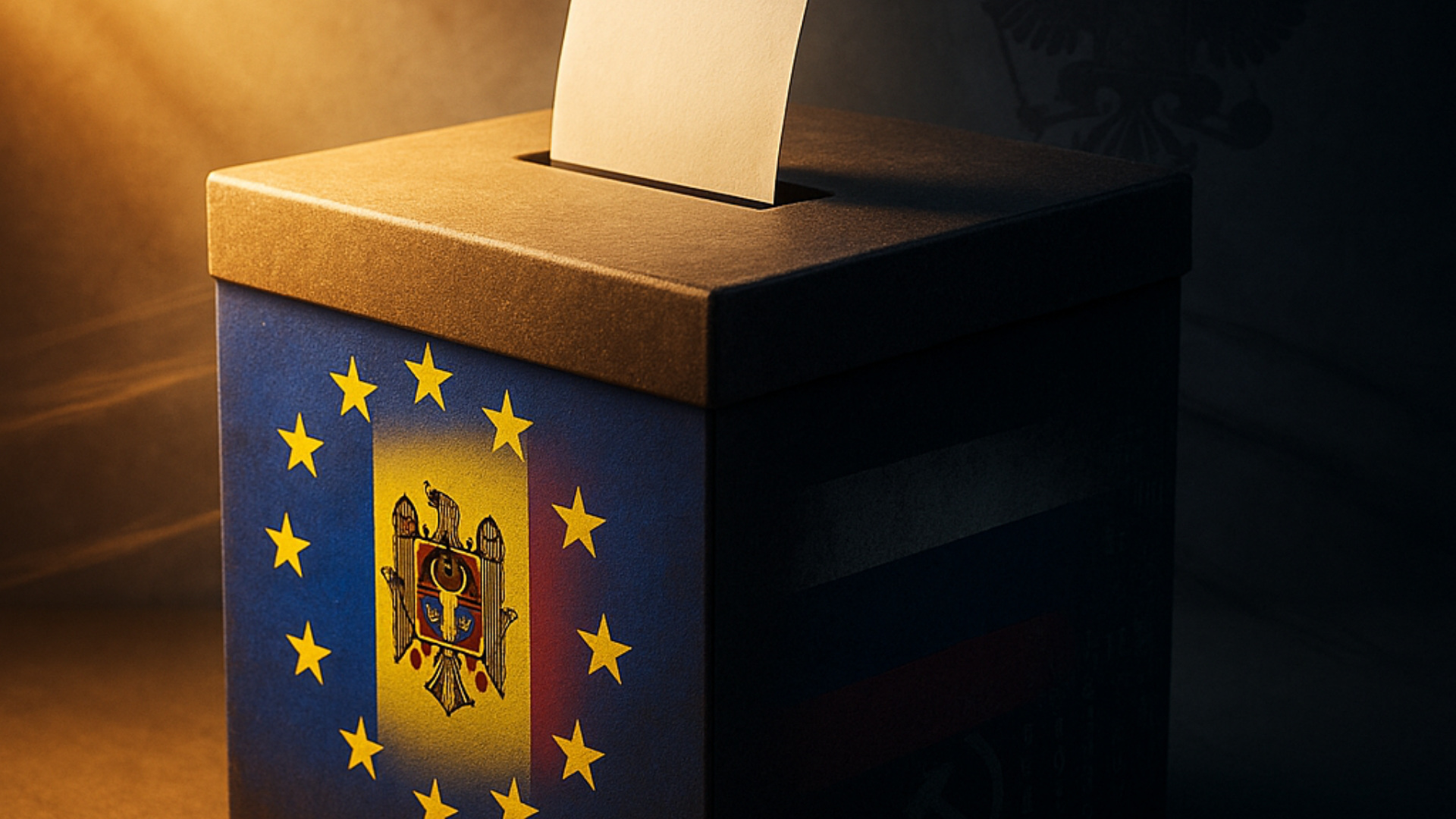
When Moldova’s pro-Western Party of Action and Solidarity secured over 50% of the vote on September 28, defeating the pro-Russian Patriotic Bloc’s under 25%, it marked more than just another election victory. It represented the latest—and perhaps most symbolically significant—contraction of Russia’s sphere of influence in the former Soviet space, coming despite what President Maia Sandu described as Russia spending “hundreds of millions of euros” to sway the outcome.
The election’s significance extends far beyond this small nation wedged between Ukraine and Romania. Moldova’s decisive rejection of Moscow’s influence campaign offers a window into a broader geopolitical transformation reshaping the post-Soviet landscape—one where Russia’s traditional dominance is eroding across multiple fronts, from the South Caucasus to Central Asia.
Battle for Moldova
The tense ballot pitted the governing PAS against several Russia-friendly opponents but no viable pro-European partners, with electoral data indicating the party will hold a clear majority of about 55 of the 101 seats in the legislature. Election day was marked by cyberattacks targeting electoral systems and government websites, false bomb threats against polling stations abroad, illegal transportation of voters, and coordinated efforts that Moldovan authorities characterized as a “tsunami” of Russian cash, cryptocurrency and disinformation.
Two pro-Russian parties—Heart of Moldova and Moldova Mare—were barred from the vote on Friday over allegations of illegal financing and vote buying, underscoring the scale of Moscow’s attempted interference.
Yet despite this unprecedented campaign, Moldova has demonstrated that Russia can be defeated against all odds and even in a hugely asymmetric fight, according to Oana Popescu-Zamfir, director of the GlobalFocus Center think-tank. The victory represents the second time in recent years that Sandu and her party have won elections by commanding margins despite widespread Russian meddling.
Caucasus Pivot
Moldova’s westward turn is part of a larger pattern. In September 2023, Azerbaijan reclaimed complete control of the Karabakh region after a lightning military campaign, exposing what observers called the emptiness of security reliance on Russia. The episode fundamentally altered the South Caucasus power dynamic.
In early 2025, the Armenian parliament adopted a bill aimed at starting the process of joining the European Union—an ultimately hostile step as far as Moscow is concerned. This followed Armenia’s growing realization, particularly after the 2020 Karabakh war, that Russia failed to live up to its obligations to the country under a shared regional security pact akin to NATO’s Article 5.
While bogged down in Ukraine, Moscow has been gradually losing its influence in the ex-Soviet space, with both Armenia and Azerbaijan sharing a pursuit of pushing back and pushing out Russia from the South Caucasus.
Meanwhile, Georgia presents a more complex picture. Once the poster child of post-Soviet countries on their way to democracy and freedom a decade ago, Georgia is now quickly slipping under the influence of Russia, China and Iran, according to American lawmakers warning of the country’s democratic collapse. Yet even here, overwhelming public support for EU membership persists despite an increasingly authoritarian government’s pro-Russian slide.
Central Asia’s Hedging Game
Further east, the situation is more nuanced but the trend unmistakable. Russia’s full-scale war on Ukraine has been a massive drain on Russian attention and resources, presenting many countries in eastern Europe, the South Caucasus, and Central Asia with an opportunity to enhance cooperation with one another, cultivate partnerships outside the region, and loosen bonds tying them to their former imperial hegemon.
In Central Asia, Russia is no longer a regional hegemon, with China’s rise having already displaced it as the premier economic power in the region. When Kyrgyzstan and Tajikistan finalized an agreement to settle their border disputes in the Fergana Valley earlier this year, they deliberately negotiated without Russia at the table—Moscow, previously the primary broker for such conflicts, was in no position to intervene as it pulled forces from both the Caucasus and Central Asia to shore up frontlines in Ukraine.
Central Asian republics have initiated the Central Asian Summit, held annually since 2018 without the participation of external powers, and recently conducted war games for the first time without Russian or Chinese participation. The region’s total foreign trade turnover in 2024 reached $220 billion, nearly doubling compared to 2017.
Yet Russia’s influence remains embedded. Russia wields significant influence through remittances sent by migrant workers from Tajikistan, Kyrgyzstan, and to a lesser extent Uzbekistan, with these remittances contributing up to 32% of Tajikistan’s 2022 GDP and 27% of Kyrgyzstan’s GDP. Central Asia’s trade with Russia has been booming, and the number of Russian firms in Central Asia has grown, as the region benefits economically from serving as a conduit for sanctions evasion.
Belarus: The Outlier
In the five years since Belarus’s 2020 protest movement, President Alyaksandr Lukashenka’s authoritarian regime has become characterized by systematic, violent repression of dissent, with the country falling into political, economic, and informational dependence on the Kremlin. Belarus has been Moscow’s main collaborator in its war against Ukraine, with the Kremlin placing more than 30,000 Russian troops inside Belarus in January and February 2022 ahead of the full-scale invasion.
During the recent Zapad-2025 military exercises, Russia and Belarus staged a simulated nuclear strike, with Belarusian officials saying the maneuvers included planning and examining the potential use of non-strategic nuclear weapons. Yet even here, cracks appear. Lukashenka is pushing a narrative of de-escalation, proposing that the West help him expand his independence from Russia, and recently held a phone call with President Trump about releasing political prisoners.
What’s Driving the Shift?
Multiple factors underpin Russia’s declining influence. The Ukraine war has stretched Moscow’s military and economic resources to breaking points. The war has also created space for other countries to get involved in Russia’s traditional sphere of influence—Armenia purchased $1.5 billion in Indian weapons in 2022-23 alone to end reliance on Russian systems; Saudi Arabia and the UAE are investing in green energy and agriculture in Azerbaijan; and the EU adopted its first Central Asia strategy in 2022 and is now the region’s largest source of foreign investment.
Demographically and culturally, the shift is generational. The process of regional decolonization is set to become more pronounced when Soviet-era elites currently at the helm give way to a younger demographic with limited knowledge of the Russian language and no historical attachment to the Soviet period.
Europe’s Response
The European Union, normally strictly neutral about elections in member states and candidate countries, made little effort hiding its allegiances to Moldova’s PAS, with numerous European leaders showing up in Chisinau in recent times and a 1.9 billion euro growth plan unveiled in early 2025 to finance infrastructure and energy projects.
European Commission President Ursula von der Leyen declared: “Moldova, you’ve done it again. No attempt to sow fear or division could break your resolve. You made your choice clear: Europe. Democracy. Freedom. Our door is open. And we will stand with you every step of the way”.
With Moldova crammed between Ukraine and NATO and EU member Romania, Brussels was on edge for weeks leading up to the vote—a pro-Russia win would have put a major wedge into its eastern flank at a time when Moscow appears emboldened to test the West’s resolve.
Road Ahead
Moldova applied to join the EU in 2022 in the wake of Russia’s full-scale invasion of Ukraine and was granted candidate status that year, with Brussels agreeing to open accession negotiations last year. With momentum on the battlefield still favoring Russia in Ukraine and no end in sight for the war, Moldova remains the only country in the EU’s eastern neighborhood that has a viable chance of becoming a member this decade.
It could well be that Moldova moves ahead in EU accession without Ukraine, potentially even later this year, serving as the locomotive that pulls Ukraine with it into the EU—precisely what EU officials had in mind when both countries were given the green light to join the bloc three years ago.
Yet challenges remain formidable. As one analyst noted, Moldova will continue to be in a difficult geopolitical environment characterized by Russia’s attempts to pull it back into its sphere of influence. In the “waiting room” posture between aspirations for EU membership and actual accession, Moldova, Georgia, and Armenia remain dangerously exposed to Russian coercion—it is precisely their orientation toward Europe and NATO that increases their vulnerability to Russian pressure, subversion, and in some cases military aggression.
Bigger Picture
Moldova’s election represents more than a single country’s choice. It illuminates a fundamental transformation in the post-Soviet space where Russia’s traditional dominance is yielding—unevenly and incompletely—to a more multipolar reality. From Chisinau to Yerevan to Astana, capitals once firmly in Moscow’s orbit are diversifying relationships, asserting sovereignty, and in some cases explicitly pivoting westward.
The 2023 Russian Foreign Policy Concept resurrected the term “near abroad” to describe these countries, pointing to “centuries-old traditions of joint statehood, deep interdependence, a common language, and close cultures” as justification for efforts to keep them within Moscow’s sphere of influence. But as Moldova’s election demonstrates, historical ties and linguistic commonalities matter less when weighed against security concerns, economic opportunities, and democratic aspirations.
Russia’s sphere isn’t disappearing—it’s shrinking. And Moldova just provided the latest measurement.
Key Takeaways:
- Moldova’s decisive pro-Western vote came despite Russia allegedly spending hundreds of millions on interference
- Pattern repeats across former Soviet space: Armenia pivoting to EU, Azerbaijan asserting independence, Central Asia diversifying
- Ukraine war has drained Russian resources and attention, creating opportunities for neighbors to reduce dependence
- Belarus remains the outlier as Russia’s closest ally, though even Lukashenka seeks greater independence
- EU fast-tracking Moldova’s accession to lock in westward orientation and potentially pull Ukraine along
- Generational shift away from Russian language and Soviet nostalgia accelerating the trend