
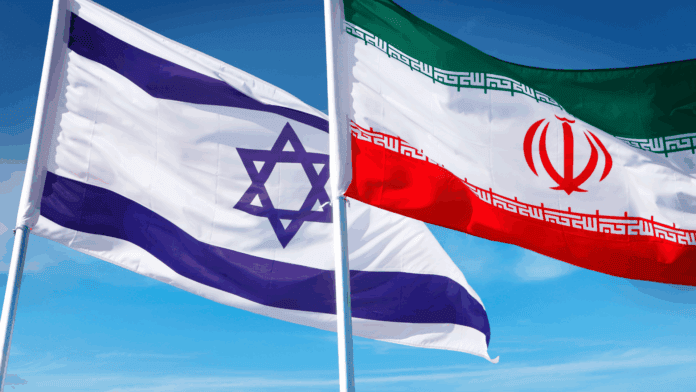
On September 29, 2025, standing alongside Israeli Prime Minister Benjamin Netanyahu at the White House, President Donald Trump floated an idea that would have seemed inconceivable just months earlier. “Who knows, maybe even Iran can get in there,” Trump said, referring to the Abraham Accords that normalized relations between Israel and several Arab states during his first term. “I think they’re going to be open to it. I really believe that.”
The statement came barely three months after Israel and Iran concluded a devastating 12-day war that saw hundreds killed, nuclear facilities struck, and missiles raining down on both nations. It followed decades of hostility in which Iran’s leaders have routinely called for Israel’s destruction, referring to it as the “Little Satan” in their revolutionary lexicon. The notion that these two countries—whose conflict has defined Middle Eastern geopolitics for nearly half a century—could sit together at a negotiating table stretches credibility to its breaking point.
Yet Trump’s suggestion deserves serious analysis rather than immediate dismissal. The proposal reveals much about the administration’s vision for reordering Middle Eastern power dynamics, the limits of military force in achieving diplomatic breakthroughs, and the complex interplay between domestic politics and foreign policy in both countries. Whether genius or madness, the idea forces a reckoning with fundamental questions about what drives the Iran-Israel conflict and whether its underlying causes can ever be resolved.
From Partners to Enemies: A Historic Rupture
The animosity between Iran and Israel was not inevitable. For most of the Cold War era, the two countries enjoyed remarkably close relations under Iran’s Pahlavi monarchy. Shah Mohammad Reza Pahlavi recognized Israel shortly after its founding and maintained substantial economic and security cooperation throughout the 1960s and 1970s. Both countries saw themselves as non-Arab powers in a predominantly Arab region, sharing concerns about radical Arab nationalism and Soviet influence. This partnership, grounded in strategic calculation rather than ideological affinity, functioned effectively for decades.
The 1979 Islamic Revolution shattered this relationship overnight. Ayatollah Ruhollah Khomeini, architect of Iran’s theocratic system, severed diplomatic ties with Israel within days of assuming power and embedded anti-Israel ideology into the Islamic Republic’s foundational documents. For Khomeini and his successors, opposition to Israel became inseparable from their revolutionary identity. Supporting the Palestinian cause and calling for Israel’s dissolution were not merely foreign policy positions but core elements of the regime’s legitimacy and regional appeal.
This ideological transformation had concrete consequences. Iran shifted from being Israel’s partner to becoming its most committed adversary, providing extensive support to Hamas in Gaza and Hezbollah in Lebanon. These groups became the vanguard of what Iran calls its “Axis of Resistance”—a network of proxies extending Iranian influence across the region while maintaining a capability to threaten Israel without direct Iranian military involvement. For four decades, this proxy warfare defined the conflict, allowing both sides to inflict damage while avoiding all-out war.
The June 2025 conflict marked a dramatic escalation from this shadow war to direct confrontation. Israel’s June 13 strikes targeted Iranian nuclear facilities, military bases, and senior commanders in what it called a pre-emptive operation to prevent Iran from acquiring nuclear weapons. Iran responded with ballistic missile barrages that struck Israeli cities and military installations. The United States joined by attacking Iranian nuclear sites at Fordow, Natanz, and Isfahan. The 12-day war ended with a ceasefire brokered by Washington and Doha, but not before hundreds had died and critical infrastructure on both sides sustained severe damage.
Ideological Chasm
Trump’s optimism about potential Iranian-Israeli normalization confronts a fundamental obstacle: the conflict is not primarily about specific grievances that negotiation might resolve, but about incompatible visions of regional order rooted in deep ideological commitments.
For Iran’s Islamic Republic, opposition to Israel represents far more than a foreign policy position. The regime’s founding ideology portrayed the Palestinian struggle as emblematic of the oppressed rising against imperial powers, with Israel cast as an illegitimate settler-colonial entity imposed by the West. Khomeini’s concept of velayat-e faqih (guardianship of the jurist) positioned Iran as the leader of global Islamic resistance, with the liberation of Jerusalem as a central component of this mission. Annual Quds Day rallies, held since 1979, institutionalize anti-Israel sentiment in Iranian public life.
This ideological framework has remained remarkably consistent across different Iranian administrations, from hardliners to relative moderates. Even President Masoud Pezeshkian, elected in 2024 as a reformist candidate, has not wavered from the official position denying Israel’s legitimacy. Iranian officials frame any recognition of Israel as betrayal of Islamic principles and abandonment of the Palestinian cause—positions that enjoy substantial support among Iran’s conservative political establishment and religious authorities.
Israel, meanwhile, views Iran through an existential security lens. Tehran’s nuclear program, ballistic missile development, and support for armed groups committed to Israel’s destruction represent what Israeli leaders consistently describe as an existential threat. The June 2025 strikes reflected a conviction among Israel’s security establishment that Iran was approaching a point of no return in developing nuclear weapons capabilities—a red line that Israel has vowed never to allow Iran to cross.
Beyond specific capabilities, Israeli strategic thinking has long focused on Iran as the primary organizing threat. The Abraham Accords themselves emerged partly from shared Arab-Israeli concerns about Iranian regional influence. Netanyahu’s government has repeatedly emphasized that normalizing relations with Arab states helps build a coalition to counter Iran, not to accommodate it. From this perspective, bringing Iran into the very framework designed to contain it would undermine the Accords’ fundamental purpose.
Domestic Constraints on Both Sides
Even if leaders in Tehran and Jerusalem were inclined toward rapprochement—and there is no indication they are—domestic political realities in both countries present formidable obstacles.
In Iran, public opinion on Israel is complex but predominantly hostile. An October 2024 survey by the Middle East Institute found that 67% of Iranians opposed normalizing relations with Israel, with only 25% in favor. This represents one of the few issues where popular sentiment aligns closely with regime policy. The recent June 2025 conflict appears to have strengthened this consensus, as even regime critics expressed anger over foreign attacks on Iranian soil. The memory of external intervention—from the CIA-backed 1953 coup to the Iran-Iraq War—creates a defensive nationalism that transcends political divisions.
Moreover, powerful constituencies within Iran’s political system have built their legitimacy and influence on the anti-Israel stance. The Islamic Revolutionary Guard Corps, which suffered leadership losses in the June strikes, derives substantial political power from its role as defender of the revolution and leader of the Axis of Resistance. Hardline clerics who dominate key institutions like the Guardian Council view the anti-Israel position as non-negotiable. Any leadership that attempted to normalize relations with Israel would face fierce opposition from these entrenched interests and risk being accused of betraying the revolution’s core principles.
In Israel, public opinion on Iran is shaped by decades of threats and recent direct attacks. A June 2025 survey by the Institute for National Security Studies found 73% support for Israeli strikes on Iran, with majorities viewing the Iranian nuclear program as an existential threat. The trauma of Iranian missile attacks on Israeli cities during the June conflict reinforced perceptions of Iran as an implacable enemy. While some younger Iranians reportedly express frustration with their government’s focus on Israel rather than domestic priorities, no equivalent sentiment exists in Israeli public opinion calling for reconciliation with Tehran.
Netanyahu’s political coalition depends heavily on right-wing parties that view confrontation with Iran as essential to Israeli security. His government has staked substantial political capital on portraying Iran as an existential threat that must be neutralized through military means if necessary. Sudden embrace of Iranian normalization would represent a 180-degree reversal that would likely fracture his coalition and face skepticism from large segments of Israeli society.
Post-War Regional Landscape
The June 2025 conflict fundamentally altered the regional balance of power in ways that complicate any normalization scenario. Israel demonstrated its capability to strike deep inside Iran with considerable effectiveness, destroying nuclear facilities, assassinating military leaders, and degrading Iran’s air defense systems. Combined with earlier setbacks—the weakening of Hamas and Hezbollah, the collapse of Assad’s Syria, and Iran’s inability to protect its proxies from Israeli operations—the Islamic Republic appears substantially diminished.
This shift might theoretically create conditions for Iranian recalculation. Some analysts suggest that a weakened Iran, facing economic pressure from renewed sanctions and military setbacks, might pragmatically seek accommodation with its adversaries. Trump’s statements about Iran being “better off” if it had joined the Accords earlier suggest he views the recent conflict as providing leverage for such a transformation.
However, this logic may fundamentally misunderstand Iranian decision-making. Regimes rarely make dramatic ideological pivots from positions of weakness; such reversals more often come from positions of confidence or after leadership transitions that bring new thinking. The June conflict, rather than inducing Iranian flexibility, appears to have generated nationalist backlash and strengthened the hardline narrative that the country is under assault by external enemies determined to subjugate it.
The role of the United States further complicates prospects for any breakthrough. American strikes on Iranian nuclear facilities made Washington a direct combatant in the June war. While Trump has expressed hope for improved U.S.-Iran relations and suggested he would have eased sanctions before Supreme Leader Ayatollah Ali Khamenei made defiant statements, deep mistrust exists on both sides. Iran remembers Trump’s 2018 withdrawal from the Joint Comprehensive Plan of Action nuclear deal and his “maximum pressure” campaign. American policymakers question whether any agreement with Iran would prove durable given the regime’s history of violations and support for proxies attacking American interests.
What Abraham Accords Expansion Actually Means
Trump’s suggestion that Iran might join the Abraham Accords deserves scrutiny regarding what such membership would actually entail. The existing Accords established diplomatic relations, opened embassies, launched trade partnerships, and created security cooperation frameworks. Applying this model to Iran and Israel would require not merely ending hostilities but building functional relationships across multiple domains.
Consider the practical requirements. Iran would need to recognize Israel’s legitimacy as a Jewish state—directly contradicting the Islamic Republic’s foundational ideology. Israel would need to accept Iran as a legitimate regional power with legitimate security interests—abandoning decades of policy aimed at containing and weakening the Islamic Republic. Both would need to dismantle the infrastructure of confrontation: Iran would have to end support for groups like Hamas and Hezbollah, while Israel would need to cease covert operations inside Iran and accept limits on its ability to strike Iranian interests.
The Abraham Accords worked with the UAE, Bahrain, Morocco, and Sudan partly because these countries had no ideological commitment to confronting Israel comparable to Iran’s revolutionary identity. Most had limited or covert ties with Israel for years, and formalization served their strategic interests in countering Iranian influence. Normalization enhanced rather than contradicted their core national interests. For Iran, the calculus is entirely different—abandoning hostility toward Israel would require repudiating fundamental elements of the regime’s identity and legitimacy.
There is also the Palestinian dimension. The Abraham Accords have been criticized for sidelining Palestinian aspirations by normalizing Arab-Israeli relations without progress on Palestinian statehood. Iran has positioned itself as the defender of Palestinian rights and armed resistance. Any move toward normalization with Israel would be seen as betraying this cause—particularly acute because the June 2025 war occurred against the backdrop of ongoing Israeli operations in Gaza that have drawn widespread international condemnation. For Iran to normalize relations while Israel continues actions that much of the world views as violations of international humanitarian law would be politically impossible for any Iranian leadership to justify.
Alternative Scenarios Short of Friendship
While full normalization appears implausible, other forms of de-escalation might be possible. History offers examples of adversarial powers establishing limited mechanisms to manage their conflicts without becoming friends.
Iran and the United States maintained no diplomatic relations for decades while occasionally finding ways to address specific shared concerns—from counter-narcotics cooperation in Afghanistan to the nuclear negotiations that produced the JCPOA. Israel and Syria maintained a hostile relationship while effectively managing their border through deterrence and occasional indirect communication channels. The Cold War saw the United States and Soviet Union develop arms control agreements and crisis communication mechanisms while remaining ideological adversaries.
Applied to Iran and Israel, this might take several forms. Both countries could commit to not targeting each other’s nuclear facilities, reducing the risk of catastrophic escalation. They could establish indirect communication channels to prevent miscalculation during regional crises. They could agree to limit support for proxies that directly threaten the other’s territory. Such arrangements would fall far short of the Abraham Accords model but could reduce the likelihood of future direct conflicts.
Regional mediators might facilitate such arrangements. Qatar played a key role in brokering the June 2025 ceasefire. Oman has historically maintained relations with both Iran and Israel and could serve as an intermediary. Saudi Arabia, despite its rivalry with Iran, shares interest in regional stability and preventing conflicts that could draw it in or disrupt energy markets. Turkey, despite its own tensions with Israel, has maintained economic ties with both countries and could potentially play a constructive role.
These mechanisms would require both sides to acknowledge certain realities. Iran would need to accept that Israel is not disappearing and that pursuing its destruction through proxy warfare risks devastating Iranian interests. Israel would need to accept that regime change in Iran is unlikely and that some form of accommodation with a nuclear-threshold Iran may be necessary. Both would need to prioritize concrete security interests over ideological positions—a significant ask for leaderships that have built their legitimacy partly on unyielding stances.
Verdict: Vision Versus Reality
Trump’s suggestion that Iran could join the Abraham Accords represents either audacious strategic vision or fundamental misunderstanding of the conflict’s nature—and perhaps both simultaneously. The statement reflects a transactional worldview in which adversaries can become partners if properly incentivized, where military pressure creates opportunities for dealmaking, and where longstanding enmities can be resolved through bold leadership and personal relationships.
This perspective has some merit. International relations are not predetermined, and seemingly intractable conflicts have occasionally found resolution through creative diplomacy. Nixon’s opening to China, Sadat’s visit to Jerusalem, and the Good Friday Agreement all seemed impossible until they happened. Leaders willing to challenge conventional wisdom and take political risks have sometimes achieved breakthroughs that cynics declared unattainable.
However, those historical successes shared certain characteristics absent from the Iran-Israel case. They generally involved pragmatic leadership on both sides willing to prioritize strategic interests over ideology. They benefited from changing circumstances that made the status quo untenable for both parties. They built on quiet preparatory diplomacy that established trust and identified zones of potential agreement. None of these conditions currently exists between Iran and Israel.
The fundamental issue is that Trump’s optimism appears to rest on a category error: treating the Iran-Israel conflict as a dispute about specific grievances amenable to negotiated resolution, when it is actually a deep structural antagonism rooted in incompatible ideological frameworks and competing visions of regional order. Iran’s Islamic Republic has defined itself partly through opposition to Israel for 46 years. Israel has organized much of its security policy and regional diplomacy around countering Iranian influence. Neither side shows any indication of rethinking these core positions.
The recent military conflict, rather than creating conditions for reconciliation, has likely deepened mutual hostility. Israel demonstrated its capability to inflict severe damage on Iran, strengthening the conviction that only military deterrence ensures security. Iran experienced the humiliation of direct attacks on its territory and the assassination of senior leaders, reinforcing narratives of victimization and the need for resistance. Both societies emerged more convinced of the other’s malevolent intentions.
This does not mean the conflict is immune to management or that every aspect is irresolvable. Specific mechanisms to reduce risks of inadvertent escalation, limit proxy warfare, and establish communication channels might be achievable through patient diplomacy and sustained regional mediation. But these modest steps toward conflict management differ fundamentally from the Abraham Accords model of normalized relations, diplomatic recognition, and partnership—the framework Trump suggested Iran might join.
The path from sworn enemies who fought a war three months ago to partners in a regional peace framework would require transformation of revolutionary Iranian ideology, acceptance by Israel of Iran as a legitimate regional power, and dramatic shifts in domestic politics on both sides. It would demand that both countries repudiate decades of policy and rhetoric, abandon constituencies that have built influence on hostility, and embrace former enemies despite fresh wounds from recent conflict. The obstacles are not merely tactical or political but structural and ideological.
Trump’s vision of an Iran-Israel reconciliation may ultimately say more about his administration’s understanding of Middle Eastern dynamics and limits of American influence than about realistic possibilities for regional transformation. The suggestion reveals a confidence that military pressure and personal dealmaking can resolve conflicts that have resisted generations of diplomatic effort. It demonstrates either inspired strategic imagination or dangerous underestimation of historical, ideological, and political forces shaping the region.
For now, the question of whether Iran and Israel can become friends remains firmly in the realm of speculation rather than serious diplomatic possibility. What seems more certain is that any realistic path forward requires acknowledging the profound gulf between these adversaries—a gulf far deeper than Trump’s optimistic vision suggests.