
This Content Is Only For Subscribers
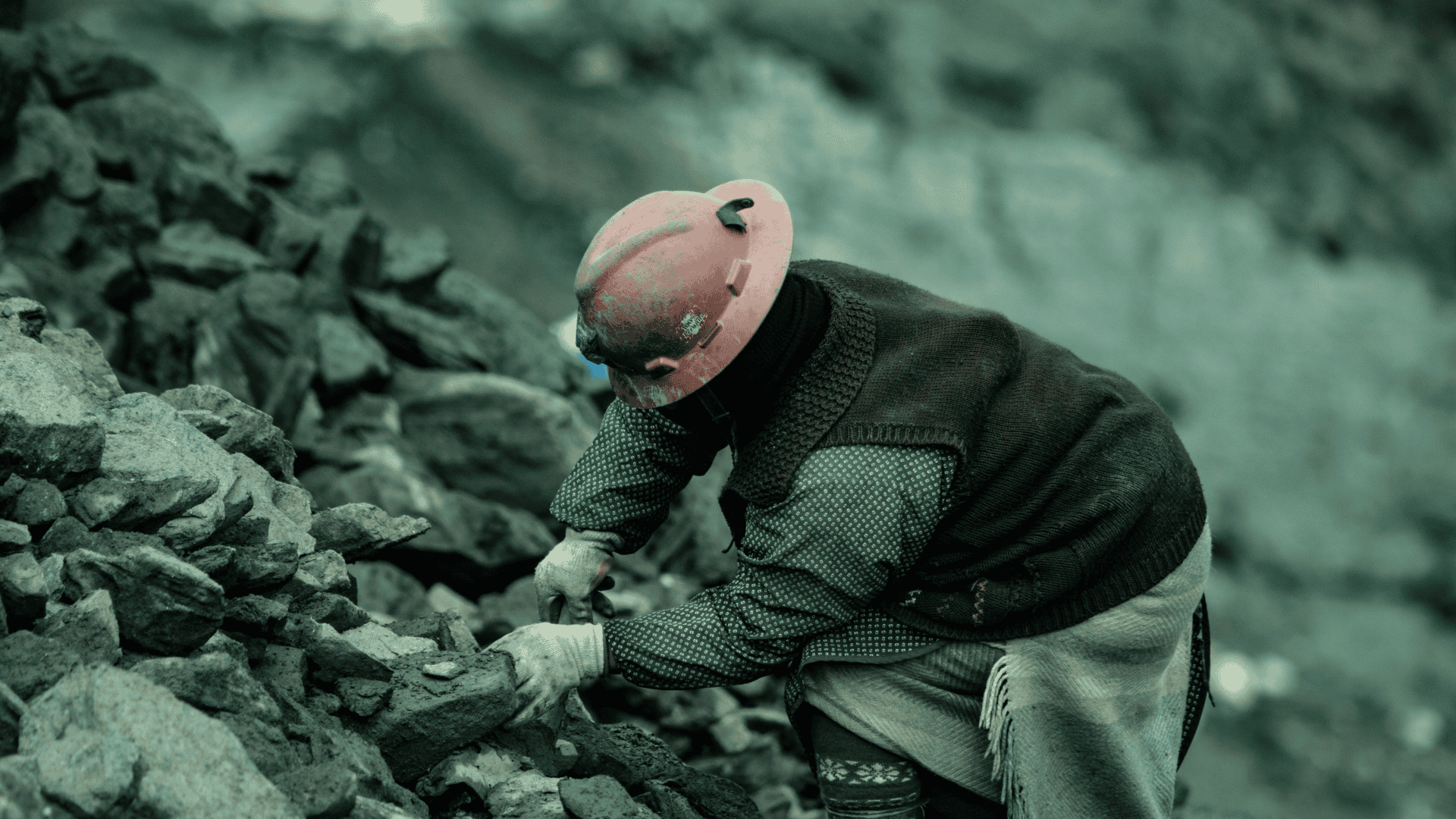
Deep beneath the Congo Basin, children as young as seven descend into dangerous cobalt mines to extract a mineral essential for every smartphone, electric vehicle, and wind turbine battery on Earth. Meanwhile, in the remote salt flats of Chile’s Atacama Desert, lithium extraction operations consume 65% of regional water supplies, threatening indigenous communities’ survival as global demand for electric vehicle batteries surges 30% annually. These scenes underscore a fundamental shift in geopolitical competition: the new “Great Game” revolves not around oil fields or shipping lanes, but around critical minerals buried in some of the world’s most unstable regions.
The green energy transition has created unprecedented demand for materials like lithium, cobalt, nickel, and rare earth elements—minerals essential for solar panels, wind turbines, and battery storage systems. China currently controls 80% of global rare earth processing, while the Democratic Republic of Congo produces 70% of the world’s cobalt under conditions that international observers describe as a humanitarian crisis. As nations scramble to secure supply chains for their clean energy futures, these mineral dependencies are reshaping alliance structures, trade relationships, and conflict dynamics across continents.
This mineral scramble represents more than economic competition; it reflects a fundamental tension between climate imperatives and geopolitical realities. The same materials needed to combat climate change are concentrated in regions plagued by political instability, human rights abuses, and Chinese economic influence, creating strategic vulnerabilities that could undermine the global energy transition itself.
Geological Foundation of Green Power
The transition from fossil fuels to renewable energy systems requires massive quantities of specific minerals that exist in commercially viable concentrations in relatively few locations worldwide. A single electric vehicle battery contains approximately 17 pounds of lithium, 77 pounds of nickel, and 30 pounds of cobalt—materials that must be extracted, refined, and processed before reaching consumers.
Lithium, dubbed “white gold” for its silvery appearance and soaring value, is primarily found in two geological formations: hard rock deposits in Australia and underground brines in South America’s “lithium triangle” spanning Chile, Argentina, and Bolivia. These three countries control an estimated 58% of global lithium reserves, with Bolivia alone possessing 21 million tons—approximately one-quarter of known global reserves.
Rare earth elements, despite their name, are relatively abundant in Earth’s crust but extremely difficult to extract and process without severe environmental consequences. China’s dominance in this sector stems not from geological advantage but from willingness to accept environmental and health costs that Western nations have deemed unacceptable. The processing of rare earths generates toxic waste streams and radioactive byproducts that require careful management over decades.
The concentration of these resources creates what economists call “resource curse” vulnerabilities—nations rich in critical minerals often struggle with governance challenges, while consumer nations face supply security risks. This dynamic has become more pronounced as clean energy demand accelerates faster than new supply sources can be developed.
Five Dimensions of Mineral Geopolitics
China’s Strategic Dominance
China’s control over critical mineral supply chains represents one of the most significant strategic advantages in contemporary international relations. Beyond holding substantial reserves of several critical minerals, China has systematically invested in processing infrastructure, overseas mining operations, and technological capabilities that give it near-monopolistic control over global supplies.
In rare earth elements, China processes approximately 85% of global production despite holding only 37% of known reserves. This dominance stems from decades of investment in refining capabilities while Western nations shuttered operations due to environmental concerns and cost pressures. The closure of California’s Mountain Pass mine in 2002, following environmental violations, exemplified how strict environmental standards inadvertently strengthened Chinese market control.
China’s Belt and Road Initiative has extended this mineral dominance globally through strategic investments in mining operations across Africa, Latin America, and Central Asia. Chinese companies own or have significant stakes in lithium projects in Argentina, Chile, and Australia, cobalt mines in the Democratic Republic of Congo, and copper operations in Peru and Zambia. This “resource diplomacy” provides Beijing with leverage over nations dependent on Chinese investment while securing long-term supply agreements.
The weaponization potential of this dominance became apparent in 2010 when China temporarily restricted rare earth exports to Japan during a diplomatic dispute over the Senkaku/Diaoyu Islands. Although the restrictions lasted only months, they demonstrated how mineral dependencies could be leveraged for political objectives, prompting urgent diversification efforts among consuming nations.
The Democratic Republic of Congo Crisis
The Democratic Republic of Congo’s cobalt sector exemplifies how mineral wealth can perpetuate rather than alleviate instability and suffering. Despite possessing an estimated 3.4 million tons of cobalt reserves—representing 48% of global totals—the DRC remains among the world’s poorest nations, with 77% of its population living below the international poverty line.
Artisanal mining, involving an estimated 200,000 workers including approximately 40,000 children according to UNICEF, accounts for 15-30% of DRC cobalt production. These miners work in dangerous conditions without safety equipment, earning between $2-3 per day while global cobalt prices reached $80,000 per ton in 2022. The contrast between mineral wealth and human poverty has created a complex ethical crisis for technology companies dependent on Congolese cobalt.
Chinese companies dominate DRC cobalt operations through investments exceeding $6 billion since 2007. China Molybdenum’s $2.65 billion acquisition of the Tenke Fungurume mine in 2016 represented the largest Chinese mining investment in Africa, while Zhejiang Huayou Cobalt’s supply chain extends from DRC mines to Chinese battery manufacturers and ultimately to international technology companies.
The mineral wealth has also fueled conflict, with armed groups controlling mining areas and imposing illegal taxes on operations. The UN estimates that conflict minerals generate $400-500 million annually for armed groups in eastern DRC, perpetuating instability that affects 5.6 million internally displaced persons.
European Union’s Strategic Response
The European Union’s recognition of critical mineral vulnerabilities has prompted the most comprehensive Western response to China’s dominance through the Critical Raw Materials Act, approved in 2024. The legislation aims to secure supply chains for 34 critical materials by establishing domestic processing capabilities, diversifying supply sources, and creating strategic reserves.
The Act sets ambitious targets: by 2030, the EU aims to extract at least 10% of its annual critical mineral consumption domestically, process at least 40% within EU borders, and ensure no single third country provides more than 65% of any critical material. These targets represent a fundamental shift from market-based procurement toward strategic resource planning reminiscent of wartime mobilization.
Implementation faces substantial challenges, particularly regarding environmental regulations that make European mining operations expensive compared to alternatives in nations with weaker standards. The EU’s Green Deal requirements mandate environmental impact assessments and community consultations that can extend project timelines by years, creating tension between sustainability goals and supply security imperatives.
The Global Gateway initiative, promising €300 billion in infrastructure investment through 2027, includes significant funding for mineral projects in developing nations. Partnership agreements with Canada, Australia, and Chile aim to create “trusted supplier” relationships, while investments in African mining infrastructure seek to reduce Chinese influence over critical supply chains.
Deep-Sea Mining’s Controversial Promise
The prospect of harvesting critical minerals from the ocean floor has emerged as a potential game-changer in global supply dynamics, though it remains highly controversial due to environmental concerns and technological challenges. Polymetallic nodules scattered across deep ocean floors contain significant quantities of nickel, cobalt, copper, and manganese—materials essential for battery production and renewable energy infrastructure.
The International Seabed Authority, operating under UN Convention on the Law of the Sea framework, regulates deep-sea mining in international waters. The “Area” beyond national jurisdiction covers approximately 54% of ocean surface and contains an estimated 21 billion tons of polymetallic nodules. A single nodule field in the Pacific’s Clarion-Clipperton Zone reportedly contains more nickel, cobalt, and manganese than all terrestrial reserves combined.
However, deep-sea mining faces fierce opposition from environmental groups and some Pacific Island nations who argue that insufficient research exists regarding ecosystem impacts. The Nauru government’s 2021 request to begin commercial mining triggered a two-year deadline for international regulations, creating pressure for premature authorization of potentially destructive activities.
Major technology companies including Google, Microsoft, and BMW have called for moratoriums on deep-sea mining until environmental impacts are better understood. This corporate opposition reflects growing consumer pressure for sustainable supply chains, though it also perpetuates dependence on existing terrestrial sources with their own environmental and human rights challenges.
Emerging Alternative Strategies
Nations and companies are pursuing diverse strategies to reduce dependence on Chinese-controlled supply chains and conflict-affected regions. Recycling technologies offer particular promise, with current battery recycling rates below 5% globally despite the potential to recover 95% of lithium and cobalt from spent batteries.
Direct lithium extraction technologies, which can recover lithium from brines without traditional evaporation ponds, could unlock new resources while reducing environmental impacts and processing times from months to hours. Companies like ExxonMobil and Chevron are investing in these technologies to extract lithium from oil field brines, potentially making the United States a major lithium producer.
Urban mining—recovering critical materials from electronic waste—represents another promising avenue. The UN estimates that global e-waste contains $62.5 billion worth of recoverable materials annually, though current recovery rates remain below 10%. Japan’s urban mining program has successfully recovered gold, silver, and rare earth elements from discarded electronics, providing materials for Olympic medals and reducing import dependence.
Mineral Diplomacy
Australia’s Lithium Leverage
Australia’s emergence as the world’s largest lithium producer, accounting for 52% of global production, demonstrates how geological endowments can translate into geopolitical influence. The country’s hard rock lithium deposits, primarily in Western Australia’s Pilbara region, have attracted over $10 billion in Chinese investment since 2018.
However, Australia’s 2021 decision to block Chinese company Yibin Tianyi Lithium’s $300 million acquisition of lithium producer Alita Resources reflected growing concern about foreign control over critical resources. The Australian government subsequently established the Critical Minerals Facilitation Office to coordinate strategic investments while maintaining domestic control over supply chains.
The AUKUS partnership between Australia, Britain, and the United States includes provisions for critical mineral cooperation, with Australia positioned as a “trusted supplier” of lithium and rare earth elements for Western defense and technology industries. This arrangement demonstrates how mineral resources are becoming integrated into broader alliance structures and strategic partnerships.
Bolivia’s Resource Nationalism
Bolivia’s approach to lithium development illustrates how resource nationalism can complicate global supply chains while reflecting legitimate sovereignty concerns. Despite possessing the world’s largest lithium reserves, Bolivia has struggled to commercialize its resources due to technical challenges with high-magnesium brine extraction and political instability.
President Evo Morales’s government (2006-2019) insisted on state control over lithium development, rejecting foreign investment proposals that would have transferred technology or profits abroad. This approach reflected Bolivia’s historical experience with resource exploitation, from Spanish colonial silver extraction to 20th-century tin mining that enriched foreign companies while leaving Bolivia impoverished.
Recent political changes have opened Bolivia to limited foreign partnerships, with agreements signed with Chinese and Russian companies for lithium processing facilities. However, environmental protests and indigenous rights concerns continue to complicate development efforts, demonstrating how local communities increasingly demand participation in decisions affecting their territories.
Strategic Implications for Global Order
The critical minerals scramble is reshaping international relations in ways that extend far beyond traditional resource competition. Unlike oil, which can be stored and transported relatively easily, many critical minerals require complex processing chains that create multiple vulnerability points and opportunities for supply disruption.
This complexity is creating new forms of economic interdependence and strategic vulnerability. Nations pursuing green energy transitions find themselves potentially more dependent on authoritarian suppliers than they were during the fossil fuel era. China’s dominance over critical mineral processing creates leverage that extends beyond trade relationships into technology standards, environmental regulations, and foreign policy alignment.
The human rights implications of current supply chains are creating reputational and legal risks for companies and governments committed to responsible sourcing. California’s Senate Bill 252, requiring companies to disclose supply chain risks related to conflict minerals, represents early efforts to address these challenges through transparency requirements and due diligence standards.
Regional security implications are emerging as nations compete for access to mineral resources. China’s investments in mining infrastructure across Africa and Latin America create economic dependencies that potentially limit recipient nations’ foreign policy autonomy. Meanwhile, Western efforts to diversify supply chains require substantial investments in regions that may lack political stability or adequate governance structures.
Toward Sustainable Mineral Security
The critical minerals challenge requires coordinated international responses that balance supply security, environmental protection, and human rights considerations. Success will depend on developing technologies and governance frameworks that can support the clean energy transition while avoiding the resource curse dynamics that have plagued previous commodity booms.
Investment in recycling technologies, alternative materials research, and more efficient resource utilization offers paths toward reduced dependence on primary extraction. However, these solutions require time to scale while current demand continues growing exponentially. The gap between clean energy ambitions and sustainable supply chain realities represents one of the most significant challenges facing global climate action.
International cooperation mechanisms, from multilateral mining codes to technology transfer agreements, will prove essential for managing this transition equitably and sustainably. The choices made in the next decade regarding critical mineral supply chains will shape geopolitical relationships and environmental outcomes for generations to come. As the world races to decarbonize its energy systems, ensuring that the cure for climate change does not create worse geopolitical diseases may prove the ultimate test of 21st-century diplomacy.