

In February 2022, Russian tanks rolled across the Ukrainian border despite decades of international law, treaties, and diplomatic assurances. In 2024, the United States and China continue their technological cold war, each racing to dominate artificial intelligence and semiconductor production, even as their economies remain deeply intertwined. Meanwhile, traditional adversaries like Israel and Saudi Arabia quietly coordinate on regional security, setting aside decades of ideological opposition when strategic interests align.
Why do nations behave this way? Why does power seem to trump principle so consistently on the world stage? And why do even democracies committed to human rights often act with ruthless pragmatism when their core interests are threatened?
The answer, according to political realists, lies not in the failures of individual leaders or temporary moral lapses, but in the fundamental structure of international politics itself. Political realism offers a framework for understanding world affairs that cuts through the rhetoric of values and ideals to focus on the hard currency of international relations: power and interest.
This isn’t cynicism, realists argue—it’s clarity. And remarkably, the clearest articulation of this worldview came not from a hardened general or Machiavellian prince, but from a German-Jewish refugee writing in the shadow of World War II. Hans Morgenthau’s theory of political realism, developed in the late 1940s, remains one of the most powerful tools we have for making sense of global politics in our complex, multipolar 21st century.
In this guide, we’ll explore what political realism actually means, why it continues to shape how nations behave, and how you can use realist thinking to better understand the headlines you read every day—while also recognizing where this framework falls short.
What is Political Realism?
Political realism is a school of thought in international relations that views world politics as a perpetual competition for power among nations pursuing their own interests. Unlike idealistic frameworks that emphasize international cooperation, moral progress, or the spread of democracy, realism starts from a darker premise: in a world without a supreme authority, nations ultimately rely on their own strength to survive.
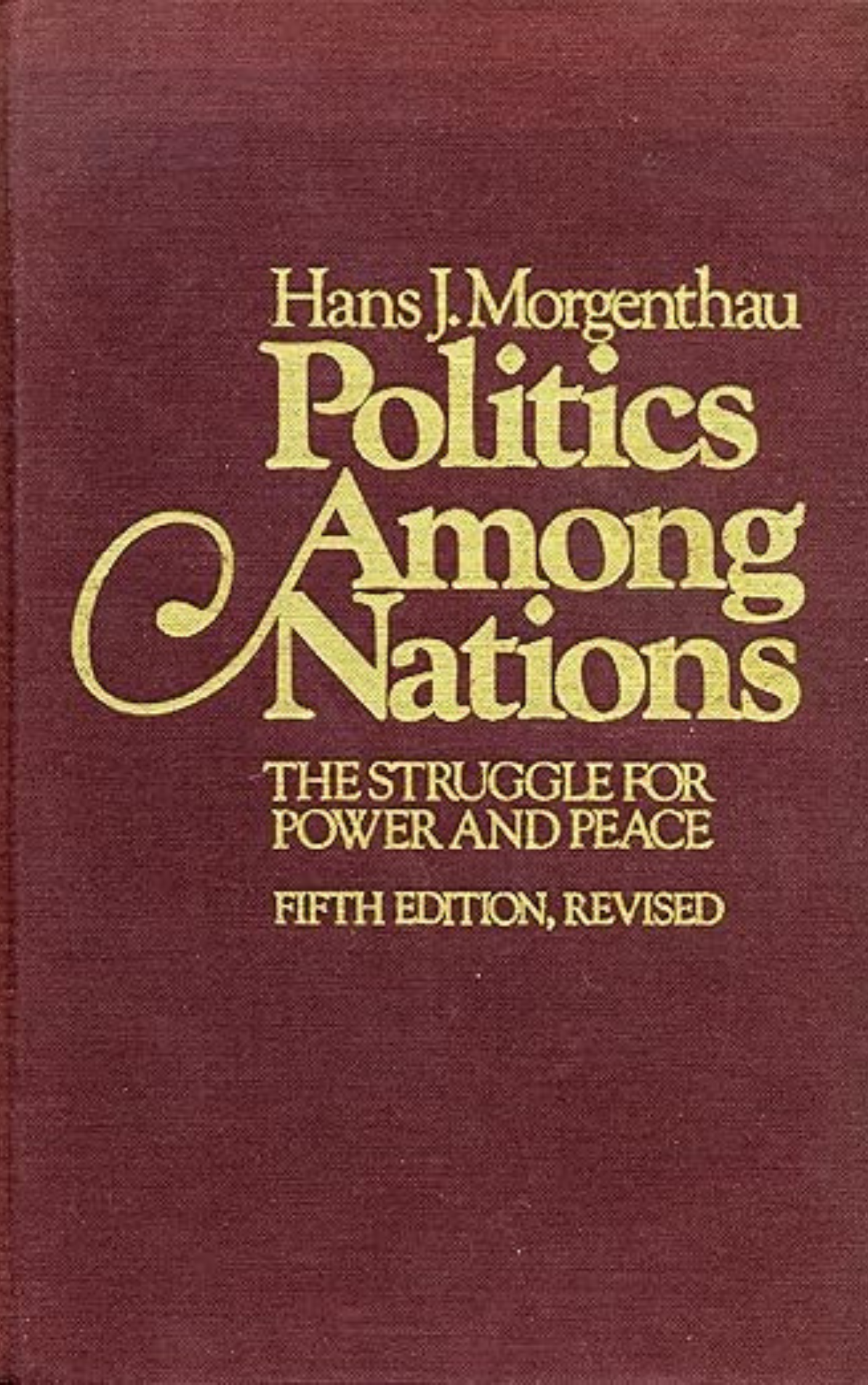
The intellectual father of modern realism is Hans Morgenthau, a legal scholar who fled Nazi Germany in 1937 and reimagined the study of international relations in his landmark 1948 book “Politics Among Nations.” Morgenthau wasn’t just theorizing in an ivory tower. He had watched the League of Nations fail, witnessed the horror of a world war that claimed over 60 million lives, and rejected the idealistic thinking that had left democracies unprepared for fascist aggression.
The historical context matters. In the 1920s and 30s, many Western leaders believed that international institutions, treaties, and the growing interdependence of economies would make major wars obsolete. They were catastrophically wrong. Morgenthau and other realists argued that this “idealist” thinking had been dangerously naive—it ignored the harsh realities of power politics and human nature.
For realists, the international system is fundamentally anarchic. This doesn’t mean chaos or disorder in the everyday sense. It means there’s no world government, no global police force with the power to enforce rules on major powers. In this environment, realists argue, states are the primary actors that matter, and they must ultimately rely on their own capabilities—military strength, economic resources, diplomatic leverage—to protect their interests and ensure their survival.
This differs sharply from how we use “realistic” in everyday conversation. Being realistic usually means being practical or accepting limits. Political realism is something more specific: a theory about how international politics actually works, based on recurring patterns throughout history. It’s descriptive, explaining why states behave as they do, but also prescriptive, suggesting how they should act to survive and thrive.
Morgenthau’s Six Principles: A Modern Translation
Morgenthau organized his theory around six core principles. Let’s translate each one for the 21st century, examining both their continued relevance and their limitations.
1. Politics is Governed by Objective Laws Rooted in Human Nature
Morgenthau believed that political behavior follows patterns based on unchanging aspects of human nature—particularly our drive for power and self-preservation. Just as economists assume people act in their self-interest, realists assume nations do too.
Historically, this explains why Thucydides’ account of the Peloponnesian War (431-404 BCE) still resonates: Athens and Sparta competed for dominance in predictable ways that mirror modern great power rivalries.
Today, we see this in how the United States responds to China’s rise. Regardless of whether Democrats or Republicans hold power, American policy aims to maintain technological and military superiority. The bipartisan consensus on China reflects what realists would call an objective national interest that transcends partisan politics or individual leadership.
The complication? Human nature might be more malleable than Morgenthau assumed. The European Union shows that historical rivals can build lasting peace through institutional design. Cultural and ideational factors—democracy promotion, human rights norms—do seem to influence state behavior in ways pure power politics can’t fully explain.
2. National Interest Defined in Terms of Power
Morgenthau wrote: “The main signpost that helps political realism to find its way through the landscape of international politics is the concept of interest defined in terms of power.” Nations don’t act on abstract principles or ideological commitments—they pursue power to secure their interests.
During the Cold War, both the United States and Soviet Union supported dictators and autocrats when it served their geopolitical interests, ideology notwithstanding.
Consider Saudi Arabia’s role in U.S. foreign policy today. Despite widespread criticism of the kingdom’s human rights record, including the murder of journalist Jamal Khashoggi, the United States maintains close ties with Riyadh. Why? Energy security, regional stability, arms sales, and counterbalancing Iran all represent concrete American interests that override moral concerns about Saudi governance.
The modern challenge? Power now includes dimensions Morgenthau couldn’t foresee. Control over semiconductor supply chains, dominance in artificial intelligence development, and influence over global digital infrastructure represent new forms of power that don’t fit neatly into traditional military-economic categories. The concept must expand, but the core insight—interest trumps ideology—remains.
3. Interest is Variable in Content Across Time and Place
While power remains the central concern, what constitutes a nation’s interest changes with circumstances. Realism isn’t a rigid ideology but a flexible framework that adapts to different contexts.
Britain once fought to prevent any single power from dominating Europe. After World War II, it accepted—even encouraged—American leadership in Europe because the context had changed.
Climate change illustrates this variability perfectly. Small island nations like Tuvalu and the Maldives now define their core national interest as preventing sea-level rise that could literally erase them from the map. For them, climate negotiations are existential security issues, not environmental amenities. Meanwhile, Russia may view some warming as advantageous, opening Arctic shipping routes and making Siberian resources more accessible. Same planet, radically different interests.
The complication arises when we ask: who defines the national interest? Morgenthau assumed relatively clear interests, but modern democracies contain competing factions with different visions. Is America’s interest in the Middle East defined by energy security, regional stability, support for Israel, promotion of democracy, or countering terrorism? Different administrations give different answers.
4. Tension Between Moral Imperatives and Political Success
Morgenthau acknowledged that universal moral principles exist, but argued that statesmen cannot always follow them. The responsibility to protect one’s nation sometimes requires morally questionable actions. This creates an inherent tragedy in international politics.
Franklin Roosevelt maintained diplomatic relations with Stalin’s Soviet Union during World War II, despite knowing about Soviet atrocities, because defeating Hitler required it.
The Afghanistan withdrawal in 2021 exemplifies this tension. The Biden administration faced a choice: continue an unwinnable war indefinitely or abandon vulnerable Afghans who had helped American forces. Either choice involved moral compromise. The decision to withdraw prioritized American interests—ending a costly forever war—over the moral imperative to protect allies, resulting in scenes of desperate Afghans clinging to departing aircraft.
Modern complication: social media and 24-hour news cycles make moral compromises more visible and politically costly. Leaders can’t as easily separate private realist calculation from public moral rhetoric, creating a gap between what realism prescribes and what publics will accept.
5. No Universal Moral Principles Applicable to States
This is realism’s most controversial claim: there’s no single moral standard by which all nations can be judged. What China considers “sovereignty” and “non-interference,” the West might call “enabling authoritarianism.” Morgenthau argued against crusading foreign policies that impose one nation’s values on others.
The Iraq War (2003) was justified partly as spreading democracy, a universalist moral mission that realists like Brent Scowcroft opposed as dangerous overreach.
Today’s debate over “democratic values versus authoritarian governance” reveals this principle’s relevance. When the United States champions a “rules-based international order,” China and Russia respond that these are Western rules designed to preserve American hegemony. African and Latin American nations often resist both camps, asserting their right to define their own political systems without external interference. The contentious reactions to Western sanctions on Russia after the Ukraine invasion—with many Global South nations refusing to join—demonstrate that moral principles in international politics remain deeply contested, not universal.
The challenge today is that some issues seem to demand universal standards. Climate change, nuclear proliferation, and pandemic response arguably require coordinated global action based on shared principles. Can realism accommodate truly global challenges, or does its state-centric focus leave it unable to address collective action problems?
6. Autonomy of the Political Sphere
Morgenthau’s final principle holds that political realism maintains the autonomy of the political sphere, understanding politics as distinct from economics, ethics, or religion. A realist analyzes foreign policy in terms of power and interest, not through economic determinism, moral absolutism, or religious ideology.
During the Cold War, realists like George Kennan warned against viewing the Soviet Union purely through an ideological lens, arguing that Russian strategic interests—warm water ports, buffer zones, sphere of influence—explained Soviet behavior better than communist doctrine.
This principle illuminates current debates about economic interdependence and conflict. Some argue that deep trade ties between the United States and China make major conflict impossible—an economic determinist view. Realists counter that political and strategic considerations can override economic logic. China’s willingness to accept significant economic costs to assert control over Taiwan, or Russia’s invasion of Ukraine despite devastating sanctions, suggests that political imperatives can trump economic rationality.
The modern complication is that economics and politics have become increasingly intertwined. Economic sanctions are now primary tools of statecraft. Technology companies shape geopolitical outcomes. Can we really separate these spheres as cleanly as Morgenthau suggested, or has the nature of power itself changed?
Key Realist Concepts for Today’s World
Understanding realism’s principles is one thing; applying them requires grasping several core concepts that translate into our contemporary context.
Power remains central, but its nature has evolved dramatically. Military capabilities still matter—Russia’s invasion of Ukraine demonstrated that conventional warfare hasn’t become obsolete. But consider the new domains of power competition. The United States’ ability to cut Huawei off from advanced semiconductors represents economic coercion that would have been unimaginable in Morgenthau’s era. China’s Belt and Road Initiative uses infrastructure investment to build influence across Asia, Africa, and Europe. Control over rare earth elements, essential for everything from smartphones to missile systems, gives China leverage over global supply chains. Cyber capabilities allow states to penetrate rivals’ critical infrastructure without firing a shot. Power now operates across military, economic, technological, and informational dimensions simultaneously.
National interest has similarly expanded beyond territorial integrity and physical security. Today’s vital interests include technological supremacy, particularly in artificial intelligence and quantum computing, which will determine economic competitiveness and military advantage for decades. Supply chain resilience became a security priority after COVID-19 exposed dangerous dependencies. Energy transition involves not just environmental policy but strategic calculations about dependence on authoritarian regimes. Even space has become a domain of national interest, with satellites essential for communications, navigation, and intelligence gathering.
The balance of power concept—the idea that states form alliances to prevent any single power from dominating—has adapted to a multipolar world. We’re witnessing the emergence of flexible, minilateral arrangements rather than the rigid Cold War blocs. The Quad (United States, Japan, India, Australia) coordinates on Indo-Pacific security without forming a formal alliance. AUKUS (Australia, United Kingdom, United States) focuses on specific technological cooperation. Middle powers like South Korea, Turkey, and Saudi Arabia play increasingly independent roles, refusing to choose definitively between great power camps. This fluid balancing creates both opportunities and instabilities that Morgenthau’s bipolar Cold War framework didn’t fully anticipate.
The security dilemma—where one state’s efforts to increase its security make others feel less secure, triggering an arms race—now plays out in new arenas. AI development creates a security dilemma where each nation fears falling behind in capabilities that could prove decisive in future conflicts, driving rapid advancement despite safety concerns. Space militarization follows similar logic: one nation’s anti-satellite capabilities threaten others’ space assets, prompting countermeasures. Hypersonic missiles reduce warning times, increasing first-strike temptations and crisis instability.
Finally, anarchy—the absence of supreme authority above states—persists despite decades of institution-building. The United Nations can’t compel Russia to withdraw from Ukraine or prevent China from militarizing the South China Sea. International law proves toothless when great powers choose to ignore it. The World Trade Organization struggles to referee trade disputes between major economies. This doesn’t mean institutions are worthless—they provide forums for negotiation and can constrain behavior at the margins—but the fundamental condition of self-help in international politics remains. When their core interests are threatened, nations still rely on their own power, not international authorities.
Realism in Action: Current Case Studies
Let’s examine how realist thinking illuminates several contemporary situations where idealistic frameworks struggle to explain state behavior.
The Ukraine War makes perfect sense through a realist lens, even if we condemn Russia’s aggression. From Moscow’s perspective, NATO expansion represented an existential threat to Russian security and influence. Ukraine’s pivot toward the West after 2014 challenged Russia’s conception of its sphere of influence, a concept realists recognize even if they don’t endorse it. Vladimir Putin calculated that Russia’s interests in maintaining a buffer zone and preventing further Western encroachment justified military action, despite international condemnation and economic sanctions. The West’s response—arming Ukraine but avoiding direct military involvement—reflects a realist calculation that Ukrainian sovereignty, while important, doesn’t warrant risking nuclear war with Russia. Each side pursues its interests through power politics, not moral principles or international law.
U.S.-China relations embody what scholar Graham Allison calls the “Thucydides Trap”—the dangerous dynamic when a rising power threatens to displace an established hegemon. Despite massive economic interdependence, with bilateral trade exceeding $750 billion annually in 2022, strategic competition intensifies. The United States views China’s technological advancement, military modernization, and regional assertiveness as challenges to American primacy. China sees U.S. efforts to maintain dominance—through alliances, military presence, and technology restrictions—as attempts to contain its legitimate rise. Both nations arm Taiwan differently (the U.S. with weapons, China with threats) based on their interests. The economic costs of confrontation haven’t prevented political competition because, as realists would predict, security concerns ultimately trump commercial ties.
Middle East realignments demonstrate interest-based diplomacy overriding ideological opposition. The Abraham Accords normalized relations between Israel and several Arab states not because of sudden affection or shared values, but because of converging interests in countering Iran, accessing Israeli technology, and maintaining American security commitments. Saudi Arabia and Iran’s Chinese-brokered rapprochement in 2023 similarly reflected pragmatic calculation—both wanted to reduce regional tensions and focus on domestic priorities—rather than any resolution of their deep sectarian and strategic rivalry. These developments puzzle those who view Middle East politics primarily through religious or ideological lenses, but realists recognize the shift as classic balance-of-power politics.
What Realism Gets Wrong
For all its explanatory power, political realism has significant blind spots that critics rightly identify.
Realism struggles to explain genuinely cooperative outcomes, particularly the European integration project. How did centuries-old enemies like France and Germany build not just peace but a supranational union that pools sovereignty? Realist predictions that the EU would collapse without a common external threat have proven wrong for decades. The framework underestimates how institutions, shared identities, and economic integration can transform state interests themselves, not just constrain behavior.
Humanitarian interventions, when successful, challenge realist assumptions. The intervention in Sierra Leone (2000) and the NATO operation in Libya (2011) initially responded more to humanitarian concerns than vital national interests. While realists can explain these as powerful states exercising their capabilities when costs are low, this feels like retrofitting the theory to preserve it.
Non-state actors—multinational corporations, terrorist organizations, international NGOs, social movements—wield influence that state-centric realism minimizes. Climate activists, tech companies, and global health organizations shape outcomes in ways that can’t be reduced to state power and interest. The COVID-19 pandemic showed both pharmaceutical companies and the WHO playing roles that realism’s focus on states doesn’t fully capture.
Feminist scholars argue that realism’s emphasis on power, conflict, and state survival reflects masculine perspectives while ignoring how gender shapes international politics. Post-colonial critics note that realism emerged from European experiences and may not universally apply to states with different historical trajectories and security concerns.
Perhaps most fundamentally, realism’s focus on continuity and recurring patterns makes it poor at explaining change. How do we get from Morgenthau’s world of great power war to our current era of relative great power peace? Why did the Cold War end peacefully? Realism emphasizes eternal verities but struggles with transformation and genuine novelty in international politics.
Environmental challenges reveal another limitation. Climate change, ocean acidification, and biodiversity loss are collective action problems requiring cooperation based on shared long-term interests. Realism’s emphasis on relative gains—ensuring you do better than rivals—works against the collaborative approaches needed for global commons issues. When every nation pursues its immediate interest, everyone loses.
Modern Evolution and Debates
Realism itself has evolved significantly since Morgenthau’s classical formulation. Kenneth Waltz’s “neorealism” or “structural realism” in 1979 shifted focus from human nature to the anarchic structure of the international system itself. For Waltz, it doesn’t matter whether leaders are aggressive or peaceful—the system’s competitive logic forces them to prioritize security and power.
This spawned further debates between “offensive realists” like John Mearsheimer, who argue states must maximize power to ensure survival, and “defensive realists” like Stephen Walt, who contend that states seek security, not power for its own sake, and that excessive expansion often backfires. These aren’t academic quibbles—they produce different predictions about whether China must challenge U.S. dominance or could be satisfied with regional hegemony.
Contemporary scholars continue adapting realism to new challenges. Some incorporate insights from behavioral economics about how cognitive biases affect strategic calculation. Others explore how domestic politics and regime type influence how states define and pursue interests. “Neoclassical realism” blends structural constraints with unit-level factors like leadership and political culture.
These internal debates show realism’s vitality but also its fragmentation. Is there a single realist theory, or multiple realist theories that sometimes contradict each other? The diversity of realist thought today makes it harder to pin down exactly what realism predicts, even as realist insights remain influential.
Why It Matters for You
You might wonder why a theory developed by Cold War academics should matter to you. Here’s why realist thinking remains practically useful for any informed citizen.
Understanding realism helps you see through the gap between rhetoric and reality in foreign policy. When political leaders invoke human rights, democracy promotion, or rules-based order, realist analysis asks: what are the underlying interests? This doesn’t mean the rhetoric is meaningless—it shapes what policies are politically feasible—but it’s rarely the whole story. Recognizing this prevents naive surprise when nations act inconsistently with their proclaimed values.
Realism provides a framework for predicting state behavior during crises. When tensions rise over Taiwan, the South China Sea, or the Arctic, realist logic suggests looking at material capabilities, strategic interests, and alliance commitments rather than diplomatic statements or legal claims. This helps you anticipate likely outcomes and assess real risks.
For evaluating your own country’s foreign policy, realism offers a critical standard. Are proposed policies realistic given the power available and interests at stake? Do they account for how other nations will respond? Realist thinking can identify overreach—commitments that exceed capabilities—and missed opportunities where interests align with feasible action.
More broadly, realism cultivates healthy skepticism about grand schemes to transform international politics. It suggests modest expectations and warns against crusades that ignore constraints. This doesn’t mean accepting injustice or abandoning improvement, but rather pursuing change with clear-eyed recognition of obstacles and costs.
Living in a Realist World
Political realism offers a powerful lens for understanding international politics, but it’s not the only lens, and viewing everything through a realist framework creates its own distortions. The world is complex enough that we need multiple theories and perspectives to grasp it fully.
The value of realism lies not in accepting its worldview as complete truth, but in incorporating its insights into a broader understanding. Yes, power and interest drive much international behavior, and ignoring this invites disappointment or disaster. But cooperation, institutions, ideas, and moral progress are also real features of our world that shape outcomes.
The most sophisticated analysis combines realist attention to power with liberal insights about institutions, constructivist understanding of how ideas matter, and critical perspectives on whose interests are served by different arrangements. Think of realism as one essential tool in your analytical toolkit, not the only tool.
As you read tomorrow’s headlines about great power competition, regional conflicts, or international negotiations, try applying the realist framework. Ask yourself: what are the underlying interests? Who has power and leverage? How does the anarchic structure of international politics constrain options? But also ask: where are states cooperating despite competing interests? How do institutions and norms influence behavior? What’s missing from a purely realist account?
In our interconnected but still anarchic world—where nuclear weapons, climate change, and global pandemics create unprecedented challenges, yet nations remain the primary actors pursuing their interests—Morgenthau’s insights remain as relevant as ever. Understanding realism won’t make international politics less tragic or frustrating, but it will make it less mysterious. And in a world where power politics continues to shape all our lives, that clarity is invaluable.