
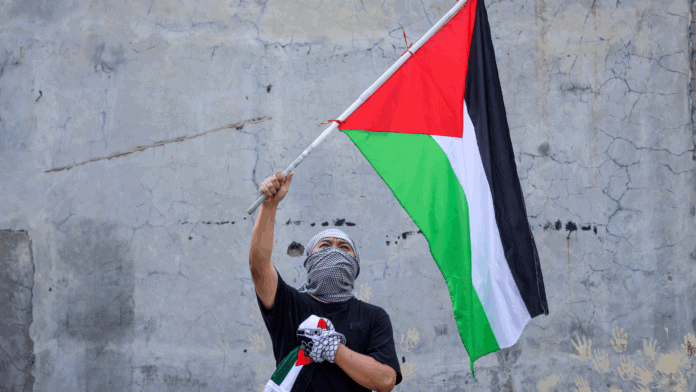
The war in Gaza was supposed to end Hamas. Instead, it has created something potentially more dangerous: a battle-hardened insurgent movement with nothing left to lose. Despite Israeli claims of military success, intelligence assessments indicate significant Hamas leadership and operational capacity survived the initial assault, setting the stage for a protracted asymmetric conflict that could reshape Middle Eastern security for years to come.
This transformation from conventional warfare to insurgency marks a critical inflection point—not just for Israel and Gaza, but for American strategy in a region where proxy conflicts increasingly determine great power competition. As Hamas adapts to guerrilla tactics, the Biden administration faces uncomfortable questions about the limits of military solutions and the necessity of diplomatic engagement with actors it would prefer to isolate.
The Insurgency Trap
Hamas’s evolution into an insurgent force follows a predictable pattern observed from Iraq to Afghanistan: when faced with overwhelming conventional superiority, armed groups retreat into civilian populations, adopt hit-and-run tactics, and shift their strategic objective from victory to survival. But Hamas’s transformation carries unique risks.
Unlike insurgencies that emerge from external invasion, Hamas retains deep roots in Gaza’s social fabric. It runs hospitals, schools, and social services—infrastructure that Israel’s military campaign damaged but could not eliminate. This dual civilian-military identity allows Hamas to blend into post-conflict reconstruction efforts while maintaining operational capabilities.
The group’s survival also validates a broader regional trend toward asymmetric warfare. Iran’s “axis of resistance” has watched Israeli military superiority clash against guerrilla tactics in real-time. Houthi missile attacks on Israeli territory and Iranian direct strikes in April and October 2024 demonstrate how regional actors are applying lessons from Gaza to their own confrontations with Israel and, by extension, the United States.
For Israeli strategists, the insurgency scenario represents their worst nightmare: an endless cycle of low-intensity conflict that drains resources, undermines deterrence, and provides constant justification for international criticism. Traditional military metrics become irrelevant when the enemy’s primary goal shifts from territorial control to political endurance.
The Humanitarian Leverage
The war’s humanitarian toll has created new diplomatic realities that neither Israel nor the United States can ignore. With over 42,000 Palestinians killed, including more than 13,300 children, and 318 aid workers killed—the highest number in any single crisis—international pressure for accountability has reached unprecedented levels.
These numbers do more than generate sympathy; they reshape diplomatic leverage. European allies increasingly condition support for Israeli security on progress toward Palestinian political rights. Arab states that might have normalized relations with Israel now face domestic pressure that makes public cooperation politically toxic. Even traditional supporters find themselves defending policies that appear to violate international humanitarian law.
The systematic targeting of journalists and aid workers particularly complicates Israel’s international standing. When neutral actors become targets, it suggests either a breakdown in military discipline or a deliberate strategy to control information—neither interpretation helps Israel’s case in international forums.
This humanitarian pressure creates what strategists call “moral entrapment”—a situation where continued military operations generate costs that exceed their strategic benefits. For the United States, supporting Israel’s operations while condemning their humanitarian consequences creates cognitive dissonance that undermines broader diplomatic credibility.
Diplomatic Resurgence
Paradoxically, the war’s devastation has revived serious discussion of the two-state solution after years of diplomatic neglect. The July 2025 UN High-Level International Conference brought together world leaders to address the two-state framework at what they termed a “historically critical moment”—though notably without American or Israeli participation.
This revival reflects cold strategic calculation rather than humanitarian sentiment. Regional powers recognize that the current trajectory—endless cycles of violence without political resolution—serves no one’s long-term interests. Even states hostile to Israeli policies understand that Palestinian political development requires Israeli security guarantees, creating potential common ground for pragmatic diplomacy.
The challenge lies in sequencing. Currently, no two-state proposal is being actively negotiated, with Israel rejecting Palestinian statehood while the Palestinian Authority maintains support for the concept. This asymmetry reflects deeper structural problems: Hamas’s survival undermines Palestinian political unity, while Israeli security concerns make territorial concessions appear impossible.
Yet the war’s outcome creates new incentives for compromise. Israel’s military campaign demonstrated both the limits of force in solving political problems and the unsustainability of indefinite occupation. For Palestinians, Hamas’s survival proves that armed resistance can endure even overwhelming military pressure, potentially strengthening moderate voices arguing for political strategies.
Regional Realignment
The Gaza war’s regional dimensions transform it from a bilateral dispute into a proxy conflict with global implications. Iran’s support network—from Hezbollah in Lebanon to the Houthis in Yemen—has treated Gaza as a test case for challenging Israeli-American dominance in the Middle East.
This regionalization creates both risks and opportunities for American strategy. The risk lies in escalation: each Gaza crisis now threatens to trigger wider conflicts involving multiple state and non-state actors across the region. Iranian capabilities demonstrated during the April and October 2024 attacks suggest that future escalations could overwhelm Israeli defenses and drag American forces into direct confrontation.
The opportunity lies in comprehensive diplomacy. Regional actors who previously viewed the Palestinian issue as a zero-sum competition now face shared interests in preventing endless instability. Saudi Arabia’s Abraham Accords negotiations, temporarily suspended due to the war, could resume if linked to credible progress on Palestinian political development.
This creates space for what diplomatic historians call “linkage strategies”—connecting previously separate issues to create broader bargaining space. Palestinian statehood could become part of a regional security architecture that addresses Iranian expansion, normalizes Israeli-Arab relations, and provides American partners with domestic political cover for cooperation with Israel.
The Reconstruction Dilemma
Gaza’s physical destruction creates a paradoxical opportunity for political transformation. Rebuilding will require international assistance on a scale comparable to post-World War II reconstruction efforts. This necessity creates leverage for demanding political reforms and governance changes that military action alone could not achieve.
But reconstruction also creates new dependencies and vulnerabilities. Who controls the rebuilding process will largely determine Gaza’s political future. If Hamas maintains influence over reconstruction efforts, it could emerge from military defeat stronger than before. If external actors control rebuilding without Palestinian buy-in, they risk creating another failed state dependent on foreign assistance.
The most promising approach involves conditional reconstruction tied to political development. International assistance could flow through reformed Palestinian institutions that provide both Israeli security guarantees and Palestinian governance legitimacy. This model requires unprecedented cooperation between traditional adversaries but offers the only realistic path toward sustainable stability.
Strategic Implications
The Gaza conflict’s evolution reveals fundamental changes in contemporary warfare and diplomacy. Military superiority alone cannot resolve conflicts rooted in competing national narratives and territorial claims. Insurgencies can survive conventional defeat if they maintain political legitimacy and social support networks.
For American policymakers, this creates uncomfortable implications. The “peace through strength” approach that worked during the Cold War proves insufficient for managing proxy conflicts in densely populated areas. Military aid to allies must be coupled with diplomatic pressure for political solutions, even when those solutions require engaging with unsavory actors.
The Biden administration’s response to Gaza will establish precedents for managing similar crises worldwide. If the United States cannot help resolve a conflict involving its closest regional ally, it raises questions about American capacity to manage great power competition in other regions where proxy conflicts determine strategic outcomes.
The Path Forward
Sustainable solutions require acknowledging hard truths that all parties prefer to avoid. For Israel, military victory cannot eliminate Palestinian political aspirations, and security cannot be achieved through indefinite occupation. For Palestinians, armed resistance alone cannot achieve statehood, and political development requires compromises with Israeli security needs. For the United States, supporting allies requires accepting limits on their actions when those actions undermine broader strategic objectives.
The most realistic pathway involves graduated diplomacy that begins with practical cooperation and builds toward political agreements. Humanitarian assistance, reconstruction efforts, and economic development can create stakeholder networks invested in stability. These networks, over time, can provide the social foundation for political arrangements that currently appear impossible.
This approach requires strategic patience—accepting that sustainable peace will take decades rather than election cycles. It also requires tactical urgency—recognizing that continued violence creates facts on the ground that make eventual compromise more difficult.
The alternative is clear: endless cycles of violence that serve no party’s interests while contributing to broader regional instability. The Gaza war’s transformation into insurgency makes this cycle more likely unless policymakers embrace the difficult compromises that peace requires.
Hamas’s survival, paradoxically, may have created the conditions for its own political marginalization—if Palestinian moderates can demonstrate that diplomacy achieves what violence cannot. The question is whether Israeli and American leaders possess the strategic vision to test this proposition before another generation learns to view violence as the only viable political option.
The stakes extend far beyond Gaza’s borders. In an era of great power competition, the Middle East’s stability affects global energy markets, migration patterns, and the credibility of international institutions. Getting Gaza right may be essential for getting everything else right in a region where local conflicts increasingly determine global outcomes.