
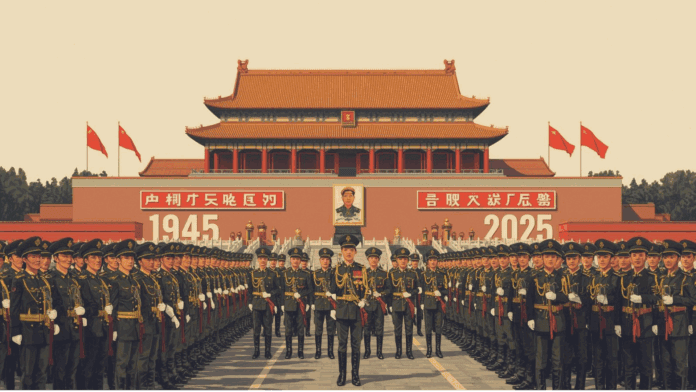
In an unprecedented demonstration of solidarity that marked an unprecedented show of force to the Western capitals, China hosted a massive military parade on September 3, 2025, bringing together three of the world’s most powerful authoritarian leaders. The military parade is the first time the leaders of Russia, China and North Korea have been seen together in public, marking a significant milestone in the emerging anti-Western coalition that has Western policymakers deeply concerned.
A Historic Gathering in Tiananmen Square
The spectacular event, held in Beijing’s iconic Tiananmen Square to commemorate the 80th anniversary of the end of World War II, featured Chinese President Xi Jinping hosting Russian President Vladimir Putin and North Korean leader Kim Jong Un. The parade, to be held in Beijing’s Tiananmen Square on September 3, is part of China’s commemorations to mark the 80th anniversary of the end of World War II following Japan’s formal surrender.
For Kim Jong Un, this gathering represented a particularly significant diplomatic breakthrough. The parade will be the first time that Kim appears together with both Xi and Putin — offering him a first multilateral diplomatic event and This is also the first multilateral diplomatic event for Kim, who rarely leaves North Korea. The North Korean leader’s attendance marked his first visit to China in six years, underscoring the strategic importance all three nations place on strengthening their alliance.
Showcasing China’s Military Modernization
Beyond the symbolic importance of the leadership summit, the parade served as China’s most comprehensive display of military technological advancement to date. China’s parade showed off its newest hardware, including laser weapons and undersea drones, rooting it firmly in the present – and depicting Xi Jinping’s future vision for a new world order that can counter the West.
The military showcase featured an array of cutting-edge weapons systems that demonstrated China’s rapid advancement in defense technology. Some of the newer Chinese military weapons expected to be showcased today: hypersonic missiles, underwater drones, “Loyal Wingmen” autonomous drones, next-generation tanks and advanced fighter jets. Among the most notable revelations were the debut of the DF-61 missile system and various directed-energy weapons that had never been publicly displayed before.
Military analysts were particularly intrigued by China’s demonstration of autonomous warfare capabilities. The general ticked off a range of China’s most modern weaponry that it’s never shown the world before: cutting-edge drones, directed-energy weapons, electronic jamming systems, hypersonic systems, air-defense and missile-defense technologies, and strategic missiles. These advanced missile systems and stealth technology represent China’s determination to match and potentially exceed Western military capabilities.
Strategic Implications of the Alliance
The timing and composition of this military parade carry profound geopolitical implications. Putin, wanted by the International Criminal Court, last travelled in China in 2024, while North Korea, a formal treaty ally of China’s, has been under United Nations Security Council sanctions since 2006 over its development of nuclear weapons and ballistic missiles. The willingness of all three leaders to appear together publicly represents a bold challenge to Western-led international norms and institutions.
The deepening Russia-North Korea relationship has been particularly concerning to Western intelligence agencies. Kim’s last overseas trip was in September 2023, when he and Putin met at a spaceport in Russia’s Far East. Putin also made a trip to Pyongyang, where he and Kim signed a mutual defense pact in June 2024. This mutual defense agreement has raised alarms about potential military cooperation that could destabilize multiple regions simultaneously.
Military Technology as Diplomatic Tool
China’s decision to unveil its most advanced military technologies during this high-profile diplomatic event reflects a sophisticated understanding of modern power projection. China is preparing to showcase its latest anti-ship missiles, combat drones and nuclear-capable ballistic missiles in a parade aimed at demonstrating its military prowess — and perhaps attracting potential buyers. This dual purpose – intimidating adversaries while attracting allies and clients – demonstrates China’s growing confidence in its role as a global military technology supplier.
The hypersonic weapons systems displayed during the parade represent a particular area where China believes it has achieved technological superiority. Images circulating this week from parade rehearsals on Chinese social media appear to show several new missiles—both supersonic and believed hypersonic—as well as unmanned undersea vehicles roughly 60 feet long, suggesting maritime and long-range strike segments will be prominent. These underwater drones and advanced missile systems could fundamentally alter the balance of power in the South China Sea and beyond.
Challenges to Western Hegemony
The parade represented more than military posturing; it embodied a direct challenge to the post-World War II international order dominated by Western powers. For many in the West, the defining unprecedented show of solidarity against the West. From atop the Gate of Heavenly Peace, Xi presided over a 70-minute parade to mark the end of World War II. This symbolic choice of location and timing sent a clear message about China’s vision for reshaping global power structures.
The coordination between these three nations extends beyond symbolic gestures to practical military cooperation. The advanced weapons display included systems that could potentially be shared or jointly developed, creating new security challenges for NATO and allied nations in the Indo-Pacific region.
Looking Forward: A New World Order?
As the dust settles from this historic military parade, the international community must grapple with the reality of a strengthened authoritarian alliance. depicting Xi Jinping’s future vision for a new world order that can counter the West is no longer merely aspirational rhetoric but appears to be backed by substantial military capabilities and diplomatic coordination.
The success of this parade in demonstrating unity among China, Russia, and North Korea will likely encourage further cooperation and potentially draw other nations into this emerging bloc. For Western policymakers, the challenge lies in developing effective responses that can deter aggression while avoiding escalation into broader conflict.
This massive display of military might, diplomatic unity, and technological advancement marks a watershed moment in 21st-century geopolitics, signaling that the era of uncontested Western global dominance may be drawing to a close. The implications of this historic gathering will reverberate through international relations for years to come, as the world adjusts to the reality of a multipolar order defined by competing visions of global governance and security.