
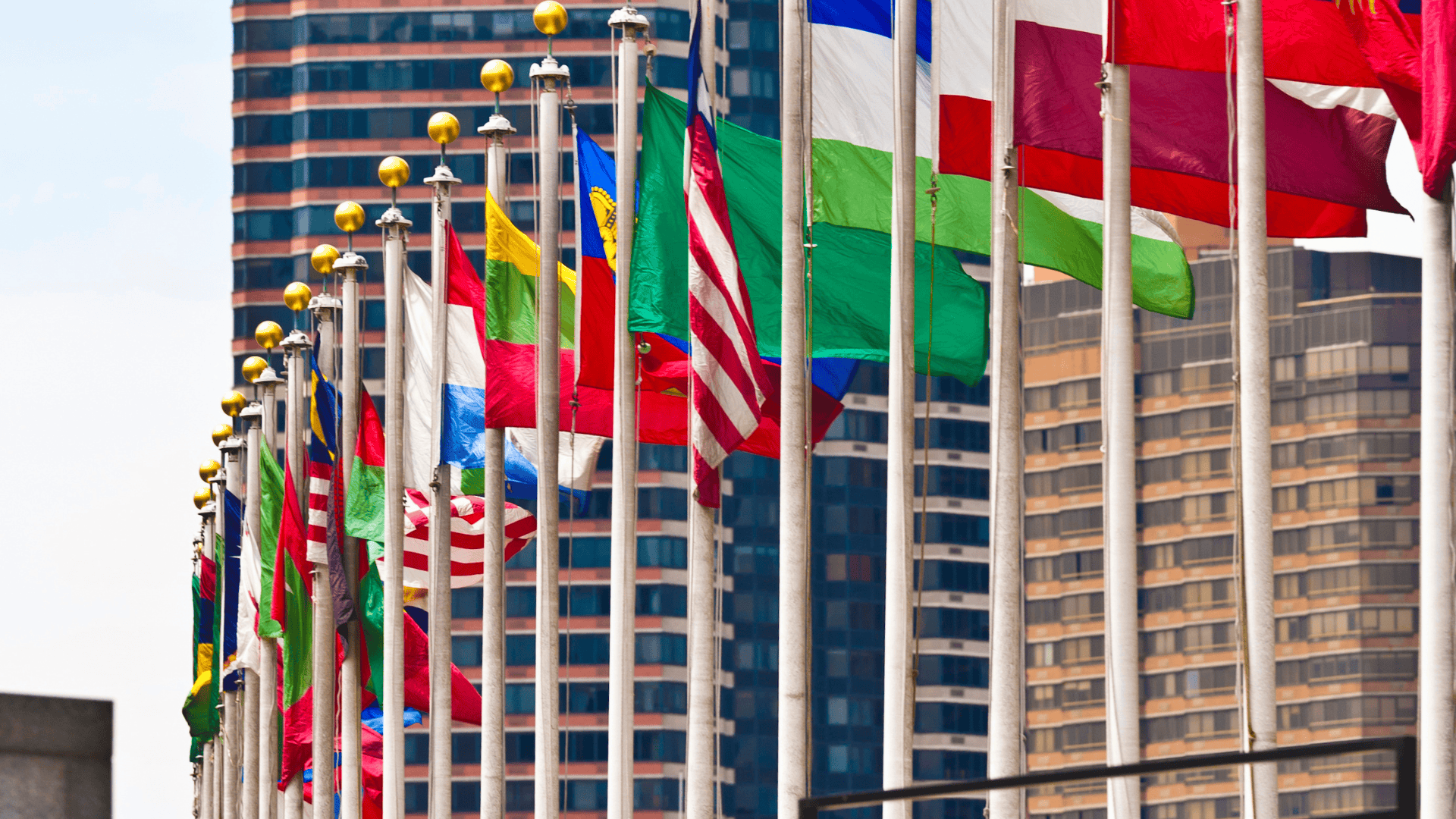
When Saudi Arabia and the UAE joined BRICS in January 2024, alongside Egypt, Ethiopia, and Iran, the moment crystallized a fundamental shift reshaping global politics. For the first time since the Cold War’s end, major powers are openly constructing alternative institutional frameworks to challenge Western-led international order. This expansion wasn’t merely about economics—it was a declarative statement that the era of American unipolarity, which defined international relations for three decades, has definitively ended.
The transition to multipolarity represents the most significant transformation in global power distribution since 1991. Unlike the bipolar Cold War system that divided the world into two competing blocs, today’s multipolar order features multiple centers of power with overlapping spheres of influence, competing governance models, and fluid alliance structures. This shift fundamentally alters how international politics operates, from trade negotiations to security arrangements.
Understanding multipolarity isn’t an academic exercise—it’s essential for navigating contemporary geopolitics. Policymakers in Washington, Beijing, Brussels, and New Delhi are recalibrating strategies based on multipolar realities. Business leaders are hedging investments across different spheres of influence. Even smaller nations are discovering new leverage opportunities by playing great powers against each other. The multipolar world is already here; the question is whether we understand its implications.
The Architecture of American Unipolarity
The unipolar moment emerged from the Soviet Union’s collapse in 1991, leaving the United States as the sole global superpower. Charles Krauthammer famously termed this the “unipolar moment” in 1990, predicting it would be temporary. What he couldn’t foresee was how long it would last or how comprehensively American power would dominate.
During the 1990s and 2000s, American unipolarity was multidimensional. The US controlled approximately 40% of global military spending, maintained the world’s largest economy, and led international institutions from the UN Security Council to the World Bank. The dollar’s dominance in international trade gave Washington unprecedented financial leverage. NATO expanded eastward virtually unopposed, while American-led interventions in the Balkans, Iraq, and Afghanistan faced limited great power resistance.
This period established what scholars call the “liberal international order”—a system of institutions, norms, and practices centered on American leadership and Western values. The Washington Consensus promoted market economics globally. Democracy promotion became official policy. International law increasingly reflected Western interpretations of sovereignty, human rights, and economic governance.
However, unipolarity contained the seeds of its own transformation. The 2008 financial crisis damaged confidence in American economic leadership. The Iraq War’s aftermath demonstrated limits of military power. Meanwhile, other powers were quietly accumulating capabilities and challenging American assumptions about permanent dominance.
Defining Multipolarity in the 21st Century
Today’s multipolarity differs fundamentally from historical precedents. Unlike the 19th-century European balance of power or Cold War bipolarity, contemporary multipolarity is characterized by asymmetric power distribution, functional specialization, and institutional multiplicity.
The primary poles include the United States, China, the European Union, Russia, and India, each wielding different types of influence. China dominates manufacturing and trade, holding the world’s largest foreign exchange reserves and serving as the top trading partner for over 120 countries. The EU remains the world’s largest single market and regulatory superpower, with its standards adopted globally. Russia leverages energy exports and military capabilities, particularly in nuclear weapons and arms sales. India’s growing economy and demographic advantages position it as an emerging superpower.
Secondary poles are equally important. Regional powers like Brazil, Nigeria, Indonesia, and Turkey exercise significant influence within their spheres while maintaining strategic autonomy in global affairs. Middle powers such as South Korea, Australia, and Canada punch above their weight through specialized capabilities and alliance networks.
[Suggested infographic: Global power distribution by military spending, GDP, trade volume, and institutional leadership]
This multipolar structure creates what international relations theorists call “complex interdependence”—multiple channels of connection between societies, absence of hierarchy among issues, and diminished role of military force. Economic statecraft, technological competition, and soft power projection become primary tools of influence.
Economic Foundations of Multipolar Power
Economic multipolarity emerged first, driven by differential growth rates and technological advancement. China’s economy grew from $1.2 trillion in 2000 to over $17 trillion in 2022, while the US economy expanded from $10.3 trillion to $25.5 trillion over the same period. The gap narrowed dramatically, fundamentally altering global economic gravity.
Trade patterns reflect this shift. China became the world’s largest exporter and second-largest importer, while intra-Asian trade now exceeds trans-Pacific trade. The Belt and Road Initiative, launched in 2013, represents China’s systematic attempt to create alternative economic networks spanning three continents. Over 150 countries have signed BRI agreements, with total investment commitments exceeding $1 trillion.
Financial multipolarity follows economic trends. Central bank digital currencies (CBDCs) challenge dollar dominance, with China’s digital yuan leading development. Cross-border payment systems like China’s CIPS and Russia’s SPFS provide alternatives to SWIFT, particularly important after Western sanctions on Russia demonstrated weaponization of financial infrastructure.
The BRICS economies collectively represent over 40% of global population and approximately 25% of global GDP. Their New Development Bank and Contingent Reserve Arrangement offer developing countries alternatives to World Bank and IMF lending, often with fewer conditionalities and governance requirements.
Military and Security Dimensions
Security multipolarity reflects both American military overstretch and other powers’ capability development. While the US maintains global military superiority, regional balances have shifted significantly. China’s military modernization, particularly in anti-access/area-denial capabilities, challenges American naval dominance in the Western Pacific.
Russia’s military intervention in Georgia (2008), Ukraine (2014), and Syria (2015) demonstrated willingness to use force despite Western opposition. The 2022 invasion of Ukraine, while revealing Russian military limitations, also highlighted Western constraints in directly confronting nuclear-armed powers.
Nuclear proliferation adds complexity to security multipolarity. Nine countries possess nuclear weapons, with several others maintaining nuclear latency. Tactical nuclear weapons development, hypersonic delivery systems, and cyber capabilities blur traditional deterrence calculations.
Regional security architectures reflect multipolar realities. The Shanghai Cooperation Organization balances NATO in Central Asia. The Quadrilateral Security Dialogue counters Chinese influence in the Indo-Pacific. African Union peacekeeping operations reduce Western military presence in Africa.
Ukraine War as Multipolar Catalyst
The Russia-Ukraine conflict exemplifies multipolar dynamics in action. Rather than creating a unified global response, the war revealed sharp divisions in international opinion and capability.
Western nations imposed unprecedented sanctions on Russia, demonstrating collective economic power. However, major economies including China, India, Brazil, and South Africa refused to join sanctions, maintaining trade relationships and even increasing energy imports from Russia. This sanctions resistance highlighted limits of Western economic leverage in a multipolar world.
The conflict accelerated military and economic decoupling. European dependence on Russian energy forced painful adjustments toward American LNG and renewable alternatives. China’s support for Russia, while carefully calibrated to avoid secondary sanctions, signaled prioritization of strategic partnership over Western economic relationships.
Global South reactions proved particularly revealing. Many developing nations abstained from UN votes condemning Russia, viewing the conflict through post-colonial lenses as European power politics rather than universal principles. African and Latin American countries prioritized food and fertilizer supplies over geopolitical alignment, demonstrating pragmatic hedging strategies characteristic of multipolar systems.
Middle East Hedging Between Great Powers
Middle Eastern dynamics illustrate how regional powers navigate multipolarity. Traditional American allies increasingly diversify partnerships while maintaining security relationships with Washington.
Saudi Arabia’s foreign policy exemplifies this approach. Despite longstanding security guarantees from the US, Riyadh joined BRICS, maintains oil production coordination with Russia through OPEC+, and deepened economic ties with China. The kingdom’s Vision 2030 development program attracts investment from multiple powers while reducing dependence on any single partner.
The UAE similarly balances relationships, hosting American military bases while becoming China’s largest trading partner in the Arab world. Emirati investments span American technology companies, Chinese infrastructure projects, and European financial institutions.
Even Israel, America’s closest regional ally, maintains growing economic and technological relationships with China despite US pressure to limit cooperation. Israeli-Chinese trade reached $18 billion in 2022, reflecting economic imperatives that transcend security partnerships.
[Suggested infographic: Middle East trade relationships with major powers, 2010 vs. 2023]
Iran’s integration into Chinese and Russian economic systems, accelerated by American sanctions, demonstrates how isolation strategies can backfire in multipolar environments. Rather than forcing behavioral change, sanctions pushed Iran toward alternative partners, strengthening autocratic partnerships.
Implications for International Institutions and Governance
Multipolarity fundamentally challenges existing international institutions designed for American leadership. The UN Security Council’s permanent membership reflects 1945 power distribution rather than contemporary realities. Reform proposals consistently fail due to competing national interests and institutional inertia.
Alternative institutions proliferate as emerging powers create parallel structures. BRICS, Shanghai Cooperation Organization, Asian Infrastructure Investment Bank, and Regional Comprehensive Economic Partnership represent institutional multipolarity. These organizations don’t necessarily oppose Western-led institutions but provide developing countries with additional options and leverage.
Norm competition intensifies in multipolar systems. Western emphasis on human rights, democracy promotion, and rules-based order faces challenges from alternative governance models emphasizing sovereignty, non-interference, and development priorities. China’s promotion of “common prosperity” and “community of shared future” concepts offers developing countries different frameworks for international cooperation.
Trade governance fragments along multipolar lines. The World Trade Organization faces paralysis as major powers pursue bilateral and regional agreements. The Comprehensive and Progressive Trans-Pacific Partnership, Regional Comprehensive Economic Partnership, and various bilateral trade deals create overlapping jurisdictions and competing standards.
Climate governance reveals both multipolar challenges and opportunities. While great power competition complicates cooperation, it also drives competitive decarbonization as nations seek technological advantages in renewable energy, electric vehicles, and carbon capture technologies.
Looking Forward: Navigating the Multipolar Future
The multipolar transition is irreversible but its ultimate configuration remains uncertain. Several scenarios are possible: stable multipolarity with defined spheres of influence, chaotic competition between rival blocs, or hierarchical multipolarity with the US remaining first among equals.
Successful navigation requires updating Cold War-era strategic thinking. Binary alliance structures give way to issue-specific partnerships. Economic and security relationships increasingly decouple. Middle and small powers gain leverage through strategic hedging rather than permanent alignment.
For the United States, managing multipolarity means accepting constraints on unilateral action while leveraging alliance networks and institutional advantages. America’s democratic values, innovative economy, and alliance systems remain significant assets, but they require different deployment strategies in multipolar contexts.
China faces the challenge of translating economic power into comprehensive influence while managing relationships with established powers and developing countries simultaneously. Beijing’s success depends partly on avoiding the “Thucydides Trap” of conflict with declining hegemons while building alternative institutions that attract rather than coerce participation.
European powers must develop strategic autonomy while maintaining transatlantic partnerships and managing economic interdependence with China and Russia. The EU’s regulatory power and economic scale provide leverage, but require greater political cohesion to maximize influence.
Regional powers and middle states benefit from increased options but face complex choices about alignment and autonomy. Success requires sophisticated diplomatic strategies that balance competing pressures while advancing national interests.
The multipolar future will be messier than unipolar dominance but potentially more representative of global diversity. Rather than lamenting the end of American hegemony or fearing Chinese dominance, policymakers should focus on building institutions and norms capable of managing multipolarity constructively. The unipolar moment is over; the multipolar era has begun. How we adapt will determine whether this transition strengthens or undermines global stability and prosperity.