
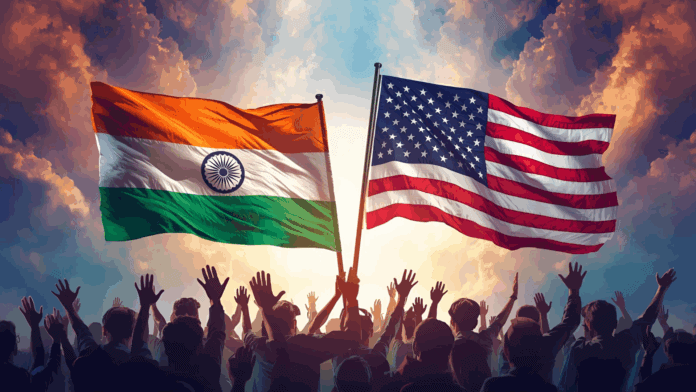
The relationship between the United States and India, once hailed as a cornerstone of 21st-century geopolitics, has entered turbulent waters as President Donald Trump continues to assert that his administration single-handedly prevented nuclear conflict between India and Pakistan through tariff threats. This claim has sparked a diplomatic row that extends far beyond mere rhetoric, touching on fundamental questions of sovereignty, mediation, and the weaponization of trade policy.
Genesis of the Dispute
The controversy stems from a four-day military confrontation between India and Pakistan in May 2025, which ended with a ceasefire agreement. While both South Asian nations credited direct military-to-military dialogue for the resolution, Trump has repeatedly claimed credit for brokering the peace through economic pressure on India.
Speaking to the press at the White House, Trump said, “I am talking to a very terrific man, Prime Minister of India, Narendra Modi. I said, ‘What’s going on with you and Pakistan?’ The hatred was tremendous.” According to Trump, tensions between the two nations were spiraling, and his intervention through trade leverage was crucial in preventing escalation.
This narrative has become a recurring theme in Trump’s public statements, since the May ceasefire. The persistence of these assertions has increasingly frustrated Indian officials who view them as an attempt to diminish India’s agency in regional affairs.
India’s Firm Rebuttal
New Delhi’s response has been unequivocal and consistent. In the weeks after India and Pakistan agreed to a ceasefire in May, officials in New Delhi seethed over Donald Trump’s claims that he brokered an end to a four-day armed conflict. This reaction reflects a deeper sensitivity within India’s foreign policy establishment about third-party involvement in the Kashmir dispute, a position that has remained consistent across different Indian governments for decades.
The Indian government’s stance is rooted in its long-held principle that the Kashmir issue is a bilateral matter between India and Pakistan, with no room for external mediation. This policy position has been maintained despite various international attempts at intervention over the years, making Trump’s claims particularly galling to Indian officials.
Tariff Weapon
What makes this diplomatic spat particularly complex is its intersection with escalating trade tensions. Trump has implemented a punitive tariff regime against India, citing its continued imports of Russian oil as justification. The US announced an additional 25 percent tariff on India over its import of Russian oil, taking the total to 50 percent.
This represents a dramatic escalation from previous trade relations. Citing India’s “massive” purchases of Russian oil, Trump said he would “substantially” increase the U.S. tariff on Indian imports, which is already one of the highest among Asian countries at 25%. The doubling of tariffs to 50% has caught many experts by surprise, particularly given India’s early willingness to engage in trade negotiations with the Trump administration.
The economic impact of these tariffs is substantial. The 50% tariff would affect tens of thousands of workers and potentially shave billions off India’s earnings, says Anupam Manur, professor of economics at The Takshashila Institution, a Bengaluru-based think tank and public policy school. This comes at a particularly challenging time for India’s economy, which has been working to diversify its trade relationships and reduce dependence on any single partner.
Historical Context and Precedent
The current crisis must be understood within the broader context of US-India relations over the past quarter-century. The relationship began its modern transformation during the Clinton administration, accelerated under George W. Bush with the civilian nuclear deal, and reached new heights during the Obama years with the designation of India as a “major defense partner.”
Trump’s first term (2017-2021) saw a complex relationship with India, marked by personal chemistry between Trump and Modi alongside persistent trade disputes. The “Howdy Modi” event in Houston and Trump’s visit to India in 2019 symbolized the personal dimension of the relationship, while trade tensions simmered in the background.
The current crisis represents a departure from this trajectory. As one analysis notes, The move caught most experts by surprise as New Delhi was one of the first to start trade negotiations with Washington, DC, highlighting how quickly diplomatic relationships can deteriorate when fundamental disagreements arise.
Broader Diplomatic Ramifications
The current dispute is having ripple effects beyond bilateral relations. Central to the current crisis is India’s continued relationship with Russia, particularly its substantial imports of Russian oil. India has defended these purchases as necessary for its energy security and as consistent with its traditional foreign policy of strategic autonomy. India won’t give up on Russia or its strategic autonomy, experts say, even as areas of friction with the US grow.
This position reflects India’s historical non-aligned approach to international relations, which has allowed it to maintain relationships with competing powers. However, this approach is increasingly challenging to sustain as great power competition intensifies and the US demands greater alignment from its partners.
On the other hand, China and India have agreed to resume trade ties and move towards resolving their longstanding border dispute. Some analysts suggest that US pressure may be inadvertently pushing India toward closer ties with China, despite their own significant bilateral tensions.
This development would represent a significant strategic setback for US interests in the Indo-Pacific, where American strategy has relied heavily on partnerships with democratic allies and partners, with India being the largest and most important among them.
Looking Forward
The persistence of Trump’s claims about mediating between India and Pakistan, despite clear denials from India, suggests this dispute may continue to fester. The intertwining of these claims with punitive trade measures creates a complex web of grievances that will be difficult to untangle.
For India, the challenge is maintaining its strategic autonomy while preserving important aspects of the US relationship. For the United States, the question is whether the current approach serves broader strategic interests or inadvertently undermines them by alienating a crucial partner.
The coming months will test whether diplomatic engagement can overcome these differences or whether the relationship will continue its downward trajectory. What began as a dispute over historical claims about mediation has evolved into a broader test of whether the US-India partnership can survive fundamental disagreements about sovereignty, strategic autonomy, and the role of economic coercion in international relations.
As both nations navigate this challenging period, the stakes extend far beyond bilateral ties to encompass the broader architecture of Indo-Pacific security and the global balance of power. The resolution of this dispute may well determine the trajectory of one of the world’s most consequential diplomatic relationships for years to come.